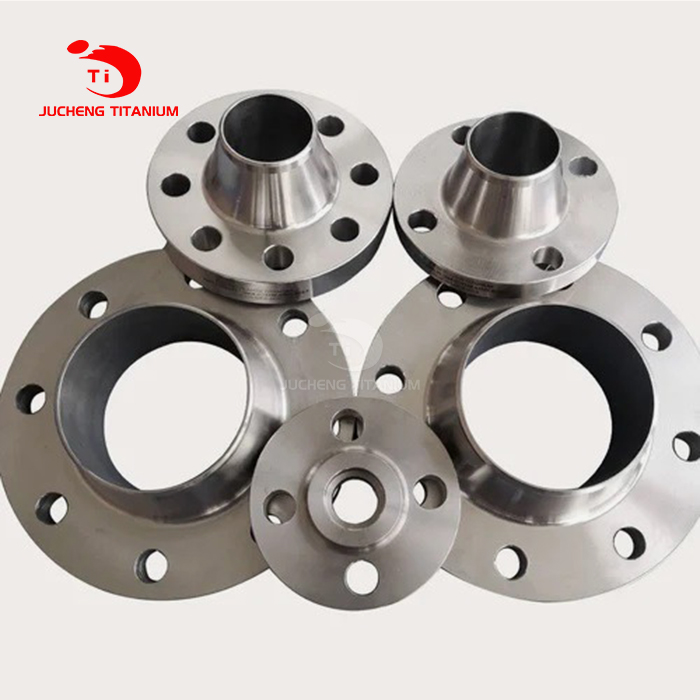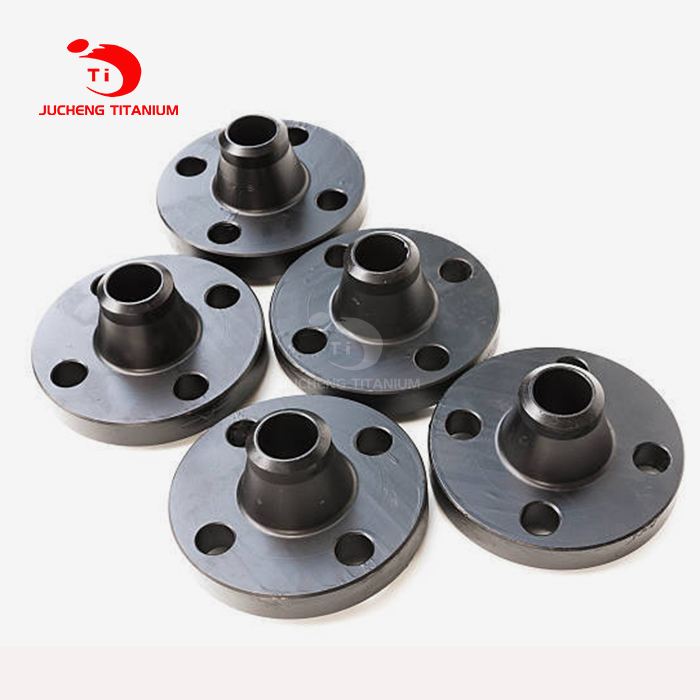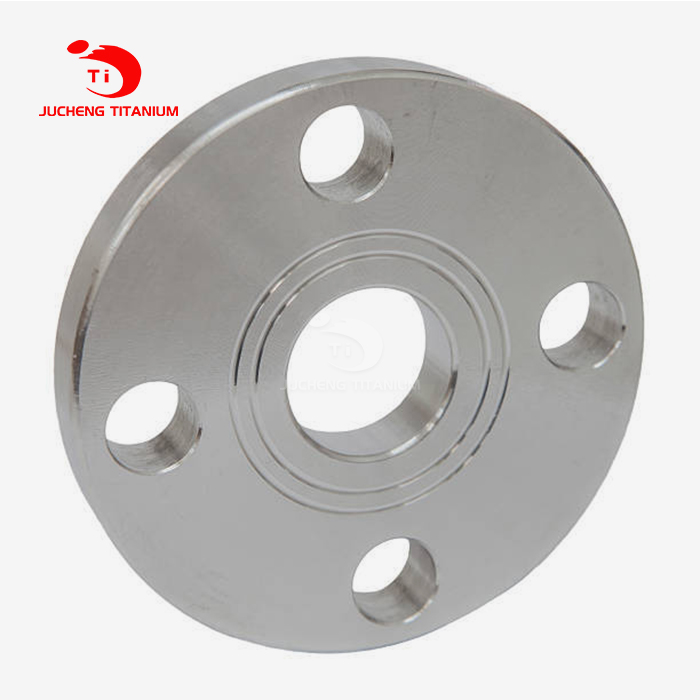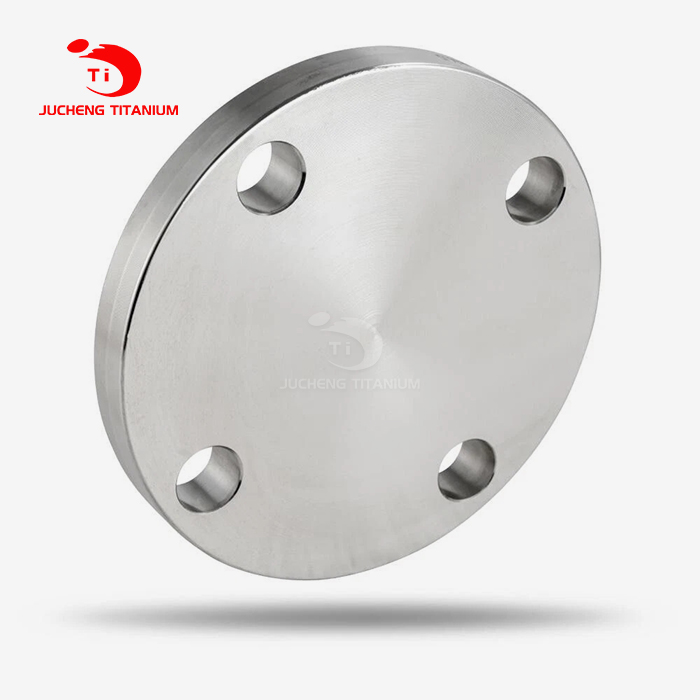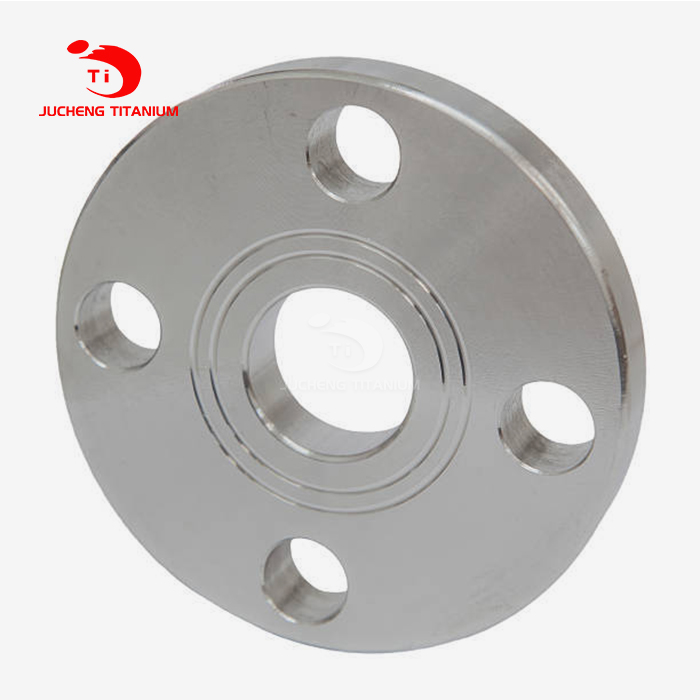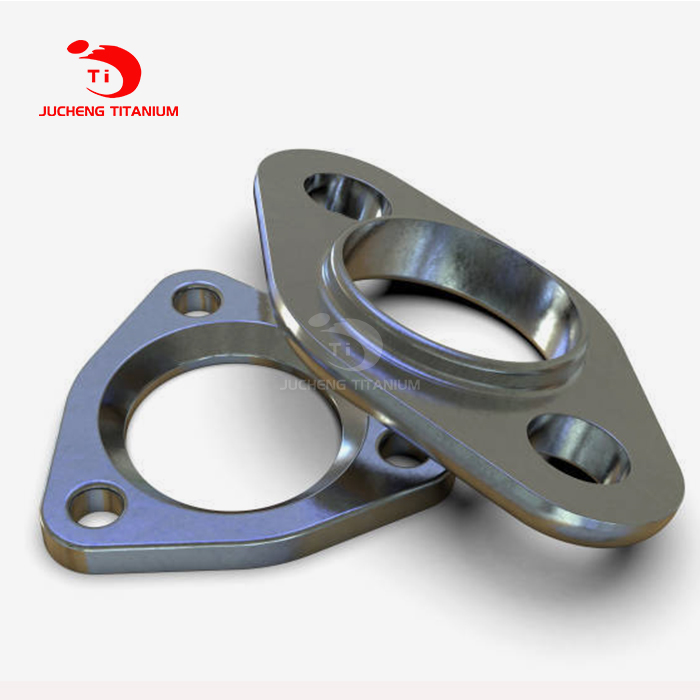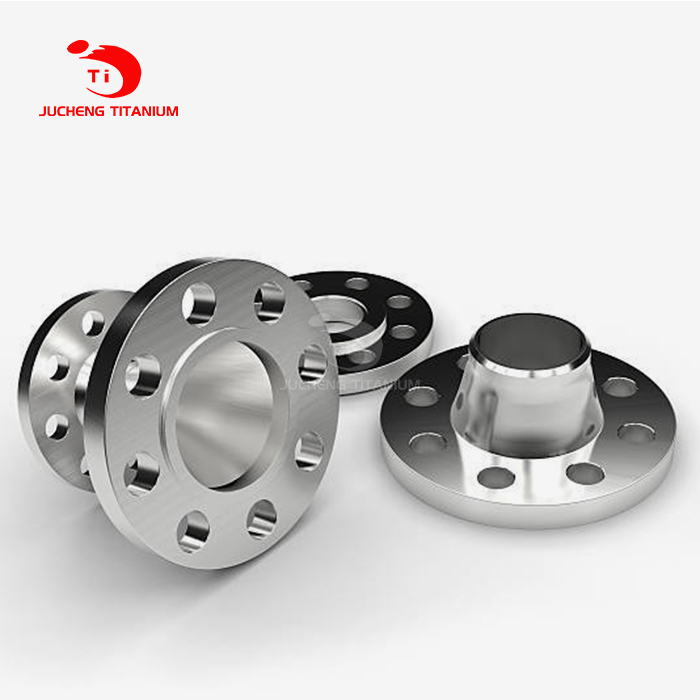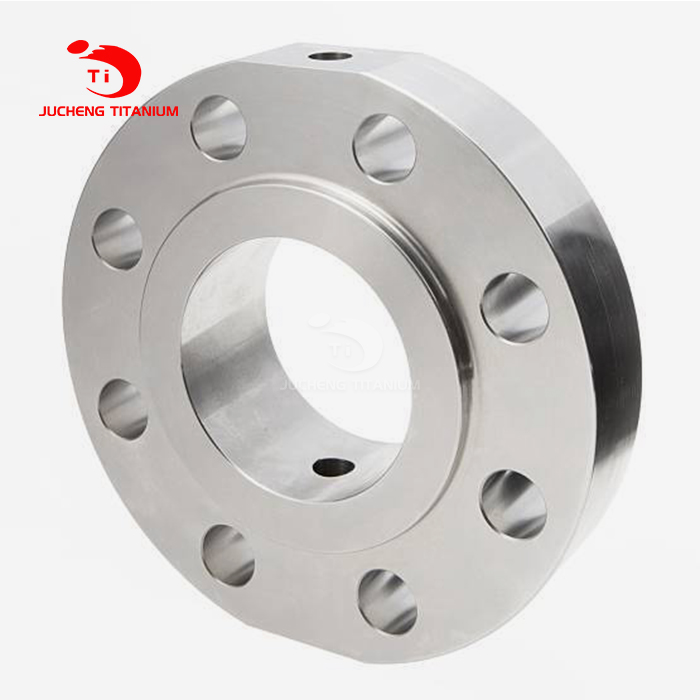

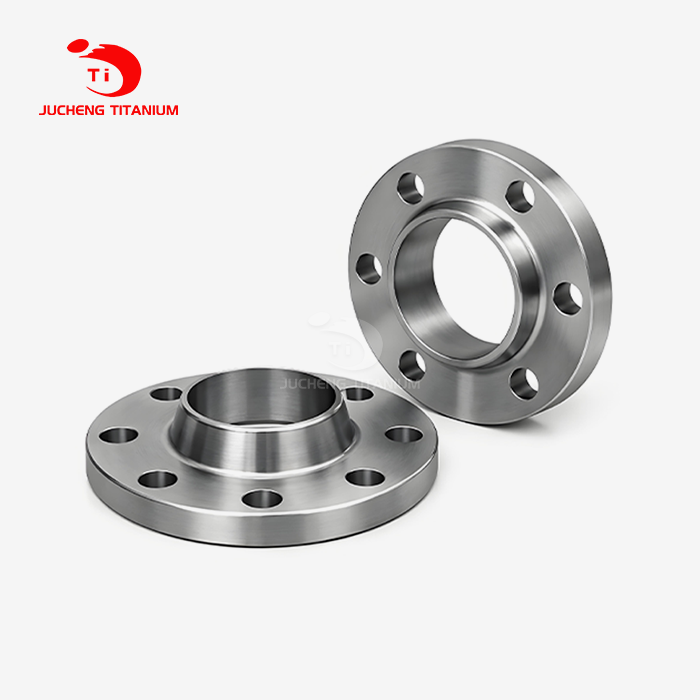
titanium lap joint flange
2.Size: NPS 1/2″ – 48″ (DN15 – DN1200), custom larger sizes available, Thickness: Sch5S – Sch160, XXS
3.Standard: ASME/ANSI B16.5, ASME B16.47, MSS SP-44, DIN 2631-2638, EN 1092-1, AWWA C207, JIS B2220, GB/T 9112, HG/T 20592
4.Type: Weld Neck (WN), Slip-On (SO), Blind (BL), Socket Weld (SW), Threaded (THR), Lap Joint (LJ), Plate, Orifice, Long Weld Neck
5. Processing Method: Titanium ingot → Forging → Heat treatment → CNC machining → Drilling → Surface finishing → Marking
6.State: Annealed
7.Surface Treatment: Machined bright
- Product Description
Titanium Lap Joint Flange - Premium Industrial Piping Solutions
Enterprise-grade titanium lap joint flange assemblies designed for harsh industrial settings are supplied by Baoji Jucheng Titanium Industry Co., Ltd. With a 120,000-square-meter production plant and more than 20 years of experience in titanium fabrication, our company keeps over 3,000 tons of titanium on hand all year long, guaranteeing quick delivery for important projects. In accordance with ASME B16.5 and ASME B16.47 requirements, our lap joint flanges have precisely machined titanium stub ends made from Grades 1, 2, 5, 7, 9, 12, and 23. These two-component systems save material costs without sacrificing performance by combining affordable backing flanges with corrosion-resistant titanium stub ends. Our ISO-certified procedures, which are backed by four invention patents and forty-one utility model patents in cutting-edge titanium processing technology, subject every unit to stringent quality control.
 |  |  |  |
What Makes Titanium Lap Joint Flanges Essential
The titanium flange addresses two critical challenges in industrial piping systems. First, it dramatically reduces project costs by using titanium only where fluid contact occurs. The stub end receives the corrosive media while the backing flange remains dry.
Second, installation becomes significantly faster. The loose backing flange rotates freely around the stub end, eliminating bolt-hole alignment frustrations during assembly. This design proves invaluable in complex piping layouts where fixed flanges create torsional stress.
Industries facing aggressive chemical environments benefit from titanium's self-healing TiO₂ oxide film. This protective layer provides immunity to chloride stress corrosion cracking and pitting in seawater up to 260°C. Chemical processors handling wet chlorine, hypochlorites, and oxidizing acids rely on this material performance.
Maintenance teams appreciate the rapid disassembly capability. Systems requiring frequent inspection for fouling or contamination are serviced quickly without welding complications.
Technical Specifications
Parameter | Details |
Grades Available | Gr1, Gr2, Gr5 (Ti-6Al-4V), Gr7, Gr9, Gr12, Gr23 (Ti-6Al-4V ELI) |
Size Range | NPS 1/2″ – 48″ (DN15 – DN1200), custom larger sizes |
Wall Thickness | Sch5S – Sch160, XXS |
Standards | ASME/ANSI B16.5, ASME B16.47, MSS SP-44, DIN 2631-2638, EN 1092-1, AWWA C207, JIS B2220, GB/T 9112, HG/T 20592 |
Flange Types | Weld Neck, Slip-On, Blind, Socket Weld, Threaded, Lap Joint, Plate, Orifice, Long Weld Neck |
Processing Method | Titanium ingot → Forging → Heat treatment → CNC machining → Drilling → Surface finishing → Marking |
State | Annealed |
Surface Finish | Machined bright, serrated spiral (125-250 AARH) for sealing |
Pressure Class | Class 150 to Class 2500 (ASME B16.5) |
Density | ~4.51 g/cm³ (45% lighter than steel equivalents) |
 |  |  |
 |  |  |
Performance Advantages You Can Count On
Your operations demand reliability under extreme conditions. Our titanium lap joint flange deliver measurable performance benefits through superior material properties.
Corrosion Resistance: Our titanium grades are resistant to almost all industrial chemicals. In acidic conditions where system integrity is at risk from crevice corrosion, Grade 7 with palladium addition offers remarkable protection.
Weight Reduction: Titanium flanges lessen structural loading since they are 45% lighter than steel substitutes. In offshore and aeronautical applications, this weight advantage reduces the need for supporting frameworks and makes installation easier.
Strength Performance: With a yield strength of at least 828 MPa, Grade 5 (Ti-6Al-4V) allows high-pressure subsea applications without material degradation. With a yield strength of at least 275 MPa, Grade 2 provides outstanding ductility for typical industrial application.
Temperature Capability: By preserving structural integrity and corrosion resistance in seawater conditions up to 260°C, our flanges outperform conventional stainless steels.
Non-Magnetic Properties: Because titanium is non-magnetic, these flanges are essential for MRI-adjacent plumbing systems and sensitive instrumentation situations.
 |  |  |  |
Industries We Serve
Aerospace manufacturers integrate our flanges into hydraulic systems requiring lightweight, high-strength connections. Marine engineering projects specify our products for seawater cooling circuits and ballast systems.
Chemical processors depend on titanium for handling corrosive process streams. Food and beverage facilities use our sanitary-grade flanges in clean-in-place systems. Pharmaceutical manufacturers trust our biocompatible materials for process equipment.
Power generation plants install our flanges in condenser systems and cooling water circuits. Medical device manufacturers incorporate our components in implantable equipment and surgical instruments.
 |  |  |
 |  |  |
Manufacturing Excellence
Our production facility transforms titanium ingots through controlled forging processes, ensuring grain structure optimization. Heat treatment procedures follow strict metallurgical protocols for each grade specification.
CNC machining centers deliver dimensional accuracy within ASME B16.5 tolerances. Precision drilling operations create bolt holes with exact spacing and alignment. Surface finishing achieves the required roughness for gasket sealing effectiveness.
Every flange receives individual marking with material grade, heat number, and dimensional specifications. Non-destructive testing equipment verifies structural integrity before shipment.

FAQ
Q: Can I use carbon steel backing flanges with titanium stub ends?
A: Yes, this combination optimizes costs effectively. The backing flange never contacts process media, so economical materials work perfectly. Ensure proper gasket selection prevents galvanic corrosion at external interfaces.
Q: What gasket materials work best with titanium flanges?
A: PTFE, graphite, and compressed fiber gaskets perform excellently. Your process temperature and chemical compatibility determine the optimal choice. We provide gasket recommendations based on your application parameters.
Q: How does delivery time compare to standard steel flanges?
A: Compared to other titanium suppliers, our 3,000-ton titanium inventory allows for quicker delivery. Standard sizes are shipped in two to three weeks. Depending on the complexity and number of orders, custom specifications take four to six weeks to complete.
Q: Can titanium flanges be used with a vacuum?
A: Definitely. Under vacuum, titanium's mechanical qualities preserve seal integrity. When constructed correctly with the right gaskets and bolt torque, the lap joint design offers dependable sealing.
Q: What grade of titanium should I use for applications involving seawater?
A: Grade 2 handles most seawater environments cost-effectively. Grade 7 offers superior performance where crevice corrosion risk exists. Our technical team evaluates your specific conditions to recommend the optimal grade.
Contact Us for Your Custom Solution
Our engineering team stands ready to support your titanium lap joint flange requirements. Whether you need standard dimensions or custom specifications, we deliver solutions backed by two decades of titanium expertise. Contact us at s4@juchengti.com to discuss your project needs today.