
Can Gr12 Titanium Tube Improve Equipment Reliability?
Gr12 Titanium Tube makes tools much more reliable. This medium-grade titanium alloy, which has 0.3% molybdenum and 0.8% nickel (UNS R53400), handles important failure modes where pure titanium sold in stores falls short. The metal doesn't corrode in cracks when exposed to hot brine and relatively reducing environments up to 260°C, which keeps equipment from breaking down too soon. Companies that use these tubes in heat exchangers, chemical reactors, and offshore systems say that they last longer between maintenance visits and cost less to run. The better fatigue resistance and temperature stability of the material directly lead to fewer unexpected shutdowns and longer asset life.

Understanding Gr12 Titanium Tube and Its Properties
When purchasing, teams look at materials for mission-critical uses, teams need to know the basic properties of different types of titanium metal. We've seen that Gr12 Titanium Tube is often misunderstood, especially when it comes to its performance limits and why it is expensive.
What Makes Gr12 Titanium Tube Unique?

Gr12 Titanium Tube is in a good spot between pure titanium (like Gr2) and Grade 7, which is very expensive because it has palladium added to it. Carefully adding molybdenum and nickel forms a lattice that keeps the metal passive in places where pure titanium would rust in certain areas. This alloy is designed to solve the problem of crevice corrosion in chloride-containing media at high temperatures, which is a major problem in the industry. This is a problem that chemical processing plants and desalination plants have to deal with all the time. Even small pits can cause equipment to fail completely.

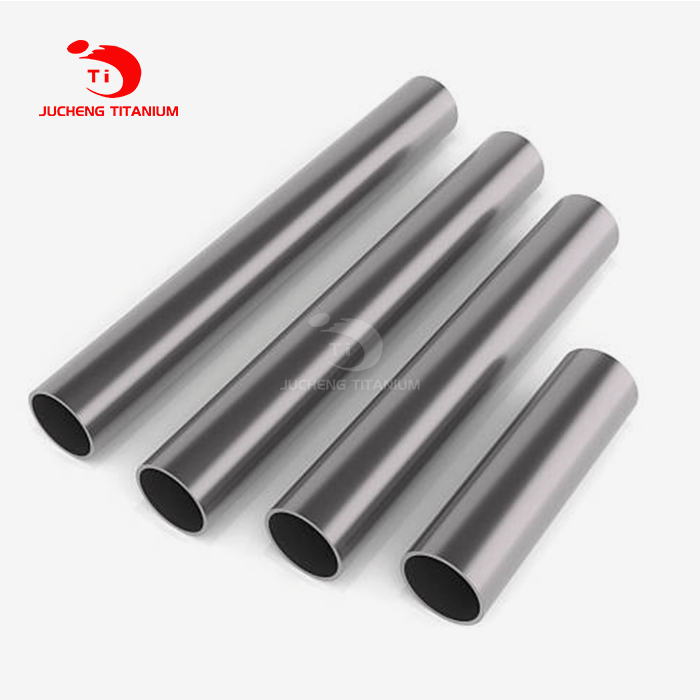
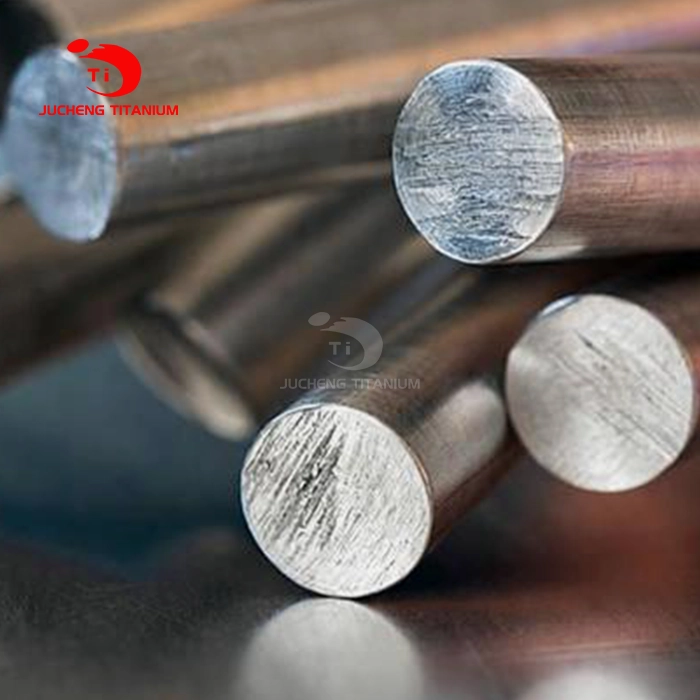
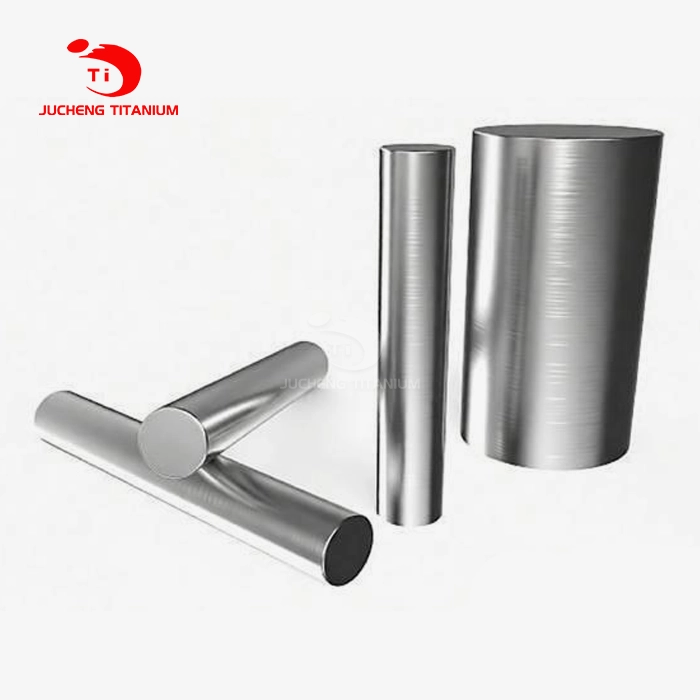
There are several precise steps that go into making a seamless tube. The first billet is made by extrusion, and then the hollow profile is made by piercing. To meet the requirements of ASTM B338 and ASTM B861, cold rolling improves the accuracy of the dimensions. Pickling gets rid of surface oxides and relaxes internal stresses. Annealing improves the structure of the grains. These ways of processing make sure that the tube wall has the same mechanical qualities all the way through, which is important for pressure tank uses that follow ASME SB338 standards.
Key Mechanical and Corrosion Performance
When stretched, Gr12 Titanium Tube usually has a minimum tensile strength of 483 MPa, which is strong enough for pressurized systems. More importantly, the yield strength is about 20% higher than that of Gr2, which lets thinner walls be used without lowering safety margins. This edge in strength-to-weight is especially useful in aircraft heat exchangers, where every kilogram affects how well fuel is used.

The core value offered is corrosion protection. The nickel-molybdenum chemistry makes the inactive oxide layer more stable in hot chloride solutions and reducing acids. Test results show that Gr12 Titanium Tube stays passive in 10% sulfuric acid up to 100°C, while Gr2 would be attacked more quickly in these conditions. This means that inspections can be done every five years instead of once a year for stainless steel alternatives in marine scrubber systems that deal with acidic condensates.
Manufacturing Standards and Quality Assurance

Following international standards builds trust in the buying process. Baoji Jucheng Titanium Industry makes tubes that meet the requirements of ASTM B337, ASTM B338, and AMS 4942. Our production follows strict quality control rules that we've come up with over 20 years of working with titanium. ICP-OES chemical analysis confirms the makeup of the metal, and 100% eddy current testing finds flaws below the surface that can't be seen with the naked eye. Before shipping, hydrostatic testing makes sure the pressure stability is correct. This stops field failures caused by manufacturing flaws.
Customers get goods that come with all the paperwork they need to track them back to the source. This includes mill test records that confirm the chemistry, mechanical qualities, and NDT results. This set of documents meets the standards for aircraft AS9100 and ISO 9001 audits, which speeds up the process of qualifying your supply chain.
Comparison of Gr12 Titanium Tube with Alternative Materials
The choice of material affects total lifecycle costs that go far beyond the price of the initial purchase. We often talk with engineering teams that are looking at a number of different choices for corrosive service uses.
Gr12 Versus Other Titanium Grades

To compare titanium types, you need to know what their performance ranges are. Gr2 economically pure titanium is less expensive, but it doesn't prevent corrosion at high temperatures, which is needed in many chemical processes. When facilities choose Gr2 at first to save money, they often have to replace the tube bundles too soon, which cancels out the savings within three years.
Gr5 (Ti-6Al-4V) is stronger than Gr12 Titanium Tube, but it doesn't fight rust as well. It makes sense to use it in structural aerospace parts, but it doesn't work well in wet, corrosive environments. There are worries about the dependability of Gr5 because it contains aluminum, which can lead to localized attack in chloride media.
Palladium is added to Gr7 to make it very resistant to rust in reducing acids. Even though it is theoretically better than the Gr12 Titanium Tube in very harsh conditions, the price difference is usually more than 40%. When doing a procurement analysis, you should check to see if the working conditions really need Palladium's performance or if Gr12 Titanium Tube middle qualities are enough for a lot less money.
Gr12 Against Traditional Alloys
316L and other types of stainless steel are usually used for chemical tools. But chloride stress corrosion cracking makes stainless steel less reliable in hot brine situations above 60°C. Because the Gr12 Titanium Tube is not affected by chloride SCC, this failure mode is not possible at all. Designers of equipment can now work at higher temperatures without having to worry about through-wall cracking all the time.
Gr12 Titanium Tube is better for mobile or sensitive-to-weight setups because it is lighter. Titanium is much lighter than steel because it has a density of only 4.5 g/cm³ compared to 8.0 g/cm³. This feature is especially helpful for offshore platforms and airplane systems because it lowers the need for structural support and increases fuel efficiency.
Copper–nickel metals don't rust in saltwater very well, but they can get biofouling and erosion–corrosion when fluids move quickly. Gr12 titanium tubes' biologically inert surface keeps marine organisms from sticking to it, so it keeps transferring heat efficiently over time. Flow speeds that would wear away copper and nickel in months have almost no effect on titanium surfaces.
Procurement Considerations for Gr12 Titanium Tubes
To navigate the global titanium supply chain, you need to know what your suppliers can do and how the market works. Purchasing managers who are in charge of making sure that important projects get the right materials need reliable sourcing partners who have shown they can do the job.
Supplier Selection and Geographic Considerations

In China's Baoji titanium valley, there is a lot of manufacturing knowledge. Companies like Baoji Jucheng Titanium Industry run high-tech production sites. Our 120,000 square meter plant keeps about 3,000 tonnes of titanium in stock, so we can quickly meet the needs of projects with tight deadlines. This capacity solves a common problem with procurement: long lead times make it take longer to get equipment up and running.
When judging a seller, check to see if they have the right certifications. It is known that Jucheng Titanium is a National High-Tech Enterprise and a specialized "little giant" company. Our products are protected by 4 invention patents and 41 utility model patents. These titles aren't just marketing claims; they show real expert skill.
Total landing cost is affected by how close the land is to services that will be used. Our established international transportation network, on the other hand, serves customers well in North America, Europe, and Southeast Asia. Having direct ties with freight forwarders who know how to handle titanium ensures that precision tubes get delivered safely, without getting damaged by bad packaging or sudden changes in temperature.
Pricing Dynamics and Customization Options
Prices for Gr12 Titanium Tube depend on the cost of raw materials, how hard the process is, and how many tubes are ordered. Market prices change based on how much sponge titanium is available, but long-term supply deals keep prices stable for projects that last more than one year. When planning your budget, you should include a 30–40% premium over pure Gr2 titanium. This will be balanced out by longer equipment life and fewer upkeep tasks.
Different providers offer different customization options. Standard sizes range from OD3 to OD219 mm, and wall thicknesses range from 0.5 to 20 mm. However, custom sizes are often needed for specific applications. We can make things to your exact specifications, including lengths, end shapes, and surface finishes. Acid-pickled surfaces meet general industry standards, while polished finishes are good for clean medicinal uses. Orbital welding is easier to do when the ends of the tubes are machined.
Minimum order amounts depend on the design. Standard sizes can ship in smaller amounts from stock, but custom sizes need to be made in large batches that start at 100 kg. Talking about project timelines early on in the planning phase helps providers plan production well, so they don't have to charge extra for faster production.
Practical Applications and Case Studies Showcasing Improved Equipment Reliability
Real-world success backs up choices about what materials to use. Companies that use Gr12 Titanium Tube in harsh environments see a measurable increase in efficiency compared to other materials.
Chemical Processing and Petrochemical Success
After multiple failures due to crevice corrosion, a chlor-alkali plant in the southeastern United States switched from stainless steel to Gr12 Titanium Tube for its heat exchanger tubes. Because of damage under the tube supports, the original steel tubes had to be replaced every 18 months. Since it was changed to titanium, the heat exchanger has been running nonstop for more than seven years without any tube breakdowns. The maintenance manager of the plant said that getting rid of unplanned shutdowns saved about $2 million in lost production on top of the cost of replacing the tubes.
In the Middle East, places that desalinate water have to deal with harsh conditions like high temperatures, chloride levels above 35,000 ppm, and living things. For multi-stage flash evaporator tubes made of Gr12 Titanium Tube, projects say that the 25-year design lives are being met in practice. Copper-nickel and super duplex stainless steel, two competing materials, usually need to be replaced or heavily repaired every 10 to 15 years when used in the same way.
Aerospace and Marine Applications

Gr12 Titanium Tube is used by aircraft makers to save weight and protect against rust in weather control systems. One aerospace part seller switched bleed air heat exchangers from stainless steel to Gr12 Titanium Tube. This cut the weight by 35% and made them more reliable in salty coastal settings. The resistance to stress corrosion cracking got rid of the need for regular inspections that kept planes from flying so that tubes could be replaced as a safety measure.
International emission rules require marine exhaust gas cleaning systems to combine sulfuric acid, seawater, and high temperatures in a way that is very corrosive. At first, scrubber makers tried to use duplex stainless steel, but acid and chloride attacks quickly caused it to break down. By switching to Gr12 Titanium Tube, the service life was extended to match the vessel's operating cycles. Maintenance was only needed during planned five-year dry-dock periods, instead of being needed for urgent repairs in the middle of a voyage.
Medical and Industrial Equipment
To make medicines, you need sterile handling tools that can handle strict cleaning and sterilization procedures. Bioreactor cooling coils made of Gr12 Titanium Tube don't break down when exposed to hot, caustic cleaning solutions and steam sterilization over and over again. The FDA allows tools to come into contact with injectable drug products as long as the material is biocompatible and doesn't contain any elements that can be leached.
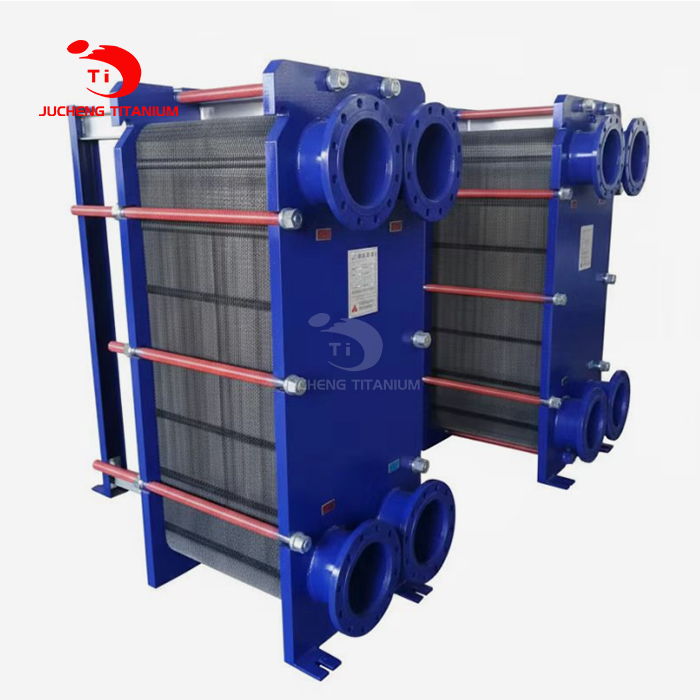
Our facilities make more than 500 sets of industrial titanium equipment every year, which is used for a wide range of tasks, from food preparation to hydrometallurgy. Over 90% of the market for our titanium heat exchangers is in the coking sector. Gr12 Titanium Tube is the only long-term material that can be reliable in thermal cycling and dirty cooling water. This place in the market is based on performance, not marketing. It was achieved by providing consistent product quality and quick technical help.
How to Evaluate and Choose the Right Gr12 Titanium Tube for Your Needs
When you match the material specs to the needs of the application, you avoid both over-engineering, which raises costs, and under-specification, which increases the risk of failure too soon. Systematic evaluation frameworks help engineering teams choose the right tube grades and sizes.
Technical Requirements Assessment
First, you need to set the working range. Write down the highest and lowest temperatures, pressure ranges, and chemistry of the fluid, such as its pH, salt level, and whether it is oxidizing or reducing. Gr12 Titanium Tube works best in fairly corrosive conditions at high temperatures, where commercially pure grades would fail, and expensive exotic alloys are a waste of money.
A mechanical load study tells us how thick the walls need to be. Use the ASME Boiler and Pressure Vessel Code formulas and the right safety factors to figure out the internal pressure stresses. Gr12 Titanium Tube has a good strength-to-weight ratio, which means that its walls can often be thinner than steel versions. This saves money on materials and makes heat movement more efficient. But the minimum wall thickness must keep the walls from falling down when pressure from outside comes in or getting damaged during installation.
In cyclic service, fatigue needs to be taken into account. When heat exchangers cycle heat, the tubes go through forces of expansion and contraction. Changing loads are caused by vibrations caused by fluid flow. Gr12 Titanium Tube is better than most stainless steels at resisting wear; its endurance limits are about 50% of its tensile strength.
Certification and Compliance Verification

Make sure that the material certifications match the requirements of the project. Most aerospace uses need to be in line with AMS 4942 and be able to fully trace the ingot back to its source. For heat exchanger service, chemical processing may need ASTM B338 certification, and for seamless pipe applications, ASTM B861 certification. The guidelines and testing procedures that are needed should be made clear in the procurement papers.
Options for third-party inspection add extra security to important applications. Chemical, mechanical, and size correctness can all be checked by independent testing labs. This proof takes more time and costs more money, but it stops conflicts and makes sure that the service will work as planned.
Product uniformity is affected by how suppliers handle quality. ISO 9001 certification shows basic quality processes, while AS9100 certification shows rules that are specific to aircraft. When you visit a factory, you can get a first-hand look at how they make things, how they calibrate their equipment, and how they train their workers. Jucheng Titanium is happy for customers to check up on our processes because we're sure they can stand up to close scrutiny from tough aerospace and defense clients.
Total Cost of Ownership Calculation
Lifecycle economics is more important than the original cost of the item. Gr12 Titanium Tube that costs more often has a lower total cost of ownership because it lasts longer and needs less upkeep. Making a financial model helps sourcing and finance partners understand why the materials were chosen.
Figure out how often to change different materials based on experience in the field or fast tests. Include the direct costs of new tubes, labor for taking the machine apart and putting it back together, and getting rid of broken parts. Include the secondary costs of production downtime, such as lost income, workers who aren't working, and supplies that are late to customers. When equipment breaks down, it's usually not handy. Emergency fixes cost more for labor and materials because they need to be done faster.
Energy economy affects how much it costs to run tools over their whole life. Gr12 Titanium Tube doesn't rust, so its heat transfer surfaces stay clean, which keeps thermal efficiency high. When tubes are fouled or rusted, systems have to work harder to reach their goal temperatures, which uses more energy. In 20 years, differences in the cost of energy can be much bigger than differences in the cost of materials at the start.
Conclusion

In businesses that have problems with acidic service, Gr12 Titanium Tube makes equipment more reliable in a way that can be measured. The adjusted makeup of the alloy makes it work better than commercially pure titanium while still being cheaper than rare grades. Engineering teams get a practical answer that makes equipment last longer, requires less upkeep, and stops expensive breakdowns that weren't planned for. It has been successfully used in chemical processing, aerospace, marine, and industrial settings that need high resistance to corrosion and high mechanical strength. When you choose the right materials and work with suppliers who know what they're doing, you can be sure that your machine purchases will last and give you a good return on your money.
FAQ
1. Why Choose Gr12 Titanium Tube Over Commercially Pure Grades?
Commercially pure titanium types like Gr2 work well in acidic settings at room temperature, but they can crack and pit when temperatures rise above 80°C in chloride-containing solutions. The molybdenum and nickel added to Gr12 Titanium Tube keep the inactive oxide layer stable in these tough conditions. This stops localized attacks that would otherwise damage the equipment and cause it to break down. This improvement makes the higher price worth it when the temperature and level of rust are higher than what pure titanium can handle.
2. How Does Pricing Compare to Alternative Materials?
Gr12 Titanium Tube is about 30–40% more expensive than pure titanium sold in stores, but a lot cheaper than Grade 7 titanium alloyed with palladium. The starting cost difference is usually two to four times higher than for specialty stainless steels. Lifecycle cost analysis often favors titanium because it lasts longer, doesn't need to be replaced as often because of corrosion, and needs less maintenance. Gr12 Titanium Tube often has a lower total cost for projects with design lives of 15 to 20 years, even though it costs more up front.
3. What Certifications Validate Product Quality?
Material test results from reputable makers show that the products meet the requirements of ASTM B338, ASTM B861, or AMS 4942. Chemical makeup should be shown through spectrographic analysis, mechanical qualities should be shown through tensile testing, and the results of non-destructive testing should prove that the material is sound inside. Tracking through the supply chain is possible thanks to being able to connect raw material heat numbers. Suppliers with ISO 9001 or AS9100 certifications have standardized quality management systems that make sure products always meet standards.
Partner with Jucheng Titanium for Reliable Gr12 Titanium Tube Solutions
Baoji Jucheng Titanium Industry has been a major manufacturer of Gr12 titanium tubes for over 20 years, serving the aircraft, chemical processing, and industrial equipment industries around the world. We can quickly supply approved seamless tubes that meet ASTM B338, ASTM B861, and AMS 4942 standards because we are a National High-Tech Enterprise and keep 3,000 tonnes of stock on hand. We can fully customize any size from OD3 to OD219 mm, changing the wall thickness, surface treatments, and end configurations to exactly what you want. Our expert team works directly with your engineering staff to improve the efficiency of your equipment by giving advice on material choice, corrosion analysis, and lifecycle cost modeling. Email our sourcing experts at s4@juchengti.com to talk about the needs of your project and get specific quotes.

References
1. Boyer, R., Welsch, G., & Collings, E.W. (1994). Materials Properties Handbook: Titanium Alloys. ASM International, Materials Park, Ohio.
2. Schutz, R.W. & Thomas, D.E. (1987). Corrosion of Titanium and Titanium Alloys. Metals Handbook, Volume 13: Corrosion, ASM International.
3. American Society for Testing and Materials (2021). ASTM B338-21: Standard Specification for Seamless and Welded Titanium and Titanium Alloy Tubes for Condensers and Heat Exchangers. ASTM International, West Conshohocken, Pennsylvania.
4. Donachie, M.J. (2000). Titanium: A Technical Guide, 2nd Edition. ASM International, Materials Park, Ohio.
5. Cotton, J.D. (2015). Selection and Use of Titanium Alloys for Seawater Applications in Marine Environments. Journal of Failure Analysis and Prevention, Volume 15, Issue 3.
6. Peters, M. & Leyens, C. (2003). Titanium and Titanium Alloys: Fundamentals and Applications. Wiley-VCH Verlag, Weinheim, Germany.