
Gr12 Titanium Plate vs Gr2: Which Grade Fits Your Project Best?
Choosing between Gr12 titanium plate and Grade 2 comes down to understanding your project's specific demands. Gr12 offers enhanced corrosion resistance in aggressive chemical environments and higher strength than commercially pure Gr2, making it ideal for hot chloride services and reducing acid applications. Grade 2 excels in moderate conditions where cost-effectiveness matters most. The alloying elements in Gr12—0.3% molybdenum and 0.8% nickel—address crevice corrosion challenges that standard grades face, positioning it as the value engineering choice for chemical processing equipment, heat exchangers, and marine applications where performance justifies the investment.


Introduction
Since titanium plates are rust-resistant and light for their strength, they are employed in chemical processing and aviation. Grade selection is always discussed with procurement management and engineering teams as a major choice that impacts project deadlines, budgets, and business viability. Choosing between Gr12 and Grade 2 titanium plates is a typical industrial material purchase issue.

We understand the stakes. If you purchase the incorrect grade, your equipment may break down early, need costly repairs, and cease operations, hurting your bottom line. This page describes the technical distinctions between these two popular titanium grades, their applications, and how to acquire them. With over 20 years of titanium product expertise, Jucheng Titanium wants to provide relevant information. To suit the demands of several sectors, we've sold over 500 pieces of titanium equipment and retained over 3,000 tonnes of stock each year.

Understanding Gr12 and Gr2 Titanium Plates: Key Properties and Differences
Chemical Composition and Alloying Strategy
Grade 2 titanium is commercially pure and little alloyed. It's primarily titanium with some oxygen, iron, and nitrogen. This purity makes it rust-resistant and shapeable. Gr12 titanium plate (UNS R53400) adds 0.3% molybdenum and 0.8% nickel to the titanium matrix in a planned manner. These alloying additives solved a long-standing industrial issue: pure titanium sold in shops is quickly affected by crevice corrosion and localised pitting in high-temperature chloride conditions and reducing acids.

Gr12 titanium plate protects better than pure grades in severe conditions due to its molybdenum and nickel combination. Due to its chemistry, Gr12 titanium plate costs more than palladium-alloyed Grade 7, yet it is still cheaper. This helps purchasing teams balance cost and performance.
Mechanical Performance Comparison

Tensile strength differences across grades affect safety gaps and design requirements. Tensile strength is 50 ksi (345 MPa) and yield strength is 40 ksi (275 MPa) for grade 2 titanium. Mechanically, Gr12 titanium plate is superior. It has 70 ksi (483 MPa) tensile and 50 ksi (345 MPa) yield strengths. Due to this strength advantage, pressure tanks may have smaller walls and lighter structural sections without compromising safety.
Both kinds remain ductile and hard at several temperatures. While Grade 2's temperature limitations are lower, Gr12 titanium plate retains its structural strength and fulfils the ASME code's temperature limits up to 315°C (600°F). Gr12 titanium plate can take greater temperatures, making it useful in steam, hot brines, and thermal cycling where commercially pure grades cannot.
Corrosion Resistance in Real-World Environments
The corrosion resistance profile highlights each grade. Grade 2 is excellent for typical industrial usage since it performs well in oxidising conditions, saltwater, and organic compounds. Gr12 titanium plate's alloying constituents greatly improve its performance in chloride-induced crevice corrosion areas.

pH levels, flow stops and starts, and temperatures fluctuate often in chemical processing, creating ideal circumstances for localised corrosion. In heated brine concentrators and hydrometallurgical autoclaves, Grade 2 parts break down too rapidly, but Gr12 titanium plate parts operate. To prevent fractures at gasket interfaces, tube-to-tubesheet junctions, and deposits, molybdenum-nickel alloying is crucial. These are common failure issues purchasing teams should examine.
Decision-Making Criteria: How to Choose Between Gr12 and Gr2 for Your Project
Evaluating Environmental Conditions
The working setting is the most important factor in the selection process. Grade 2 is good enough for contact with air, fresh water systems, and a lot of chemical processes that happen at normal temperatures and use oxidizing chemicals. Gr12 titanium plate is the right engineering choice when you need to work with hot chlorides above 140°F (60°C), reducing acids like diluted sulfuric or phosphoric acid, or marine settings where flow is limited.
Temperature affects this choice in two ways. Higher operating temperatures not only weaken materials but also speed up the process of corrosion. Applications that go back and forth between room temperature and high temperatures cause thermal stress that makes rusting more likely. Gr12 titanium plate's improved performance envelope handles problems with both mechanical stress and corrosion at the same time, making it reliable in harsh thermal conditions.
Cost-Benefit Analysis and Lifecycle Economics
The cost of materials is simply one aspect of project economics. Grade 2 costs 30–40% less per pound than Gr12 titanium plate, making it ideal for budget-conscious applications. If the product breaks fast and has to be replaced, these initial savings might be lost. Chemical plant management picked Grade 2 heat exchanger tubesheets, but crevice corrosion failed them after three years. Substitution, including downtime, cost substantially more than material savings.
Gr12 titanium plate costs more upfront, but longer service life and fewer repair gaps pay for it. To determine how cost-effective something is, consider how frequently it has to be examined, how much downtime it may cost, and how long it will endure. For critical instruments where loss would be costly, Gr12 titanium plate is generally cheaper over ten or fifteen years.
Manufacturing and Fabrication Considerations

Weldability affects both the way something is made and how it can be fixed in the future. Both grades can be welded successfully with TIG or MIG processes and the right amount of inert gas protection. The industrial clarity of Grade 2 makes choosing welding settings and filler metal easier. To keep the corrosion resistance of the weld zone high, Gr12 titanium plate needs matching ErTi-12 filler wire or a higher-alloyed filler. This is an important specification detail that procurement teams should make sure fabricators understand.
The grades don't vary much in how easy they are to machine, but Gr12 titanium plate's higher strength makes tools last a little longer. Both work well with normal titanium cutting methods, such as using sharp tools, a lot of coolant, and steady feed rates. The steps for hot forming and annealing are slightly different, and Gr12 titanium plate needs specific temperature ranges to get the best microstructure from its metal. These needs are usually met by experienced fabricators, but quality problems can be avoided by choosing suppliers who have a track record of processing titanium well.
Procurement Insights: Sourcing Quality Gr12 and Gr2 Titanium Plates
Supplier Qualification and Certification Requirements
Quality control starts with choosing the right provider. Titanium plate manufacturers with a good reputation keep certifications like ISO 9001 for quality management and credentials specific to their industry, like ASME code stamp authorization. Material certifications should refer to the right standards. In North America, ASTM B265 is the main guideline for titanium plate, while AMS 4911 and ASME SB265 are used in aircraft and pressure vessels, respectively.

We at Jucheng Titanium have been recognized as a National High-Tech Enterprise and a focused and creative "little giant" business on a national level. Our 41 utility model patents and 4 idea patents show that we are always coming up with new ways to process titanium. These qualifications are important because they show that the company has consistent quality systems and the technical know-how to meet strict requirements. Not only should you look at a supplier's licenses, but you should also look at their production capacity, quality control processes, and systems for tracking materials to make sure you know where they came from.
Understanding Lead Times and Inventory Availability

Lead times have a big effect on project schedules, especially when the sizes or quantities are custom. Standard plate sizes that have been hot-rolled and annealed usually ship within 4 to 6 weeks from reputable sources who keep stock on hand. Custom specifications that need a certain thickness, width, or surface treatment may make lead times 8 to 12 weeks longer, depending on how busy the mill is and what kinds of materials are available.
At our plant in Baoji, we keep about 3,000 tons of titanium in stock in a range of grades and types, including Gr12 titanium plate. We have a strategic amount of stock on hand that lets us react quickly to pressing project needs that can't wait for standard mill lead times. Just-in-time supply lines give makers and sellers of chemical equipment a lot of freedom. Supplier inventory depth is a key part of this. When looking for titanium plates, make sure you know the minimum order quantity, any stocking programs for needs that come up again and again, and any fast delivery options that are available.
Technical Support and Custom Processing Services
The right connection with a seller includes more than just delivering goods; it also includes expert advice and processing that adds value. When designing complex projects, it's helpful to include suppliers early on. This is because choosing the right materials, figuring out the best thickness, and planning how to build them all affect both cost and performance. We've worked with builders who work on chemical plants to come up with titanium-clad solutions and unique heat exchanger layouts that protect against corrosion while also being cost-effective.
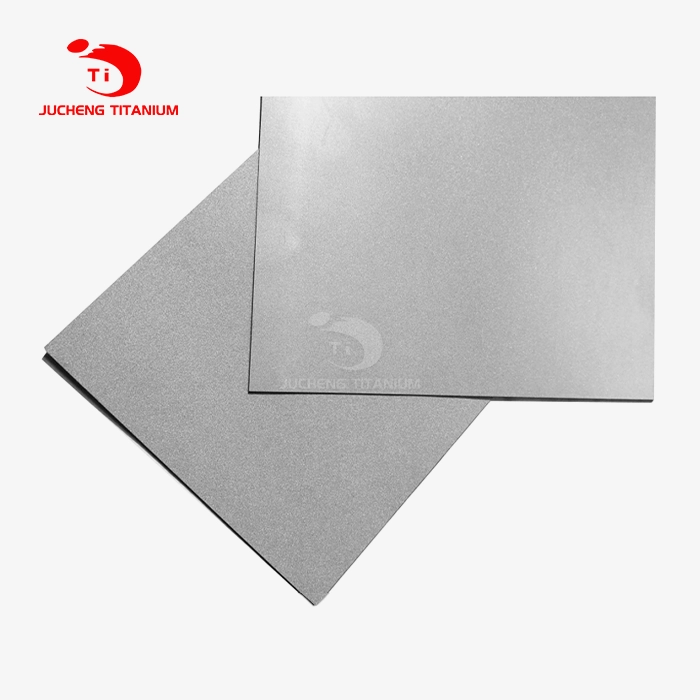
We can roll, anneal, level, pickle, and do other surface finishing processes as part of our output. We work with plates that are 4 mm to 80 mm thick, up to 2500 mm wide, and up to 10,000 mm long, or any other size you need. This wide range of processing options lets buying teams be very clear about what their application needs, instead of having to change designs to fit standard sizes. Your supply chain will run more smoothly and coordinate better if you can send surfaces that have been pickled and polished, machined parts, or fully assembled products.

Advantages of Gr12 Titanium Plate Over Gr2: Why It Could Be Your Best Choice
Superior Performance in Aggressive Chemical Environments
When it comes to choosing materials, chemical production processes are some of the toughest. Gr12 titanium plate works especially well in places where widely pure grades don't do well. Gr12 titanium plate is resistant to crevice corrosion and pitting, which makes it a good choice for hot chloride applications like brine heaters, salt production evaporators, and desalination equipment. The molybdenum-nickel alloying makes the material stable in pH levels and temperatures that would normally break down Grade 2 parts quickly.
Another important area of advantage is hydrometallurgical applications. Autoclaves for pressure oxidation and tanks for acid dumping rub materials against rough slurries while reducing acid attacks on them. We've given Gr12 titanium plates to be used as linings in autoclaves because they can handle both mechanical and chemical damage that would eat through pure titanium. Gr12 titanium plate's high prices are justified by longer campaigns and less unexpected upkeep in these tough environments.
Structural Efficiency Through Enhanced Strength
The better mechanical properties of Gr12 titanium plate make it possible to optimize designs in a way that balances out differences in the costs of materials. When allowable stresses are higher, pressure vessels, heat exchanger shells, and structural parts can have thinner wall sections. This thinner layer cuts down on the amount of material needed, the cost of making it, and the total weight of the system. This is especially helpful for mobile equipment or retrofits that are limited by room and weight.
Shell and tube heat exchangers are a good example of this structural efficiency. The allowed stress values for the material have a direct effect on how thick the tubesheet is. Gr12 titanium plate is stronger than Grade 2, so it can make tubesheets that are thinner. This cuts the amount of material needed by 15 to 20 percent compared to Grade 2 designs with the same pressure ratings. Not only does the tubesheet lose less weight, but so do the support structures and piers. This saves money all the way through the creation of the system.
Case Applications Demonstrating Value
A lot of marine desalination plants in the Middle East use Gr12 titanium plate for their thermal distillation units and multistage flash evaporators. When you mix high-temperature, concentrated brine with still areas in tube bundles, you get the perfect conditions for crevice corrosion. When facilities first put in Grade 2 parts, they broke down too soon, but Gr12 titanium plate installations are still working well after more than fifteen years of service. Based on this track record, Gr12 titanium plate has become the standard for new desalination capacity.
A lot of the reactor vessels, column interiors, and pipe systems in chemical plants that do chlor-alkali processes, chlorinated organic synthesis, and wet chlorine production depend on Gr12 titanium plate. In a synthesis reactor, one pharmaceutical company changed failed Grade 2 stirrer shafts with Gr12 titanium plate parts. This got rid of a maintenance problem that kept stopping production. The higher material cost was worth it because it made the product last longer and required fewer repairs in the event of an emergency.
Conclusion
To choose between Grade 2 and Gr12 titanium plate, you need to carefully match the qualities of the materials to the needs of the job and the cost of doing it. Grade 2 is still the best choice for general industry settings where its resistance to rust, ability to be shaped, and low cost meet performance needs. Gr12 titanium plate stands out in harsh chemical environments, high-temperature chloride environments, and situations where higher mechanical strength lets the design be better.
The choice process is based on factors like the intensity of the environment, the temperature, the needed service life, and the total cost of ownership, not just the price of the materials at first. Getting experienced suppliers involved early on in the project development process is helpful for procurement teams because they can use their technical knowledge to help with choosing materials, writing specifications, and planning the supply chain. Titanium plates can last for decades in harsh industrial environments if the right grade is chosen based on the needs of the application.
FAQ
1. What are the key tensile strength differences between Gr12 and Grade 2 titanium plates?
Grade 2 has a tensile strength of about 50 ksi and a yield strength of about 40 ksi, making it good for general construction uses. With a tensile strength of about 70 ksi and a yield strength of about 50 ksi, Gr12 titanium plate has better mechanical properties. This means that equipment specifications can call for thinner walls and higher pressure ratings.
2. Can Gr12 titanium plate be welded to commercially pure Grade 2 material?
For welding with TIG or MIG methods, yes, Gr12 titanium plate and Grade 2 can be used together. Use higher-alloyed filler metal or matching ErTi-12 filler wire to keep the corrosion resistance in the weld zone. Proper inert gas shielding and heat input control make sure that the integrity of the joint meets the requirements of the code.
3. How does Gr12 compare to Grade 7 in cost versus performance for chemical applications?
Gr12 titanium plate is 30–40% cheaper than Grade 7 with palladium added to it, and it's strong enough against crevice rust for most hot brine and mild acid uses. Although Grade 7 works a little better in places with very low pH, Gr12 titanium plate is still the better value engineering choice for most chemical processing needs.
4. What surface conditions are standard for hot-rolled titanium plates?
Plates that have been hot-rolled usually have a gray metal scale on them from the heat processing. For final uses, ask for a surface treatment that includes bead blasting and acid etching to remove scale and pickle. This gets rid of scale, makes sure the surface can be inspected easily, and increases its resistance to rust. For certain needs, polished and machined surfaces are offered.
Partner with Jucheng Titanium for Your Gr12 Titanium Plate Requirements
Choosing the right titanium grade requires knowledge that comes from decades of producing experience and completing successful projects. Jucheng Titanium has been specializing in the titanium business for more than 20 years and can help you with your procurement problems by mixing technical know-how with quick supply chain skills. Our 3,000-ton inventory of different grades promises fast delivery for pressing needs, and our custom processing services can meet the exact size or surface needs of your application.
Our strict quality standards are shown by our ASTM B265, ASME SB265, and AMS 4911 certifications. We are a National High-Tech Enterprise and a listed reserve company in Shaanxi Province. We can make titanium with thicknesses ranging from 4 mm to 80 mm when it is hot-rolled and annealed. The surface can be polished, machined, or acid-pickled, among other options. Whether you need normal plate sizes or parts that are made just for you, our engineering team works with you to choose the best materials and set the best processing requirements.

Get in touch with our technology experts at s4@juchengti.com to talk about the specifics of your project. We offer competitive quotes, documentation of our processing capabilities, and material certifications that are tailored to your procurement timeline. As a reliable provider of Gr12 titanium plate to chemical processing, marine, and industrial equipment makers around the world, we're dedicated to giving your projects the quality materials they need.
References
1. ASTM International. "ASTM B265: Standard Specification for Titanium and Titanium Alloy Strip, Sheet, and Plate." American Society for Testing and Materials, West Conshohocken, PA.
2. Schutz, R.W., and Thomas, D.E. "Corrosion of Titanium and Titanium Alloys." ASM Handbook Volume 13B: Corrosion Materials, ASM International, Materials Park, OH.
3. Boyer, R., Welsch, G., and Collings, E.W. "Materials Properties Handbook: Titanium Alloys." ASM International, Materials Park, OH.
4. Donachie, Matthew J. "Titanium: A Technical Guide." ASM International, Materials Park, OH, Second Edition.
5. ASME Boiler and Pressure Vessel Code. "Section II: Materials, Part B: Nonferrous Material Specifications SB-265." American Society of Mechanical Engineers, New York, NY.
6. Peters, M., Kumpfert, J., Ward, C.H., and Leyens, C. "Titanium Alloys for Aerospace Applications." Advanced Engineering Materials, Wiley-VCH Verlag GmbH.