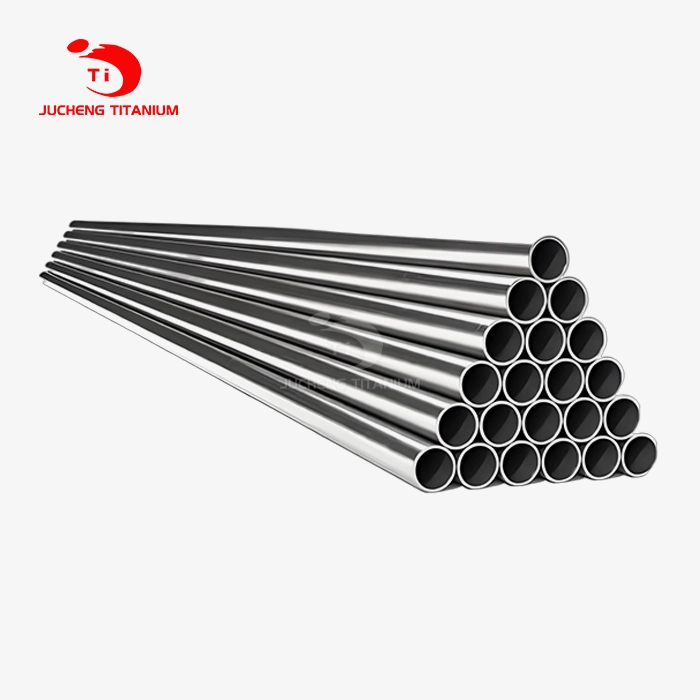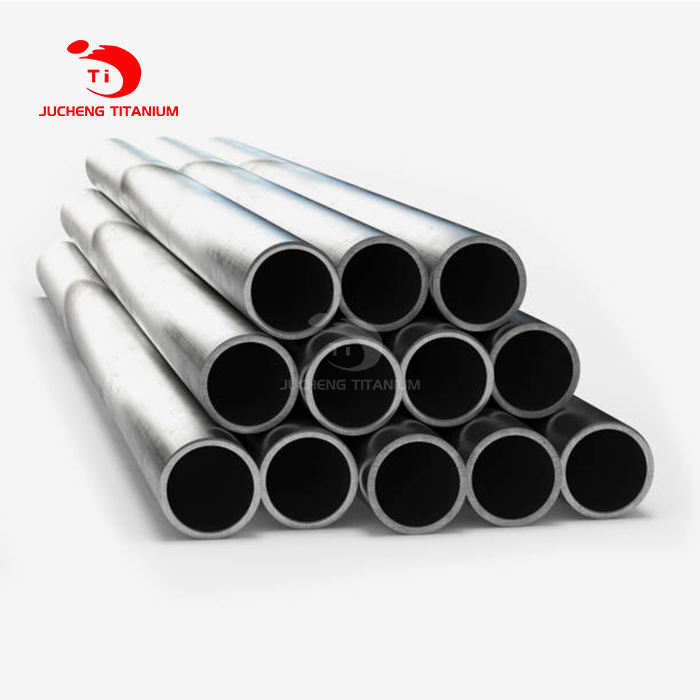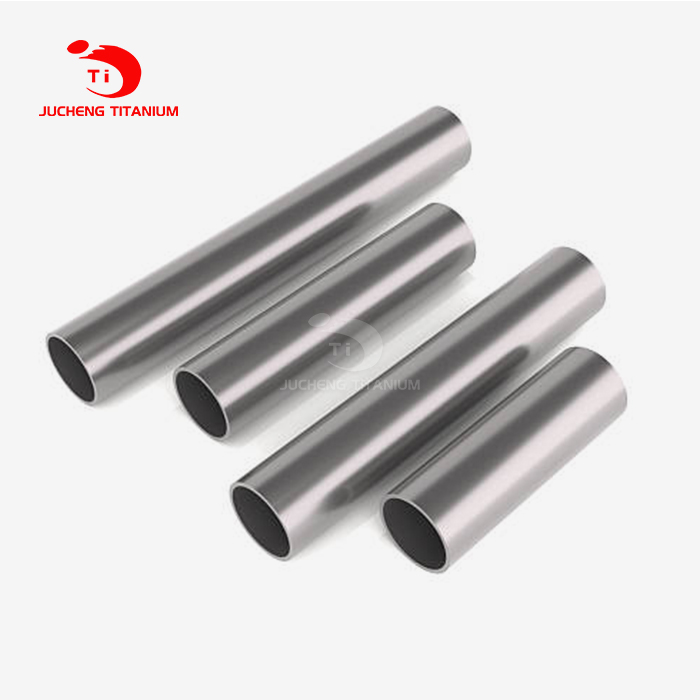

Gr2 Titanium Tube with High Strength and Weldability
When procurement managers look for tubing for important industrial uses, they always have to find the right balance between material strength, rust resistance, and ease of manufacturing without sacrificing durability or going over budget. Gr2 Titanium Tube is the answer to this complicated problem in the business world. When it comes to commercially pure titanium, it has a moderate tensile strength of more than 345 MPa, great ductility, and great weldability. These are all qualities that directly address the weak spots of stainless steel and copper-nickel alternatives in chloride-rich and high-velocity fluid environments. Higher-strength titanium alloys aren't as easy to shape, but this grade strikes the perfect balance between mechanical performance and manufacturing flexibility. This makes it an essential material for heat exchangers, chemical reactors, and aerospace hydraulic systems.

Understanding Gr2 Titanium Tubes – Properties and Specifications
Commercially pure Gr2 Titanium Tube with the designation Grade 2 Titanium Tube is the titanium product that is most often used in industry. This alpha-phase metal has at least 99% titanium, with small amounts of oxygen, iron, and nitrogen added to improve its mechanical qualities without making it less resistant to corrosion. The material has a yield strength of about 275 MPa, a tensile strength of between 345 and 510 MPa, and a stretch rate of more than 20%. These mechanical properties give it a strength-to-weight ratio that is almost 40% better than stainless steel. This lets thinner wall shapes be used in heat transfer applications to make them more efficient.

Chemical Composition and Mechanical Performance
The microstructural perfection of this type of titanium is what makes it unique. The carbon content stays below 0.08%, the nitrogen content stays below 0.03%, and the hydrogen content stays below 0.015 %. This keeps the alpha-phase crystalline structure stable across all operational temperature ranges. This mix allows a passive titanium dioxide layer to form on its own, which is 10–100 nanometres thick and instantly grows back when the surface is damaged. The oxide film protects against stress corrosion cracking caused by chloride, which is a type of failure that happens a lot in naval condensers and chemical processing equipment made of 304 and 316 stainless steel.

According to ASTM B338 guidelines, testing shows that the product works the same way at all temperatures, from very cold to 300°C all the time. The material stays flexible at temperatures below zero and has better creep resistance than copper alloys at higher temperatures. Charpy impact testing shows that toughness retention is higher than 80% at -196°C. This means that seamless tubing can be used in liquefied natural gas applications where a brittle fracture could be very dangerous.

Manufacturing Standards and Quality Assurance
First, vacuum arc remelting is used to get the metal to the right level of purity. Then, hot extrusion or piercing is used to make hollow billets. Then, cold rolling is used to get the sizes down to the final requirements. This is done several times, with annealing cycles at 650–750°C in between each pass to recover flexibility and get rid of work hardening. To finish the surface, it is acid-pickled in hydrofluoric-nitric acid solutions to get rid of oxide scale. This is followed by bright annealing in controlled atmospheres or mechanical polishing to get the surface roughness to less than 0.8 μm.

We make seamless titanium tubing with outside widths from 3 to 219 mm and wall thicknesses from 0.5 to 20 mm. However, we can easily make special sizes as well because our production is very flexible. As required by ASTM B337, B338, B861, and AMS 4942, each output lot goes through hydrostatic testing at 1.5 times the maximum working pressure, non-destructive eddy current inspection to find flaws, and measurement verification. Material test records show the chemical make-up using spectroscopic analysis, the tensile qualities of standard specimens, and the results of flattening or flaring tests that show the material can be welded and shaped.

Comparing Gr2 Titanium Tube with Alternative Materials and Grades
To choose the right materials, you need to know how to weigh performance trade-offs in different operational settings. For corrosive service, commercially pure Gr2 Titanium Tube is the go-to material. Other materials and titanium grades, on the other hand, are used to meet different engineering needs.
Gr2 Versus Gr5 Titanium Alloy Performance
The yield strength of Grade 5 titanium, which is a Ti-6Al-4V alpha-beta metal, is almost twice as high as that of Grade 2. Aerospace uses that need the highest strength-to-weight ratios are worth the 200% price increase and lower weldability that come with this metal. Adding aluminium and vanadium, on the other hand, lowers its resistance to corrosion in reducing acids and high chloride concentrations. For welding Grade 5, you need to use an inert gas shield on both the root and face sides and heat treat the metal after the weld. For Grade 2, you can use normal TIG welding techniques without any extra steps or heat treatment.
The difference in flexibility is also very important. Grade 2 tubing can be bent to curves as small as 2.5 times its outer diameter without the help of a mandrel. This lets heat exchangers have more complicated coil arrangements. To get a Grade 5, the minimum bend radius has to be 5–6 times the width, and the forming temperatures have to be carefully controlled. The ability of commercially pure material to be shaped more easily lowers project costs by 15 to 30 percent for chemical processing equipment, where the difficulty of manufacturing has a direct effect on installation costs.
Material Substitution Analysis: Stainless Steel and Copper-Nickel
Because it is easier to work with and costs less, designers have traditionally chosen Type 316L stainless steel for corrosive service. Lifecycle cost analysis, on the other hand, shows a different picture. When temperatures go above 60°C and chlorine levels are above 500 ppm, pitting corrosion starts to happen in stainless steel. This means that corrosion limits of 3 to 6 mm must be built into the wall thickness design. Titanium tubes don't allow any corrosion to happen, so the walls can be 40–50% smaller while still holding the same pressure values. The higher thermal conductivity makes up for titanium's lower intrinsic conductivity (0.16 W/m·K vs. 16 W/m·K for copper metals), giving it the same heat transfer coefficients and an infinite service life.
Copper-nickel 90/10 alloys work better in hot temperatures, but they erode and corrode in seawater moving faster than 2 meters per second. Titanium tubes can handle flow rates of up to 4 meters per second without losing any material. This means that the heat exchanger can hold twice as much heat while taking up the same space. Getting rid of sacrificial anodes, impressed current cathodic protection systems, and replacing tubes every two years also lowers the cost of running the plant. Studies on naval design show that selecting titanium condensers can save 60% over the course of 25 years of service, even though they cost 180 to 220% more at first.

Grade Selection Guidelines for Specific Applications
When procurement teams choose materials, they should use a decision matrix that takes into account how bad the working situation is. When working with oxidising acids like nitric, chromic, and hypochlorous acids in chemical processing, commercially pure grades work well at all temperatures and concentrations. Additions of alloys are needed for reducing acids like hydrochloric or sulphuric. Grade 7 with palladium or Grade 12 with molybdenum and nickel offer better protection. Marine uses don't usually need higher alloy grades unless the working pressure is more than 20 bar, in which case Grade 9 titanium is stronger. Medical device makers only choose unalloyed types to make sure they are biocompatible and follow the rules. The surface treatments can be customised to meet the needs of each implant or tool.

How to Select and Procure Gr2 Titanium Tubes for Your Business
For strategic buying of Gr2 Titanium Tubes, you need to look at more than just price when evaluating suppliers. Total cost of ownership is based on how reliable the supply chain is, how consistent the quality is, and how much technical support is available.
Supplier Qualification and Certification Requirements
The first step in evaluating a vendor is to check their quality control certifications. Registration with ISO 9001:2015 shows that you can control the process, and registration with ISO 13485 is necessary for medical uses. Aerospace companies need to have AS9100D certification to show that they meet flight quality standards. In addition to checking for certifications, reviews of production facilities should also look at systems for tracking raw materials, controls for the heat treatment process, and records of how the non-destructive testing equipment was calibrated. We keep full lot tracking from the makers of titanium sponges all the way through to the final production of tubes. Material test records connect chemical makeup and mechanical properties to specific customer orders.
Factory-direct buying gets rid of markups from distributors that can be anywhere from 25 to 40 percent and gives you access to engineering knowledge when you're making specifications. Our expert team works with customers to find the best wall thickness, weld joint design, and making methods that make the best use of the material's properties while still meeting the needs of the application. This consultative approach stops people from over-specificating, which drives up costs needlessly, and under-specificating, which lowers reliability.
Order Specifications and Logistics Considerations
For custom tube sales, it's important to be clear about the required surface finish, end preparation, and size limits. Tolerances for outer diameters are usually ±0.2 mm for diameters less than 50 mm and ±0.5% for diameters greater than 50 mm. Tolerances for wall thickness are either ±10% or ±0.1 mm, whichever is greater. Surface roughness standards should take into account the needs of the application. For example, Ra 0.8 μm is fine for structural uses, while Ra 0.4 μm is better for heat transfer tubes to keep them from getting fouled up. There are different ways to prepare the ends: they can be plain cut, bevelled for welding, or threaded for connections. Each of these adds 2 to 4 weeks to the lead time for specialised machining.
In order to keep production costs low and stocking costs high, minimum order amounts are needed. For normal sizes, the minimum order for seamless tubes is 500 kg, which is a good amount of money. However, our 3,000-ton standing inventory lets us fill smaller orders from stock for common specs. It takes 6 to 8 weeks to deliver custom extrusions, 10 to 12 weeks to deliver non-standard alloy types that need special melting temperatures, and 2 to 3 weeks to deliver stock items. International logistics use wooden crates with moisture barrier packaging to keep surfaces from getting stained while traveling by ocean. For shipments of mixed materials, consolidation services are also available.
Cost Optimization and Regulatory Compliance
Titanium tubing prices change along with the prices of titanium sponge commodities. However, long-term supply agreements reduce price changes by tying quarterly price changes to public indexes. When you commit to buying more than 5 tonnes of something every year, prices usually go down by 8 to 12 percent. Also, sticking to a few size specs cuts down on tooling costs and makes shipping more predictable. Technical value engineering often finds ways to use cheaper materials instead of titanium in low-stress parts while focusing on using titanium where it's needed for its resistance to rust.
Different countries have different export paperwork needs, but business invoices, packing lists, and certificates of origin are always needed. Most regulations are satisfied by ASTM material test results, but some places need third-party inspection certificates or paperwork that is specific to their country. Our export compliance team is used to dealing with these rules, which ensures that all customs processing goes smoothly in the European Union, North America, and Southeast Asia. Harmonised tariff groups under heading 8108.90 make it easier to figure out duties, but free trade deals may lower or get rid of import duties for certain end uses.

Application Insights: Maximizing Gr2 Titanium Tube Performance in Key Industries
Commercially pure Gr2 Titanium Tube is very useful because it has a special mix of qualities that make it useful for many engineering problems in many different industries.
Aerospace and Defense Applications
When aircraft hydraulic systems work at up to 3,000 psi, they need materials that can withstand fatigue cycling, Skydrol hydraulic fluid compatibility, and the effects of lightning strikes. Titanium tubing meets these needs and makes the system 40% lighter than alternatives made of stainless steel. The weight savings directly lead to higher payload capacities or lower fuel use, which are worth $1,200 per kilogram over the life of the aircraft. Seamless construction gets rid of weld parts that could break under vibration loads, and the lack of a magnetic signal keeps aircraft systems from being affected.
Titanium is used in airframe structures because it can keep its strength at high temperatures and has a thermal expansion rate of 8.6 μm/m·K, which is almost the same as carbon fibre composites. This thermal compatibility keeps stress from building up at the points where two different types of material meet when the temperature changes from ground level to cruise altitude. Customers in the aerospace industry ask for bright annealed surface finishes that make it easier to check for surface flaws visually while also giving exposed parts a good look.
Chemical Processing and Heat Exchange Systems
Stainless steel quickly breaks down in chemical reactors that handle chlorinated organics, bleach production streams, and pharmaceutical synthesis operations. Titanium heat exchanger tubing eliminates downtime caused by corrosion and makes it possible to make designs that are smaller by improving thermal performance. A petroleum plant that switched from 316L steel tubes to titanium tubes in overhead condensers had no tube failures in eight years of operation, compared to the 18–24 months that the old tubes were replaced. By getting rid of maintenance turnarounds, $2.3 million in lost production was avoided, and 420 hours of maintenance work were saved each year.
When it comes to volume, titanium tubing is most often used in seawater-cooled condensers in seaside power plants. Because the material doesn't corrode when microbes affect it, expensive chlorination systems aren't needed, and heat transfer coefficients stay within 2% of their original values for 30 years of service. We provided 47,000 meters of titanium condenser tubing with an outer diameter of 25.4 mm and a wall thickness of 0.7 mm for a recent 600 MW combined-cycle plant. We finished the job on time, 11 weeks ahead of schedule, so it met the plant's construction critical path.
Medical Device and Biomedical Engineering
Titanium is used to make surgical instruments because it is biocompatible, can be sterilised for a long time, and is not magnetic. Making endoscopic tools out of small-diameter tubing—3 to 8 mm in outer diameter and 0.5 mm walls—gives them the rigidity needed for accurate handling while keeping them light enough to keep surgeons from getting tired. The material can be autoclaved many times without breaking down, and it doesn't cause allergic reactions when used in patient contact situations. Surface treatments like electropolishing to Ra 0.2 μm and titanium nitride coating make the metal more resistant to wear and give it a unique gold colour to help customers tell the difference between products.
For orthopaedic implant uses, the materials must be certified to ASTM F67 standards for surgical implant materials. We do this by using controlled processing and special production equipment. Custom tubing for intramedullary nails and external fixation systems has precise size control (outer diameter tolerances of ±0.05 mm), which lets it be press-fitted together without any extra work being done. Due to its strength, resistance to rust, and proven biocompatibility, commercially pure titanium has become the material of choice for long-lasting implants that will work reliably for the rest of the patient's life.
Why Choose Our Gr2 Titanium Tubes – Trusted Solutions for B2B Clients
Since 2004, Baoji Jucheng Titanium Industry has met the needs of demanding industrial customers, building a name for quality Gr2 Titanium Tube service and technical innovation. Because our operations are in Baoji, China, which is known as the "Titanium Valley," we are close to sources of raw materials and have a lot of experience handling titanium in the area. Being named a National High-Tech Enterprise and a national-level specialised "little giant" proves our market position and technological strengths.
Our manufacturing skills cover the whole production line, from checking the raw materials to finishing the last tube. Modern machines like 3,000-ton extrusion presses, multi-stand cold pilger mills, and controlled-atmosphere bright annealing furnaces make sure that the dimensions and surface quality are exact and meet the strictest customer requirements. More than 1,500 tonnes of seamless titanium tubing can be made every year, and the company is flexible enough to handle both large-scale production runs and small-batch special orders for study purposes.
During production, quality control measures are put in place to make sure that incoming materials are checked using optical emission spectroscopy and that measurements are kept accurate to ±0.01 mm with laser micrometres. Finally, the finished product is tested by measuring its resistance to hydrostatic pressure, flattening, and flaring. Our lab has tensile testing equipment that meets ASTM standards, metallographic preparation facilities, and hardness testing equipment that is calibrated every year to meet national standards. Documentation tools make it possible to track everything from melt heat to identifying each tube individually, meeting the needs of both military AS9100 and hospital ISO 13485.
Customer relationships include more than just delivering products. They also include professional advice, help with installation, and service after the sale. When operational problems happen, our engineering team helps with developing weld procedures, choosing the best materials, and figuring out why things broke. This way of working together has led to long-term partnerships with companies that make aerospace parts, tools for chemical processing, and medical devices. These companies value quick expert help just as much as they value high-quality products. Customers from North America, Europe, and Southeast Asia depend on our export operations knowledge to help them with shipping paperwork, customs rules, and regulatory compliance issues.
Global standards for business duty are in line with sustainable manufacturing practices. Our production processes use closed-loop acid recycling, which stops the creation of hazardous waste. Also, scrap material recovery systems send tubes that don't meet specifications and production waste back to the melting process. Over the last five years, energy-saving measures like recovering waste heat from annealing furnaces and using variable-frequency drive motor controls have cut electricity use by 22%. These environmental pledges help us reach our business goals by lowering costs and meeting the more and more stringent sustainability standards set by multinational customers for the supply chain.
Conclusion
Commercially pure Gr2 Titanium Tube has the best mix of strength, formability, and resistance to rust, making it a useful material for a wide range of industry uses. Its proven success in harsh environments, like seawater heat exchangers and aircraft hydraulic systems, makes it worth specifying even though the original material costs are higher. This is because it has better lifecycle economics. When making choices about what to buy, it helps to know the properties of the material, how it should be used, and how to choose a supplier that will provide a stable supply and expert support. Baoji Jucheng Titanium Industry is ready to meet your needs for titanium tubing. They have been making high-quality products with titanium for 20 years, making them experts in this important engineering material.
FAQ
1. What distinguishes Grade 2 from Grade 5 titanium tubing?
Grade 2 titanium is commercially pure and has moderate strength and great weldability. It can be used in corrosive settings and for complex manufacturing. Grade 5 (Ti-6Al-4V) is an alloy that is almost twice as strong as Grade 4, but it is less resistant to corrosion and requires more difficult welding. Grade 5 is usually best for structural uses in aerospace, while Grade 2 is better for chemical processing and naval systems because it doesn't rust as easily.
2. How does titanium tubing perform compared to stainless steel in corrosive service?
Titanium is completely resistant to the chloride-induced pitting and stress corrosion cracking that can only happen in stainless steel at high temperatures and in concentrations below 500 ppm. This makes it possible to make designs with zero corrosion allowance walls that are 40–50% thinner than stainless steel equivalents. This improves heat transfer and makes the products last longer than 30 years.
3. What lead times should we expect for custom tube orders?
Standard-sized tubes from stock ship in two to three weeks. It takes 6 to 8 weeks to make custom extrusions, which includes getting the material ready, making it, and checking its quality. For non-standard metal types that need special melting temperatures, the time frame grows to 10 to 12 weeks. Long-term supply deals and volume commitments make it possible to schedule production in a way that cuts down on lead times through specialised manufacturing campaigns.
Partner with a Trusted Gr2 Titanium Tube Manufacturer
Baoji Jucheng Titanium Industry wants procurement professionals, engineering teams, and project managers to talk about how our options for Gr2 Titanium Tube seamless titanium tubes can help your business. We have been handling titanium for more than 20 years, keep 3,000 tonnes of stock on hand for quick delivery, and can make unique parts with outer diameters ranging from 3 to 219 mm. We can give your projects the quality and dependability they need. Our technical experts work with customers to find the best material specs, lower costs, and make sure that all regulations are followed in uses like aerospace, chemical processing, medical devices, and industrial equipment. Email our international sales team at s4@juchengti.com for full specs, material certifications, and price quotes for your project. Working with a widely known specialised maker that cares about your success is a big plus.

References
1. ASTM International. (2021). ASTM B338-21: Standard Specification for Seamless and Welded Titanium and Titanium Alloy Tubes for Condensers and Heat Exchangers. West Conshohocken, PA: ASTM International.
2. Boyer, R., Welsch, G., & Collings, E.W. (1994). Materials Properties Handbook: Titanium Alloys. Materials Park, OH: ASM International.
3. Schutz, R.W. & Watkins, H.B. (1998). Recent developments in titanium alloy application in the energy industry. Materials Science and Engineering: A, 243(1-2), 305-315.
4. Donachie, M.J. (2000). Titanium: A Technical Guide, 2nd Edition. Materials Park, OH: ASM International.
5. Peters, M., Kumpfert, J., Ward, C.H., & Leyens, C. (2003). Titanium alloys for aerospace applications. Advanced Engineering Materials, 5(6), 419-427.
6. Sedriks, A.J. (1996). Corrosion of Stainless Steels, 2nd Edition. New York: John Wiley & Sons.