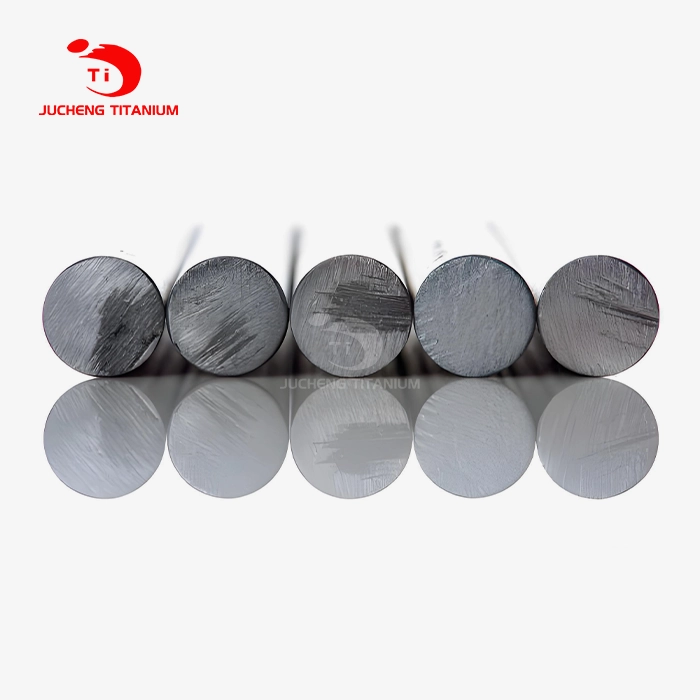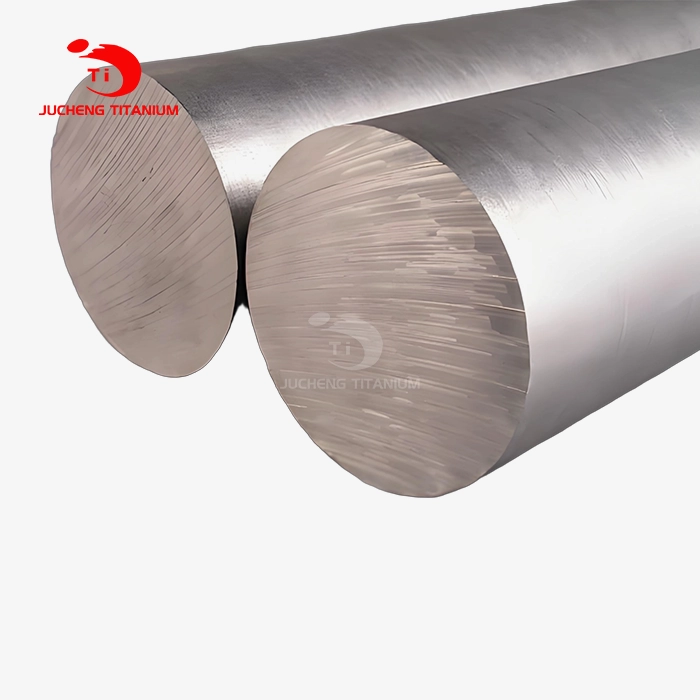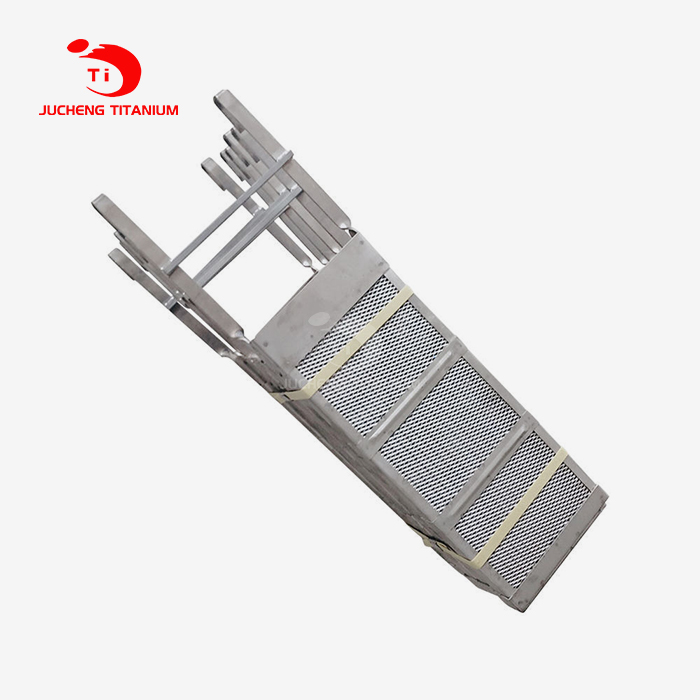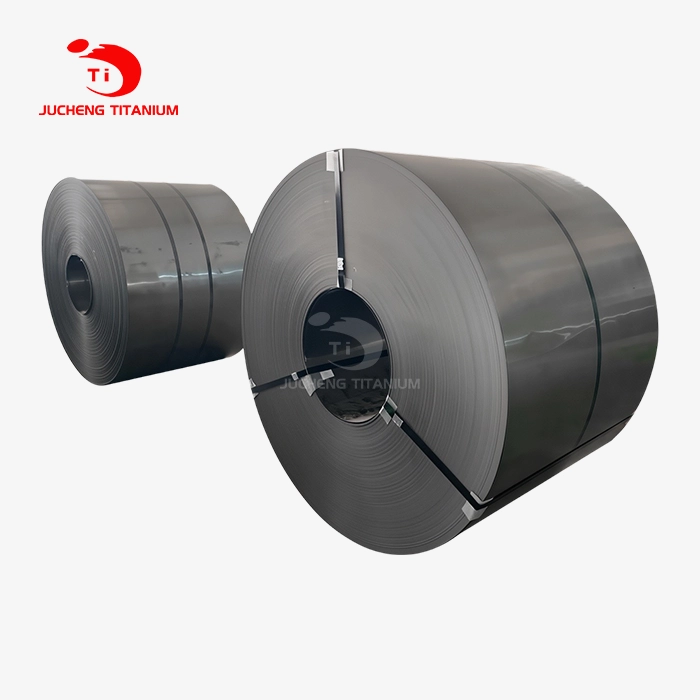

Introduction To Titanium Grade 1 Plates
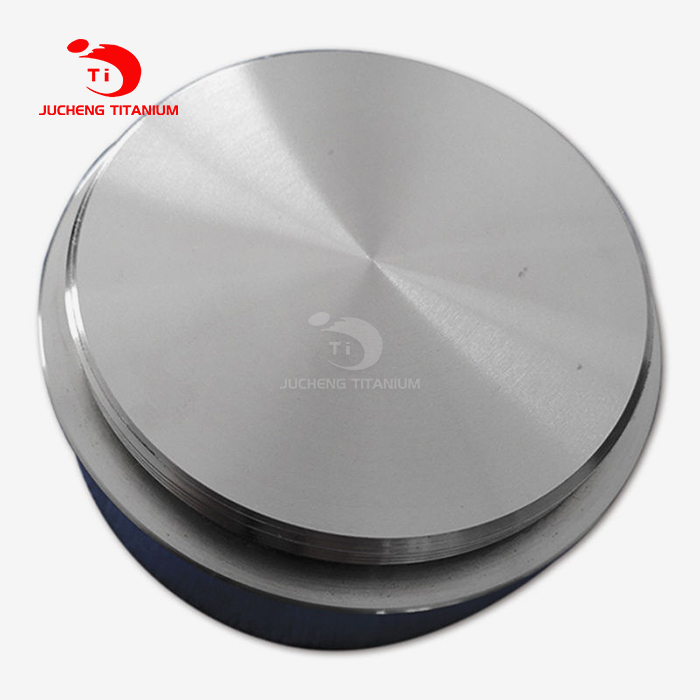
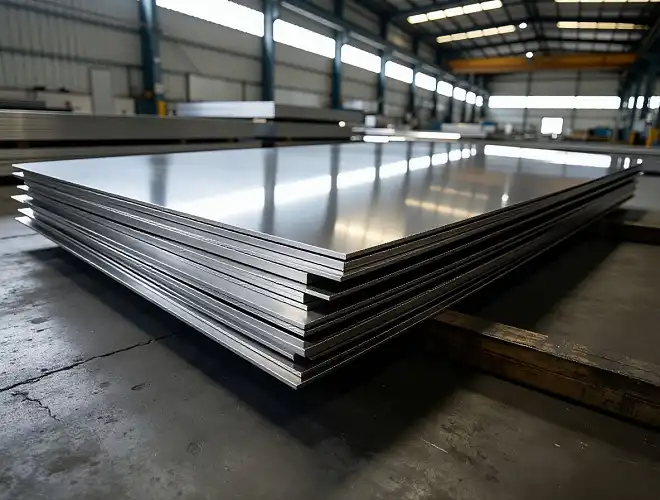
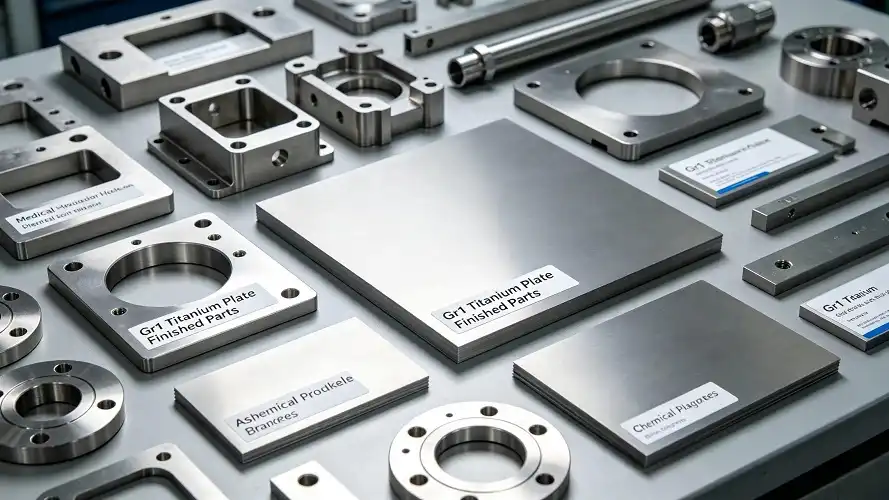
This Grade 1 titanium plate is the best form of titanium that can be bought in stores. It has unbeatable rust resistance and great formability, which makes it essential in many industrial sectors. ASTM B265 standards say that this grade of titanium is the softest and most ductile. It also has the least amount of alloying elements, usually with an oxygen level below 0.18%, which directly adds to its better fabrication properties. When purchasing materials for important uses in chemical processing, desalination systems, medical devices, and aerospace parts, procurement professionals need to know about the unique properties of Grade 1 titanium plates in order to keep costs low and ensure operational reliability. This type of commercially pure titanium strikes a good balance between mechanical performance and chemical stability. This makes it a smart choice when harsh corrosion environments threaten the longevity of equipment.
Understanding Grade 1 Titanium Plate: Properties and Composition
Chemical Composition and Purity Standards
Due to strict molecular controls, Grade 1 titanium plates are different from other widely pure types in terms of their chemical make-up. The ASTM B265 standards say that the highest amounts of nitrogen (0.03%), carbon (0.08%), hydrogen (0.015%), iron (0.20%), oxygen (0.18%), and titanium (0.001%) are all that are allowed. This managed amount of oxygen is very important because oxygen is an alpha stabiliser that affects both strength and flexibility. Grade 1 has less oxygen than Grades 2, 3, and 4. This makes it easier to cold form and weld, which lowers the cost of fabrication during complicated manufacturing processes. Because the material is pure, it will behave consistently during deep drawing, roll making, and other cold-working processes that would cause higher-strength types to crack.
Mechanical Properties and Performance Parameters
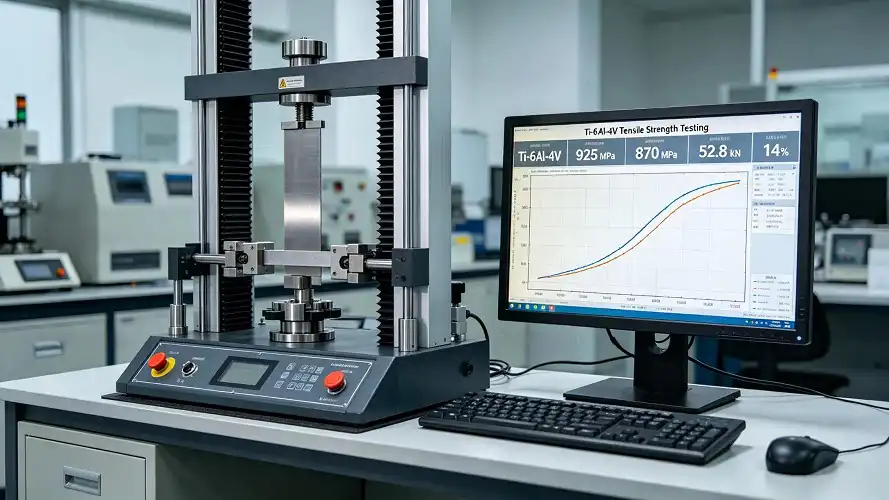
Grade 1 titanium plates have mechanical properties that make them ideal for uses that value rust protection over maximum strength. The lowest tensile strength is 35 ksi (240 MPa), the lowest yield strength is 25 ksi (170 MPa), and the material can stretch more than 24% in a two-inch gauge length. These features show how incredibly flexible the material is, letting it be formed in very tight shapes without having to go through any annealing steps in between. With a density of 4.51 g/cm³, it is stronger than most stainless steels and can be used in more chemical and marine environments. There is about 16 W/m·K of thermal conductivity, and the melting point is 1668°C. Because of these physical factors, Grade 1 plates can keep their shape at temperatures ranging from absolute zero to 300°C. However, if they are exposed to temperatures above 400°C for a long time, oxide scales may form that make them less resistant to corrosion.
Corrosion Resistance Mechanisms
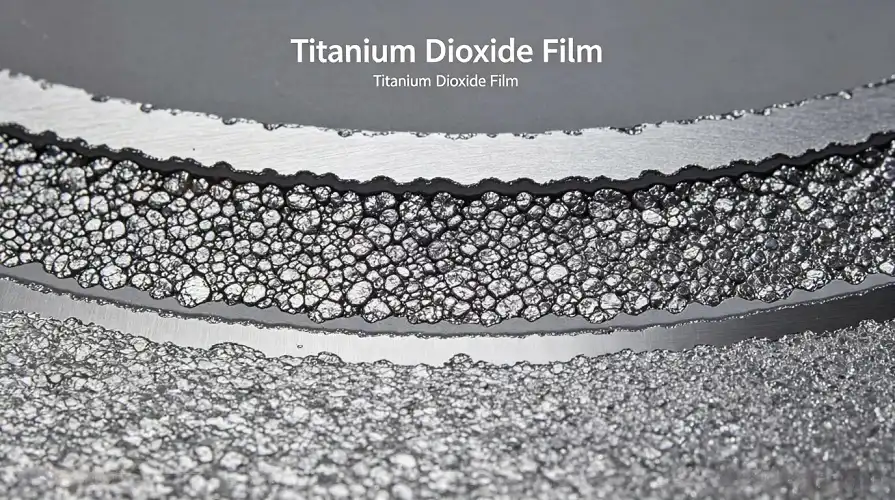
The very high resilience of Grade 1 titanium in harsh settings comes from the stable, self-healing formation of a titanium dioxide (TiO₂) passive film right away. When this protective layer is broken, it grows back within milliseconds. This makes it resistant to pitting, crevice corrosion, and stress corrosion cracking in chloride-rich environments, where stainless steels usually fail. At room temperature, the material is completely resistant to seawater, wet chlorine gas, chlorite solutions, and hypochlorite bleaching environments. Grade 1 works well in reducing acid situations, like when the concentration of sulphuric acid is less than 10%. However, Grade 7 or 12 is needed when inhibitors are not present. Because the oxide film stays stable at pH levels from 3 to 12, this grade can be used in chemical reactors that handle multiple process streams without worrying about material degradation.
Applications and Advantages of Grade 1 Titanium Plates
Industry Applications Across Critical Sectors
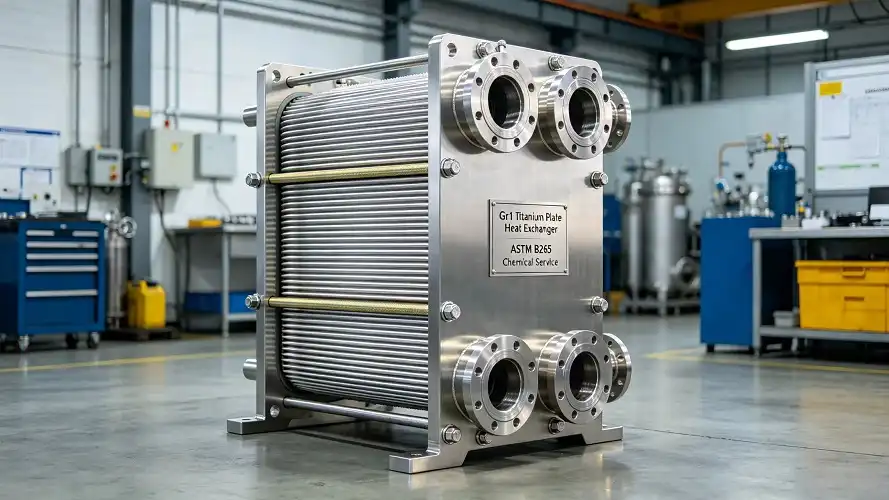
Grade 1 titanium plates are used a lot in chemical processing plants to build heat exchangers, pressure tanks, and reactor linings. This is because chlor-alkali processes make byproducts that are very acidic. Because the material can handle wet chlorine situations at temperatures up to 120°C, it doesn't break in a way that is as bad as nickel alloys and high-grade stainless steels do in similar working conditions. Desalination plants use this grade for evaporator tube sheets and flash chamber parts because high temperatures and fast-moving seawater can cause rust that is affected by microbes. Grade 1 is used in aircraft manufacturing for non-structural parts like firewalls, hydraulic tubes, and ducting systems, where formability is more important than high tensile strength. Because these plates are biocompatible and don't break down in autoclaves, they are used in the medical device industry for surgery tool cases, sterilisation trays, and housings for implantable devices.
Grade 1 plates are used in marine engineering projects for things like offshore platform parts, covers for fuel tanks, and seawater pipe systems. Because the material doesn't biofoul, it needs less maintenance than copper-nickel alloys and doesn't let toxic metals leak into marine ecosystems. More and more, automakers are using available pure titanium for parts of high-performance exhaust systems. The mix of resistance to corrosion and weight reduction makes these parts last longer and use less gas.
Comparative Advantages Over Alternative Materials
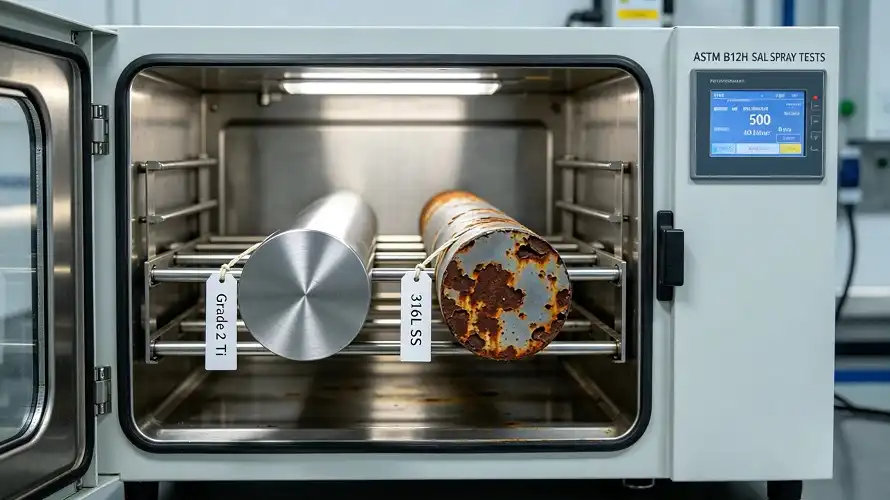
Compared to Grade 2 titanium, which is the most commonly used commercially pure type, Grade 1 titanium is easier to shape and resists rust a little better, but it has a 15% lower tensile strength. This trade-off is helpful when Grade 2 material would need to be heated more than once for deep drawing or complex forming operations. Compared to other types of stainless steel, like 316L, Grade 1 titanium is completely resistant to chloride-induced rusting and cuts the weight of parts by almost 40%. The material gets rid of worries about sensitisation during welding, which is a common problem with austenitic stainless steels and can cause intergranular rust in areas that are heated.
Grade 1 titanium plates are about as resistant to rust in oxidising environments as nickel alloys like Hastelloy C-276, but they are much cheaper to make. Nickel alloys are still better in reducing acid environments, though. Aluminium metals are lighter than titanium, but they don't have the same corrosion protection in chemical or sea environments, so they need protective coatings that are more difficult to keep up. Grade 1 titanium is more cost-effective in the long run because it lasts longer, needs less maintenance, and doesn't need protective coating systems that need to be replaced every so often.
Procurement Guide: Sourcing Grade 1 Titanium Plates for Global Businesses
Supplier Selection and Quality Verification
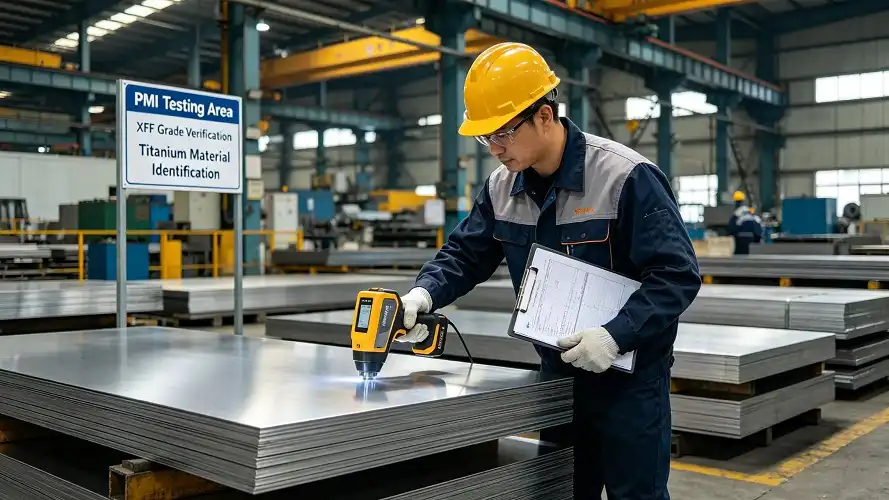
Verification of certifications, such as ISO 9001 quality management systems and industry-specific accreditations, like AS9100 for aircraft uses or ISO 13485 for medical device manufacturing, is needed to find approved suppliers. Material test reports (MTRs) must be sent with every shipment. They contain records of chemical analysis, mechanical testing, and heat treatment that can be linked to specific production lots. Before accepting a package, third-party inspection services can check the limits for dimensions, the finish on the surface, and the presence of internal flaws using ultrasonic testing. Suppliers should show that they can do special processing, such as precise cutting, edge preparation, and surface processes like mechanical cleaning or acid pickling.
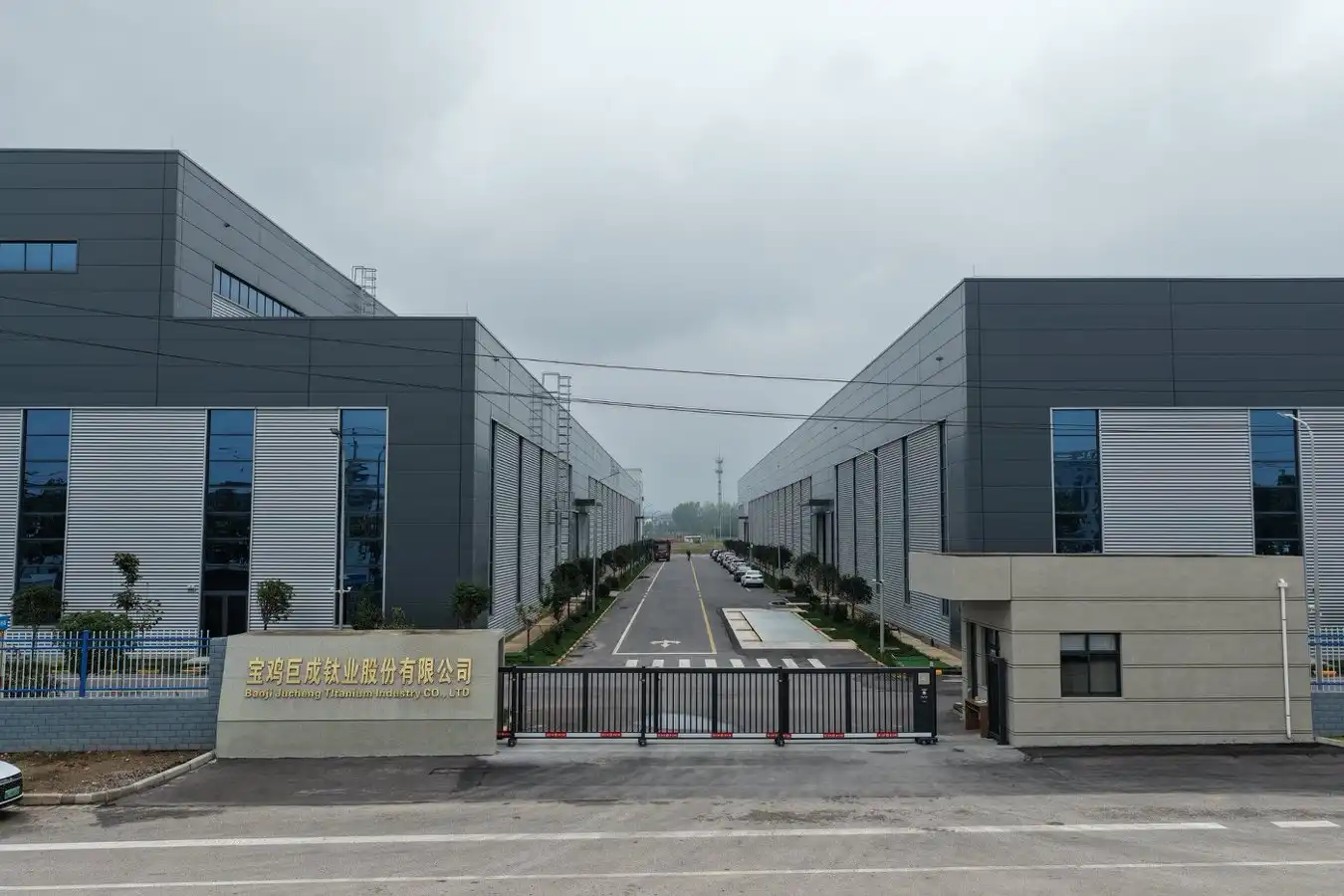
Baoji Jucheng Titanium Industry Co., Ltd. is a good example of a qualified supplier because it has been processing titanium for more than 20 years and has four invention patents and 41 utility model patents that are directly related to production processes. The company's status as a National High-Tech Enterprise and "little giant" designations show that it consistently produces high-quality products across more than 500 different types. Keeping an inventory of about 3,000 tonnes of titanium makes it possible to meet urgent project needs quickly, without the long lead times that come with ordering directly from the mill.
Pricing Factors and Cost Management
The price of Grade 1 titanium plate changes depending on how much is ordered, how much titanium sponge is available globally, and how pure the raw material must be. On the market right now, standard mill finish plates in common sizes usually cost between $15 and $25 per kilogram. Tight thickness tolerances, special surface treatments, or faster delivery all cost extra. When you negotiate a bulk purchasing agreement for more than 10 tonnes of goods per year, you can usually get discounts of 8–12% and make sure that you always have supplies for project-based procurement cycles. Customising sizes to cut down on waste during production can make up for higher costs per kilogram by increasing the rate at which materials are used.
Transportation arrangements have a big effect on overall landed costs, especially for foreign shipments that need special care because titanium reacts with other materials while being shipped. Combining packages to meet minimum container load requirements cuts down on per-unit freight costs, and proper packing keeps surfaces from getting dirty, which could affect material certifications. When negotiating, buyers should make sure they understand the Incoterms, since CIF prices can hide insurance and freight costs that are very different depending on the shipping route.
Geographic Sourcing Considerations
Different regions have a lot of manufacturing skills, and each one has strategic benefits for making purchases. Chinese manufacturers, mostly in Baoji's Titanium Valley, use integrated supply chains that go from making sponges to processing finished plates. This lets them offer competitive prices and a wide range of customisation options. Jucheng Titanium can make more than 1,500 tonnes of specialised titanium products every year, and they already have established export channels that serve markets in North America and Europe. U.S. manufacturers still have an edge when it comes to rapid prototyping, small-lot production, and shorter lead times for domestic projects, but they have to charge more because labour costs are higher. European providers stress tight tolerances and complete systems for tracking materials that are in line with strict rules in the aerospace and medicinal industries.
Making the Right Choice: Decision-Making Criteria for Titanium Plates
Grade Comparison for Application Optimization
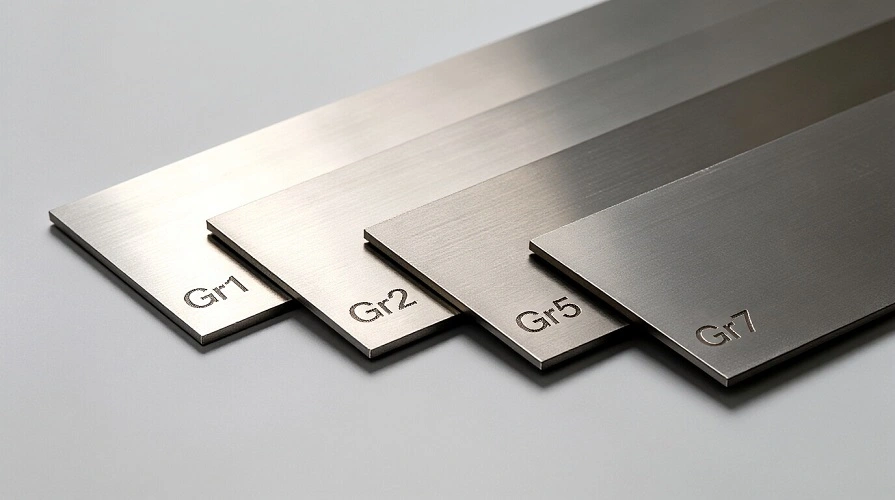
When choosing between available pure titanium grades, you have to weigh the need for strength against the need to be able to shape the metal and the intensity of the corrosion environment. Grade 1 titanium plates are best for uses where maximum flexibility allows for complicated shaping and rust conditions are within their resistance range. Grade 2 has 40% higher tensile strength and is still easy to shape, so it is usually used in general industrial settings with moderate mechanical loads and good corrosion resistance. Grade 3 is an option for intermediate strength that isn't often chosen because it doesn't offer many benefits over Grade 2. Because it has more oxygen, Grade 4 is stronger than some titanium alloys, but it is less flexible, which means it can't be cold-formed.
The most common titanium alloy is Grade 5 (Ti-6Al-4V). It has high strength-to-weight ratios that are needed for aerospace structural parts, but it costs a lot more than commercially pure grades and needs to be hot-formed to make complex shapes. Grade 7 (Ti-0.15Pd) and Grade 12 (Ti-0.3Mo-0.8Ni) are better at resisting reducing acids in chemical processing equipment. This is because they are made of strategic alloys, but they cost 30–50% more to buy than Grade 1. Grade 1 titanium plates are still the best choice when corrosion resistance is important, and strength needs to be less than 35 ksi, especially for parts that can be easily fabricated in cold conditions.
Durability and Lifecycle Cost Analysis
The total cost of ownership calculations need to include more than just the cost of buying the materials. They also need to include the cost of installation, the frequency of maintenance, and the expected service life. Because Grade 1 titanium doesn't break down in marine environments or chemical process streams, it can make equipment last 25 to 30 years instead of 8 to 12 years for treated carbon steel options. Getting rid of protection paint systems cuts down on the costs of inspection and reapplication that add up over the life of a building. Weldability without the need for post-weld heat treatment cuts down on the cost of labour and energy used in fabrication while maintaining the integrity of the joint and matching the properties of the base material.
When titanium comes into contact with less noble metals in electrolytic settings, it is important to pay attention to the galvanic corrosion potential. When you properly insulate or use mounting materials that are suitable, you can keep titanium from corroding faster and still keep its integrity. Because the material doesn't crack under stress, tracking programs that are needed for austenitic stainless steels in chloride service aren't needed, which cuts down on running costs.
Future Trends and Innovations in Grade 1 Titanium Plate Manufacturing
Advanced Production Technologies
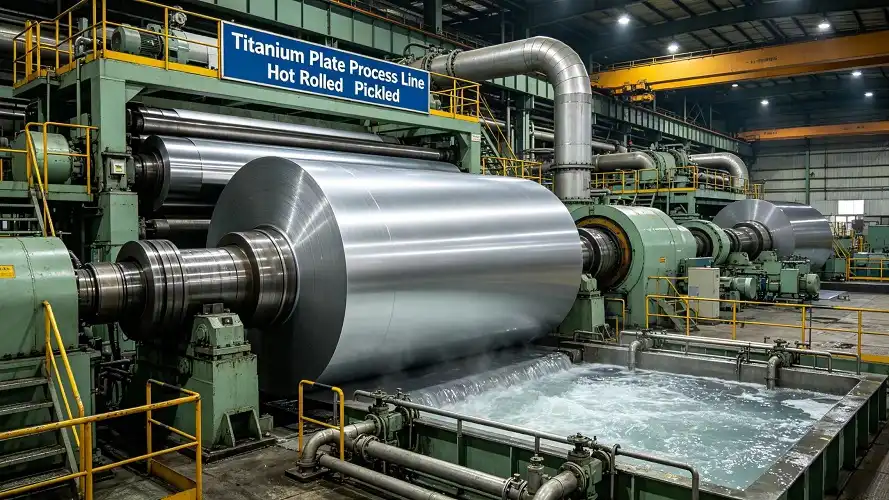
Through process improvements, new manufacturing innovations keep making Grade 1 titanium plates more consistent and cost-effective. Electron beam cold hearth melting (EBCHM) technology gets rid of flaws and high-density inclusions better than regular vacuum arc remelting. This makes the material cleaner and better at withstanding wear and tear. Using computer-controlled temperature profiling to improve hot rolling keeps the grain structure the same across the width of the plate, so there aren't many differences in the mechanical properties of the top and the center. Precision levelling systems that use roller setups and feedback settings can get flatness tolerances of less than 5 mm per metre. This means that less cutting is needed for uses with close tolerances.
New developments in surface treatment include laser texturing patterns that make coatings stick better to hybrid material systems and make heat transfer more efficient in thermal management applications. Using chemicals that are better for the environment to improve the pickling process cuts down on harmful waste while creating smoother surfaces that can be used right away without any extra work. These advances in technology have lowered the cost of making each unit, and they have also made Grade 1 titanium more useful in cost-sensitive markets where stainless steel used to be the standard.
Market Growth Projections and Emerging Applications
A study of the industry predicts that the demand for commercially pure titanium plates will continue to grow. This is because more renewable energy infrastructure is being built, especially in offshore wind sites and geothermal systems, where the high cost of the material is justified by its resistance to corrosion. Facilities that use electrolysis to make hydrogen need materials that don't rust for the cell parts. As the global hydrogen economy grows, Grade 1 titanium is the best choice. In municipal water treatment infrastructure replacement cycles, titanium is being used for more and more important parts because it has lower lifecycle costs, even though it costs more to buy.
Biomedical device miniaturisation opens up uses for thin-gauge Grade 1 plates in minimally invasive surgical instruments and wearable medical sensors that need to be biocompatible and MRI compatible. Researchers studying wire-arc deposition of commercially pure titanium may be able to make large structural parts in almost perfect shapes, which would cut down on material waste and the time needed for machining custom fabrications. Environmental sustainability concerns support titanium's ability to be recycled and last a long time, which is in line with the circular economy ideas that are becoming popular across many industries.
Conclusion
Grade 1 titanium plates are the best at resisting corrosion and can be shaped into any shape. They are used in chemical processing, naval engineering, medical devices, and aircraft parts. The commercially pure makeup of the material makes its fabrication behaviour predictable, and its passive oxide layer lets it work for decades in harsh settings without any upkeep. Partnering with certified suppliers who can provide consistent quality, technical support, and flexible customisation to meet the needs of each project is key to successful procurement. When you know the differences between commercially pure titanium types, you can choose a material that meets your performance needs and stays within your budget. As manufacturing technologies improve and new uses appear in biomedicine and renewable energy, Grade 1 titanium plates will continue to be a basic material that engineers use to build systems that last.
FAQ
1. What thickness ranges are available for Grade 1 titanium plates?
Standard mill production includes thicknesses from 4 mm to 80 mm, widths from 950 mm to 2500 mm, and lengths of up to 10,000 mm. Specialised rolling schedules let you get custom sizes to meet the needs of your specific project, but you usually have to order a minimum amount of these sizes.
2. How does Grade 1 titanium's corrosion resistance compare to other grades?
Because it has fewer intermediate elements, especially oxygen, Grade 1 is slightly more resistant to rust than Grades 2, 3, and 4 in most settings. The grade works really well in oxidising and chloride environments, but for reducing acid applications that don't need inhibitors, you need alloyed versions like Grade 7 or 12.
3. What certifications should accompany Grade 1 titanium plate purchases?
Shipments must come with material test results that show they meet the requirements of ASTM B265, ASTM F67, AMS 4911, or ASME SB265. Certificates should have records of heat treatment, chemical makeup analysis, and mechanical property tests. For important uses, industry-specific approvals like EN 10204 3.1 or 3.2 inspection certificates add another layer of proof.
Partner with Jucheng Titanium for Reliable Grade 1 Titanium Plate Supply
Jucheng Titanium is ready to help you with your buying needs by making an approved Grade 1 titanium plate that meets the strict ASTM B265 and ASTM F67 standards. Over the past 20 years, we've worked with aerospace manufacturers, chemical processors, and medical device companies to make custom-sized plates with thicknesses ranging from 4mm to 80mm. These plates can be hot-rolled, annealed, polished, machined, or acid-pickled on the outside. We keep 3,000 tonnes of goods on hand all year and can produce more than 1,500 tonnes a year, so we can meet tight project deadlines and offer OEM/ODM customisation for unique uses. Get in touch with our technical team at s4@juchengti.com to talk about your specific needs and get competitive quotes from a reputable Grade 1 titanium plate provider that cares about quality and dependable global operations.
References
1. Boyer, R., Welsch, G., & Collings, E.W. (1994). Materials Properties Handbook: Titanium Alloys. ASM International, Materials Park, Ohio.
2. Schutz, R.W. & Watkins, H.B. (1998). Recent Developments in Titanium Alloy Application in the Energy Industry. Materials Science and Engineering A, Volume 243, Issues 1-2, pp. 305-315.
3. Donachie, M.J. (2000). Titanium: A Technical Guide, 2nd Edition. ASM International, Materials Park, Ohio.
4. ASTM International (2021). ASTM B265-20a: Standard Specification for Titanium and Titanium Alloy Strip, Sheet, and Plate. West Conshohocken, Pennsylvania.
5. Peters, M., Kumpfert, J., Ward, C.H., & Leyens, C. (2003). Titanium Alloys for Aerospace Applications. Advanced Engineering Materials, Volume 5, Issue 6, pp. 419-427.
6. Sedriks, A.J. (1996). Corrosion of Stainless Steels and Titanium Alloys in Marine Environments. Corrosion Science, Volume 38, Issue 10, pp. 1773-1791.