
Titanium Grade 5 Seamless Tube for Precision Industrial Parts
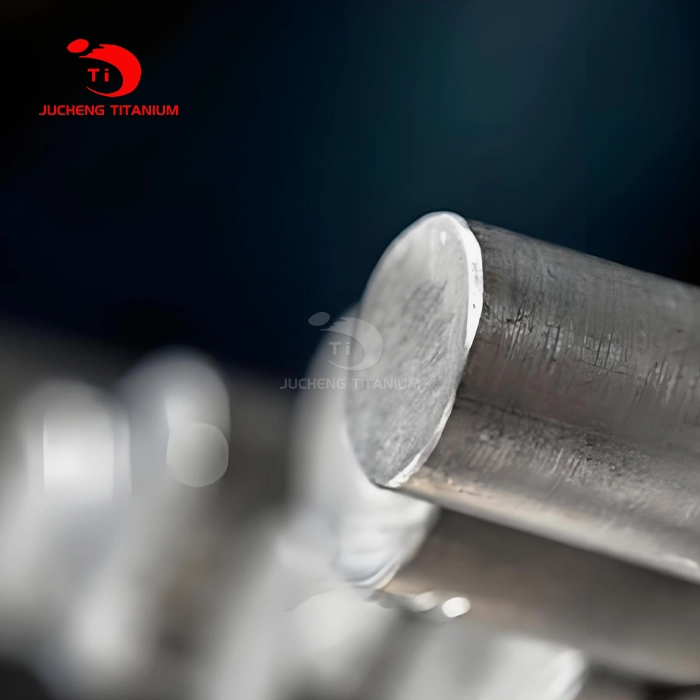
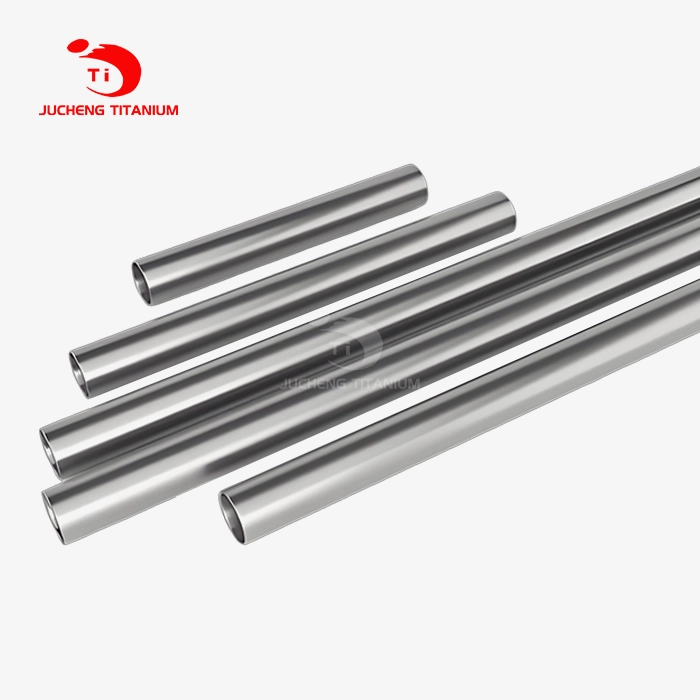
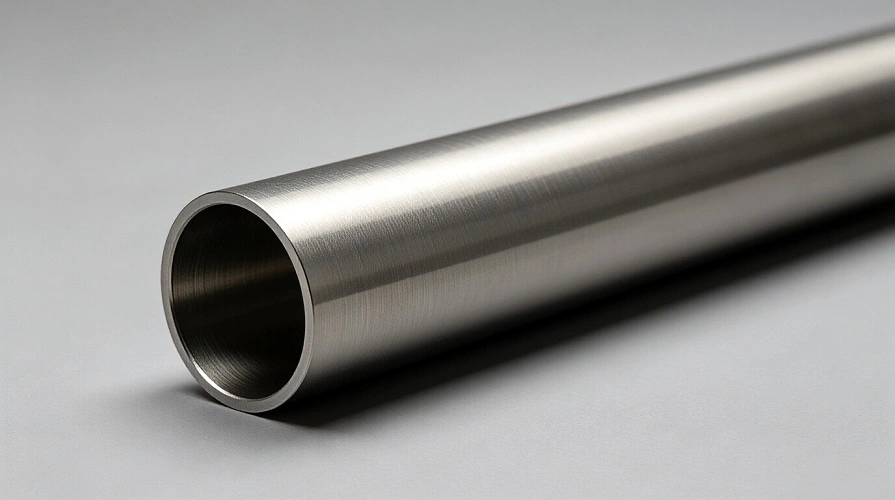
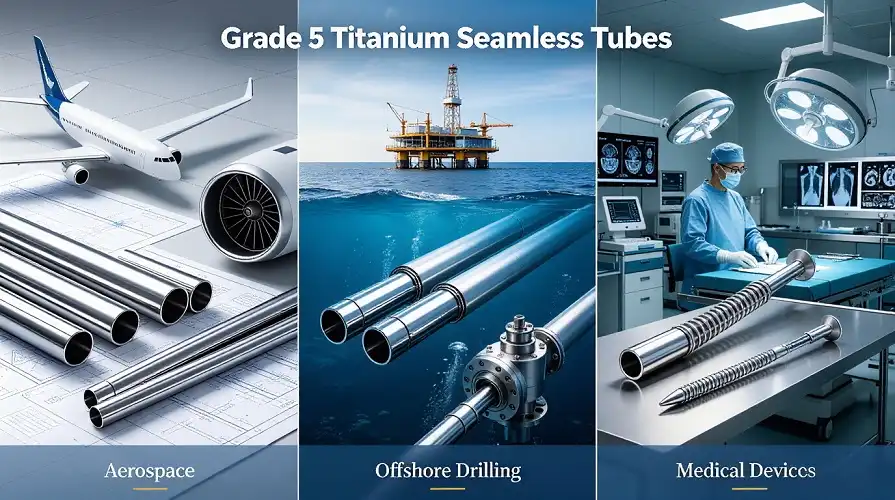
Titanium grade 5 seamless tube is the best option when engineers must reduce weight without jeopardizing structural integrity in high-pressure settings. This seamless tubing from Ti-6Al-4V alloy avoids weld seams, which break under cyclic load. Its strength-to-weight ratio and corrosion resistance make it ideal for aerospace hydraulic lines, offshore drilling instruments, and precise medical devices that require durability.
Understanding Titanium Grade 5 Seamless Tubes
The Chemical Foundation of Ti-6Al-4V Alloy
The alloy composition of the titanium grade 5 seamless tube is balanced: 6% aluminum strengthens and reduces density, while 4% vanadium stabilizes the beta phase, enhancing ductility and heat treatability. To avoid embrittlement, oxygen concentration is rigorously maintained below 0.20%, as validated by inert gas fusion analysis during quality assurance methods.
All Jucheng Titanium manufacturing batches meet strict compositional specifications. ASTM B861 and AMS 4943 tubes in our inventory ensure stability for procurement organizations handling long-term aerospace or defense contracts. Alpha-beta microstructures provide optimum room-temperature strength and 400°C stability.
Mechanical Properties That Define Performance
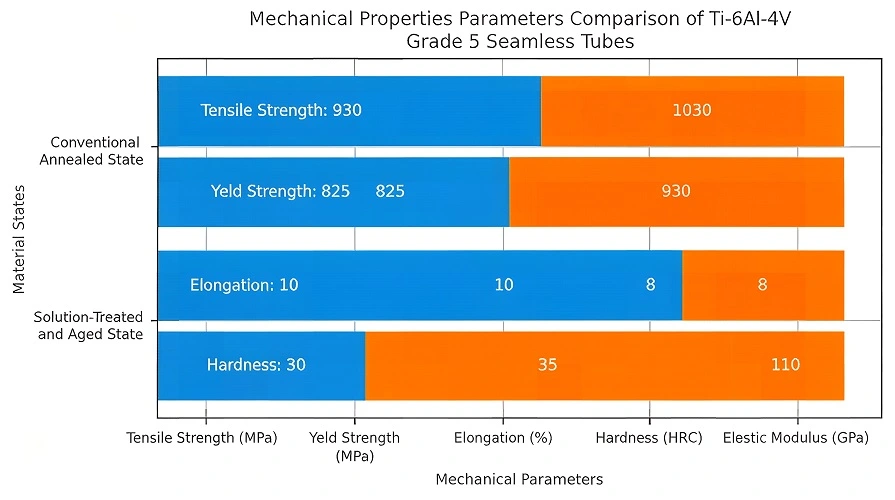
Titanium grade 5 seamless tube outperforms commercially pure titanium. Tensile strength averages 950 MPa, whereas yield strength is 828 MPa. This strong mechanical profile allows smaller wall sections with equal pressure ratings to stainless steel, meeting aeronautical weight reduction standards.
Elastic modulus is 113.8 GPa, giving structural components rigidity without brittleness. Actuation linkages and rotary tool housings provide exceptional wear resistance at 36 HRC. Fatigue resistance under cyclic loads is especially beneficial because seamless design removes weld heat-affected zones that concentrate stress and propagate cracks.
Heat Treatment Protocols for Enhanced Durability
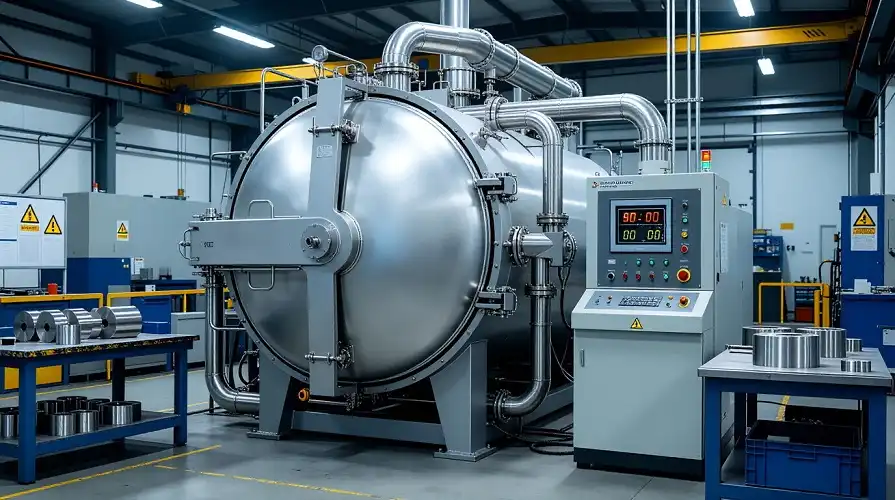
Most seamless titanium grade 5 seamless tubes are annealed. After cold working, this heat treatment recrystallizes the microstructure, restoring ductility for final assembly bending or flaring. Our facility uses vacuum annealing to avoid surface oxidation, allowing polishing or machining without material removal penalties.
Solution treatment and aging (STA) is a heat treatment option for high-strength applications. STA-condition tubes are only suited for components that do not need post-delivery shaping since they increase tensile strength over 1100 MPa but decrease elongation. Procurement teams should indicate the required metallurgical state during quoting to minimize downstream fabrication issues.
Comparing Titanium Grade 5 Seamless Tubes with Other Materials
Grade 5 Versus Grade 2 Titanium: Strength Trade-offs
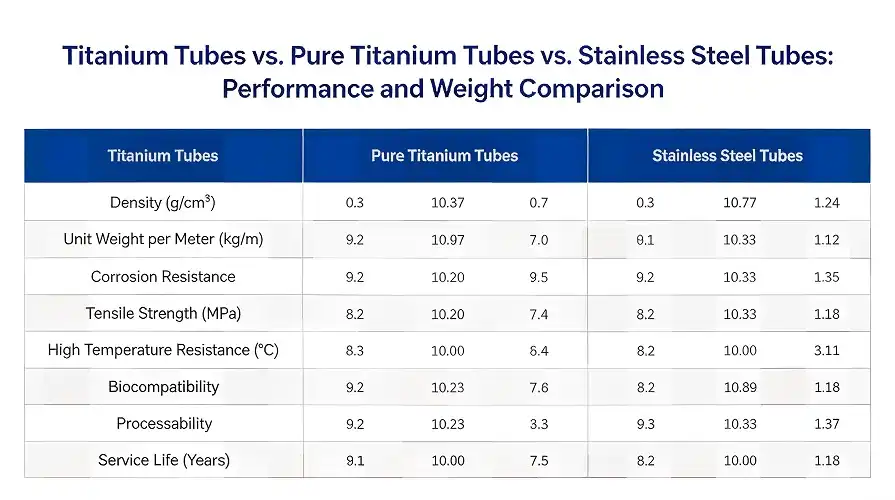
Formability and cost are better with commercially pure Grade 2 titanium, but its tensile strength is only 345 MPa, half that of Grade 5. This discrepancy is crucial in pressure vessel applications where wall thickness affects system weight. Hydraulic systems above 3000 psi need the titanium grade 5 seamless tube's strength margin for safety without bulk.
Both grades have high corrosion resistance in most industrial situations, although the titanium grade 5 seamless tube's alloying elements reduce hydrogen absorption during cathodic protection. Grade 5 costs 40-60% more due to component simplification or weight reductions offsetting material surcharges through lifetime value analysis.
Titanium Versus Stainless Steel: The Weight Penalty Reality
Stainless steel 316L tubing is a popular choice due to its existing supply chains and reduced upfront expenses. Titanium alloys weigh 56% less than steel at equal quantities. Transforming an aerospace hydraulic system from steel to Ti-6Al-4V seamless tubing can reduce structural mass by several hundred pounds, improving fuel economy or payload capacity during the aircraft's lifetime.
Titanium excels in offshore seawater corrosion. Chloride-rich conditions cause pitting and crevice corrosion in stainless steel, necessitating cathodic protection and periodic inspections. The passive oxide layer of titanium regenerates spontaneously, reducing maintenance expenses in subsea systems where access costs thousands of dollars every intervention. Due to lower marine servicing costs, the original investment returns quickly.
Seamless Versus Welded Construction: Structural Integrity Considerations
In welding tubing, base metal fusion causes longitudinal seams and microstructural discontinuities. Under pressure cycling, these weld zones concentrate stress due to the changed grain structures and flaws, such as partial penetration or entrapped slag. Seamless extrusion eliminates this weakness and provides homogeneous mechanical qualities around the tube.
Non-destructive testing standards vary greatly amongst building processes. Every seam of welded tubes must be ultrasonically or radiographically inspected, increasing inspection costs and rejection rates. Only dimensions verification and surface condition evaluation are needed for seamless tubes, simplifying quality assurance. Zero-tolerance industries, including aerospace hydraulics, nuclear instrumentation, and medical gas distribution, demand seamless construction at a minimum.
How are Titanium Grade 5 Seamless Tubes Manufactured?
From Billet to Hollow: Extrusion Processes
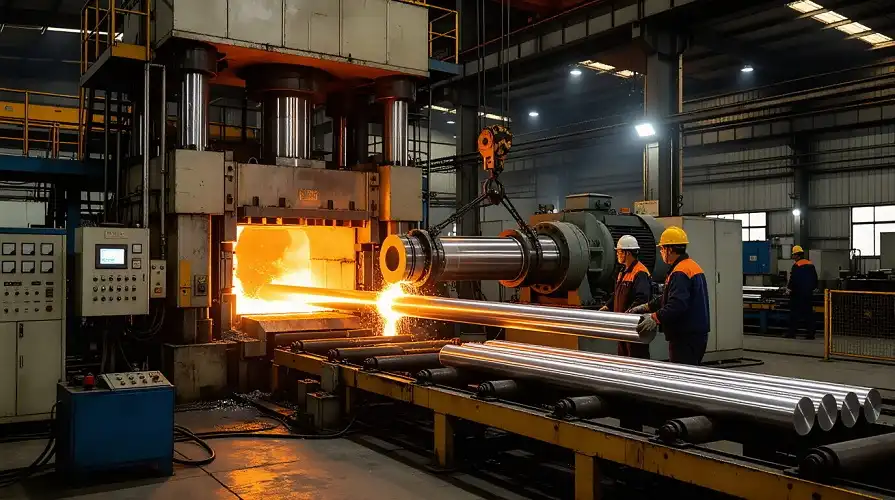
Vacuum arc remelted (VAR) titanium ingots are forged into cylindrical billets. Heating these billets to 900-1050°C makes the alloy ductile for plastic deformation. Mandrels regulate internal diameter accuracy while hot extrusion via dies generates the hollow shape.
Because Ti-6Al-4V flows strongly at high temperatures, extrusion demands a lot of force. Hydraulic presses with 5000+ tons of force move billets through carbide dies, lowering outer diameter and elongating tube length. Temperature, ram speed, and reduction ratio are tuned to minimize galling and internal cavities that undermine structural integrity.
For finer dimensional tolerances, tubes undergo several cold pilgering runs after extrusion. This cold-working method achieves tolerances of ±0.1mm for outer diameter standards by incrementally reducing diameter and wall thickness over a mandrel. To preserve ductility for forming, intermediate annealing cycles are needed after cold processing work-hardens the material.
Quality Assurance Through Rigorous Testing
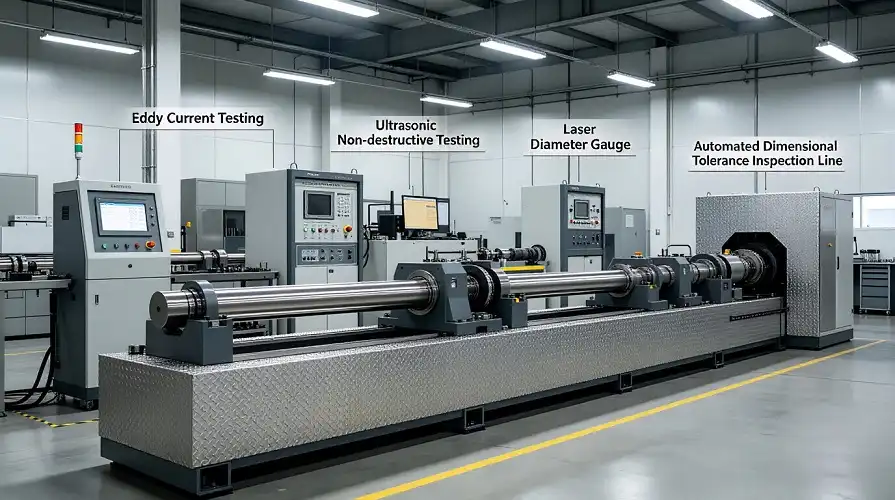
Jucheng Titanium tests every production batch before client release. Ultrasonic examination finds voids and inclusions that might cause fatigue fractures under stress. Eddy current testing detects scratches and pits that surpass ASTM B338 and ASME SB338 criteria.
For corrosion resistant titanium pipe, dimensional verification uses coordinate measuring devices for important assembly fit-up tasks, including tube straightness, concentricity, and wall thickness consistency. Statistical process control detects production patterns and corrects them before dimensional drift causes non-conformance. Every shipment includes material test results for chemical composition and mechanical qualities using optical emission spectroscopy and tensile specimen testing.
Traceability systems meet aerospace and defense material genealogical documentation by linking completed tubes to ingot heat numbers. This chain-of-custody evidence assists failure analysis investigations and aerospace supply chain AS9100 quality management system compliance.
Customization Capabilities for Specialized Requirements
Custom tube dimensions are common in precision industrial applications; standard tube diameters range from 3mm to 219mm, and wall thicknesses from 0.5mm to 20mm. Jucheng Titanium may offer non-standard sizes for prototype development or low-volume production.
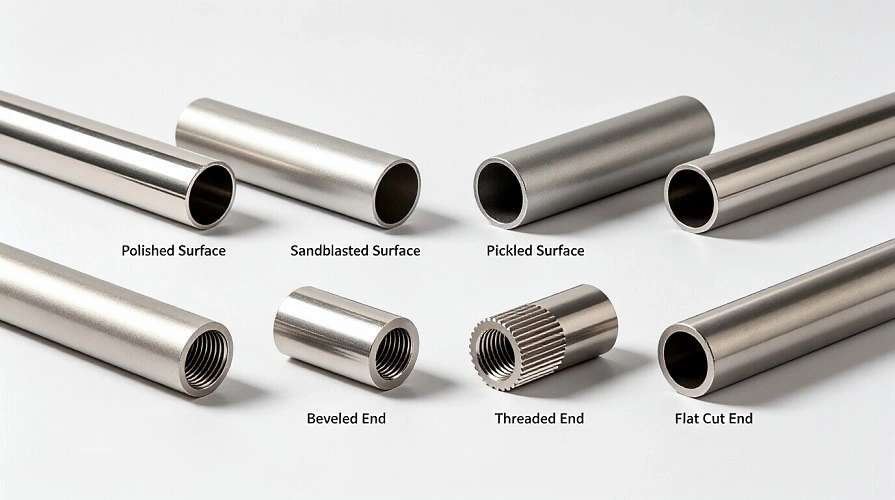
Acid-pickled surfaces eliminate heat treatment scale, bright-annealed surfaces are ideal for hygienic applications, and mechanically polished surfaces achieve sub-micron surface roughness for optical inspection systems. Per client designs, end preparations such as beveled edges for welding, threaded connectors, and precision-cut lengths save assembly facility secondary processes.
Custom configurations take 8-12 weeks from order confirmation to obtain raw materials, schedule manufacturing, and verify quality. Rush processing can shorten project schedules by using our 3,000-ton raw material inventories to start production faster than lean inventory providers.
Procurement Guide: Buying Titanium Grade 5 Seamless Tubes
Evaluating Supplier Credentials and Certifications
Mission-critical material sourcing involves significant supplier risk. The baseline expectation is ISO 9001 certification, but aerospace and defense procurement generally requires AS9100 registration to demonstrate knowledge with industry-specific criteria, including configuration control and first-article inspection methods.
Each shipment shall have material certificates referencing ASTM standards B337 for seamless pipe, B338 for condenser tubing, or B861 for general corrosive use, as well as AMS 4942 aerospace material property parameters. For initial vendor qualification, third-party test laboratory validation of mechanical qualities and chemical composition lends credibility to supplier paperwork.
Export compliance is crucial for foreign buyers. ITAR, export license, and customs paperwork experts expedite cross-border transactions that block projects throughout regulatory review processes. Jucheng Titanium's export operations service Europe, North America, and Southeast Asia, with logistical agreements providing dependable delivery to major industrial hubs.
Understanding Pricing Dynamics and Cost Optimization
Global titanium sponge markets set Ti-6Al-4V seamless tubing material costs at $45-75 per kilogram, depending on order volume, specification complexity, and delivery urgency. Tube processing costs $15-30 per kilogram due to energy-intensive manufacturing and sophisticated equipment for smooth fabrication.
Through numerous techniques, volume commitments unlock special pricing. Bulk orders spread setup expenses over manufacturing runs, lowering per-unit processing fees. Demand insight from annual supply agreements lets suppliers manage raw material procurement scheduling to capitalize on market circumstances. Blanket orders with planned releases streamline cash flow and material availability by balancing buyer and supplier inventory carrying costs.
TCO often justifies the titanium grade 5 seamless tube's material premium over alternatives. Operational savings exceed original procurement costs due to greater corrosion resistance, fatigue resistance, and weight-driven performance benefits. Fuel savings alone can yield a 10:1 return on material investment in aerospace applications over 20 years.
Logistics and Lead Time Management
Global supply channels complicate material procurement. Ocean freight for consolidated container loads is cost-effective but takes 6-8 weeks for trans-Pacific shipping. Project delays incur contractual penalties that surpass accelerated shipping fees, thus air freight speeds transit to days rather than weeks.
Our Baoji manufacturing site stocks annealed common tube diameters for fast standard specification compliance. For grades Gr1, Gr2, Gr5, Gr9, and Gr12 in popular diameters, stock availability allows delivery within 2-3 weeks. The 8-12 week production time applies to custom orders with particular dimensions or surface treatments.
In international transactions, incoterms selection affects landed cost calculations and risk transmission. FOB (Free on Board) arrangements require the buyer to pay for transportation and insurance, whereas DDP accounts for all expenses till delivery, simplifying budgeting. Procurement experts negotiate terms that match their logistics capability and risk tolerance.
Advantages of Titanium Grade 5 Seamless Tubes in Industrial Applications
Strength-to-Weight Ratio Superiority in Demanding Environments
Ti-6Al-4V seamless tubing's mechanical efficiency changes weight-sensitive design choices. Grade 5 tubes allow aerospace hydraulic systems to surpass 5000 psi while weighing half as much as steel assemblies. Lighter tubing necessitates weaker mounting brackets, which lower airframe stresses and allow thinner skins or higher payloads.
Motorsports engineers use this advantage in suspension components when unsprung weight immediately diminishes handling response. Formula 1 pushrods made from seamless Ti-6Al-4V tubing weigh 40% less than steel ones and are rigid enough to transmit suspension loads without geometry adjustments. Lap time increases of tenths of seconds justify material expenses in professional racing, where competitive advantages fetch premium pricing.
Titanium grade 5 seamless tubes are used in offshore drilling downhole instrumentation packages at 15,000 psi. Measurement-while-drilling sensors can withstand thousands of drilling cycles due to their strong yield strength and fatigue resistance under cyclic pressure loading. Reliable equipment in these remote situations eliminates costly fishing operations to collect broken tooling from wellbores miles underwater.
Corrosion Resistance Extending Component Service Life
Titanium's passive oxide layer grows instantly when exposed to oxygen, protecting it against harsh chemicals. These films self-heal when damaged, unlike protective coatings that deteriorate mechanically or chemically. Seamless Grade 5 tubes in sour gas conditions with hydrogen sulfide prevent high-strength steel fractures from sulfide stress cracking, reducing catastrophic petrochemical processing failure mechanisms.
Titanium's corrosion resistance shines in seawater. For shipboard seawater cooling systems, fire suppression mains, and ballast lines, naval architects require Ti-6Al-4V seamless tubing with a 30-year service life without replacement. The absence of corrosion product accumulation maintains full flow capacity throughout the vessel's operational lifetime, contrasting with copper-nickel or stainless steel systems that experience progressive fouling and pitting damage.
Chemical processing with highly concentrated acids challenges most metals. The resistance of titanium to oxidizing acids like nitric acid and chromic acid allows smooth tube deployment in reactor cooling coils and distillation column condensers. Pharmaceutical and high-purity chemical production, where trace metal content is prohibited, benefits from the material's stability.
Economic Justification Through Lifecycle Cost Analysis
Titanium grade 5 seamless tube costs three to six times more than steel or stainless steel. The upfront premium must be justified by total cost of ownership models that account for installation labor, maintenance intervals, replacement frequency, and operational performance consequences during the asset's service life.
Value is driven by maintenance expense avoidance. Critical system corrosion failures need emergency shutdowns, accelerated parts procurement, and overtime work, which raises repair costs. Corroded pipe failures cannot be tolerated on offshore installations with daily operational costs over $500,000. Titanium seamless tubes for essential service avoid this failure mechanism, turning unexpected maintenance occurrences into decades-long replacements.
Inefficient systems with corrosion quietly incur performance deterioration costs. Corroded heat exchanger tubes reduce thermal transfer coefficients, requiring process temperature modifications or higher utility consumption to sustain production. Pitted aircraft hydraulic lines release contaminated particles that harm precise servo valves, requiring premature hydraulic system component replacements. Titanium's robust surface maintains design performance over decades.
Conclusion
Titanium grade 5 seamless tube represents a strategic material choice for industries where component reliability, weight optimization, and corrosion resistance define competitive advantages. The mechanical properties of Ti-6Al-4V alloy and seamless manufacturing eliminate weld-related vulnerabilities, resulting in performance unmatched by conventional materials. To meet project deadlines, procurement managers should evaluate suppliers based on certification depth, customization flexibility, and inventory availability. The economic argument for titanium increases when lifespan costs replace material price comparisons, demonstrating large returns from increased service life and avoided maintenance.
FAQ
Q1: Why are seamless tubes preferred over welded tubes in aerospace applications?
Seamless structure avoids cyclic pressure loading stress concentration areas at weld seams. Each flight cycle, aerospace hydraulic systems endure pressure changes, causing fatigue stress and fracture propagation in weld heat-affected zones. The homogeneous microstructure of seamless tube walls properly distributes load, eliminating premature fatigue failures that halt aircraft for unplanned maintenance.
Q2: How can buyers verify that material certifications meet project requirements?
Request production lot-specific material test reports (MTRs) on chemical composition and mechanical qualities. Compare stated values to ASTM B861 and AMS 4943 limitations. Suppliers who are confident in their quality welcome third-party laboratory certification. Aviation and defense applications require supply chain integrity, which is shown by traceability of completed tubes to ingot heat numbers.
Q3: What customization options exist for specialized industrial requirements?
On engineering drawings, dimensional customisation allows non-standard outside diameters, wall thicknesses, and cut lengths. Acid-pickled to mechanically polished surfaces achieve predetermined roughness levels. Beveling for weld prep, threading for mechanical connections, and precision squareness for critical fit-up dimensions are end preparations. The manufacturing flexibility of Jucheng Titanium allows iterative design development without tooling change penalties from prototype to production volumes.
Partner with Jucheng Titanium for Your Ti-6Al-4V Seamless Tube Needs
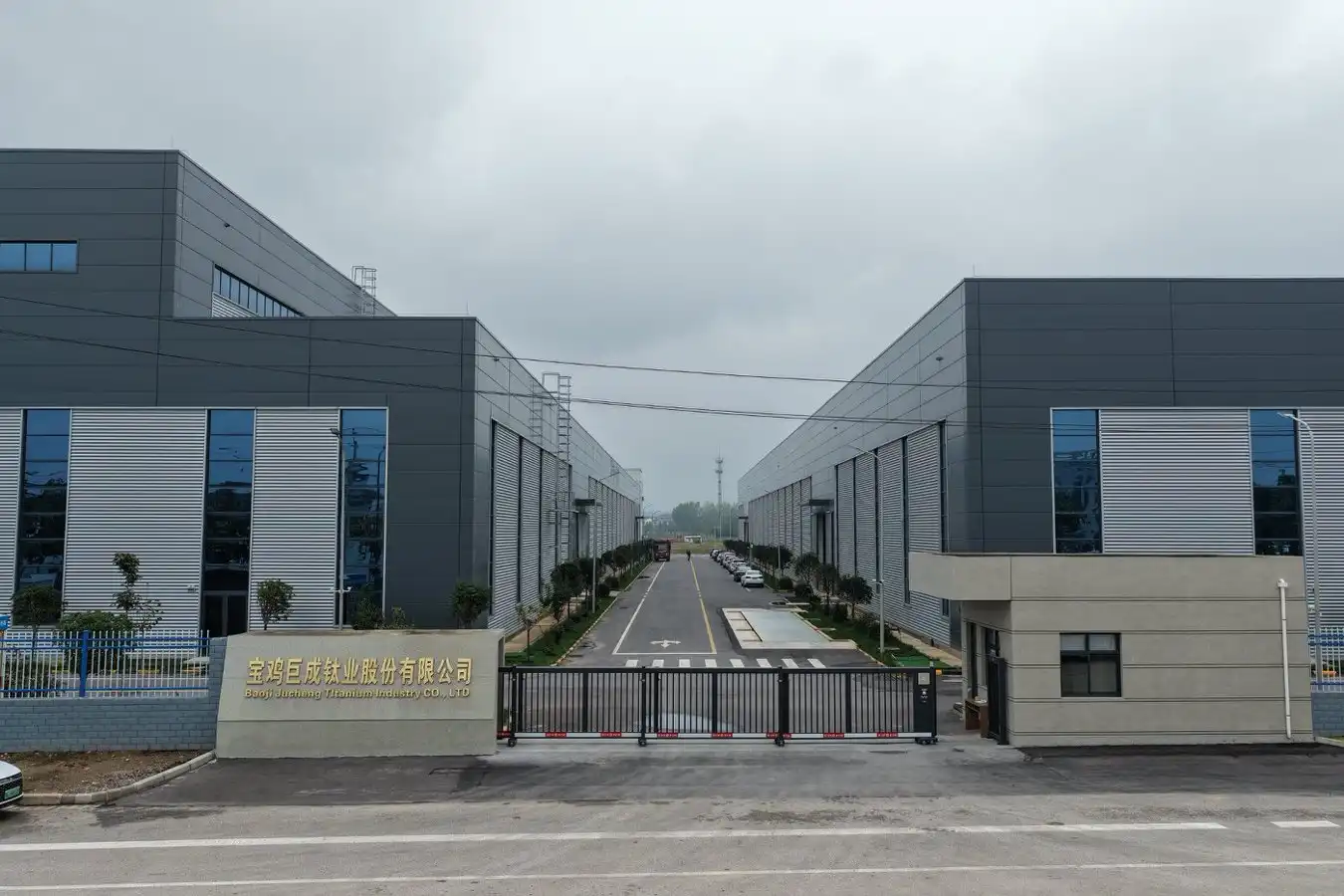
Baoji Jucheng Titanium Industry offers titanium grade 5 seamless tube made to aerospace and industrial specifications for precision components. Our 20+ years of titanium processing knowledge and 3,000 tons of inventory make us a responsive titanium grade 5 seamless tube supplier that can fulfill urgent project deadlines without compromising quality.
We offer engineering depth beyond material supply as a National High-Tech Enterprise with 45 titanium production patents. Our technical team works with procurement and design engineers to optimize material parameters, offer cost-effective alternatives, and give metallurgical advice to ensure component performance meets application requirements. When field conditions prove unexpected, comprehensive after-sales service includes material performance assessment and failure investigation.
Contact our sales staff at s4@juchengti.com to discuss seamless tube needs. Detailed prices reflecting your volume commitments, delivery timelines, and customisation demands ensure fair pricing without hidden costs. Discover how working with a trusted titanium grade 5 seamless tube manufacturer turns supply chain reliability into a competitive advantage.
References
1. Boyer, R., Welsch, G., & Collings, E.W. (1994). Materials Properties Handbook: Titanium Alloys. ASM International, Materials Park, Ohio.
2. Donachie, Matthew J. (2000). Titanium: A Technical Guide, 2nd Edition. ASM International, Materials Park, Ohio.
3. Lutjering, Gerd & Williams, James C. (2007). Titanium, 2nd Edition. Springer-Verlag, Berlin Heidelberg.
4. ASTM International (2021). ASTM B861-21: Standard Specification for Titanium and Titanium Alloy Seamless Pipe. West Conshohocken, Pennsylvania.
5. SAE International (2019). AMS 4943G: Aerospace Material Specification for Titanium Alloy Tubing 6Al-4V Annealed. Warrendale, Pennsylvania.
6. Peters, M., Kumpfert, J., Ward, C.H., & Leyens, C. (2003). Titanium Alloys for Aerospace Applications. Advanced Engineering Materials, Volume 5, Issue 6, pp. 419-427.