
Are titanium rods flexible?
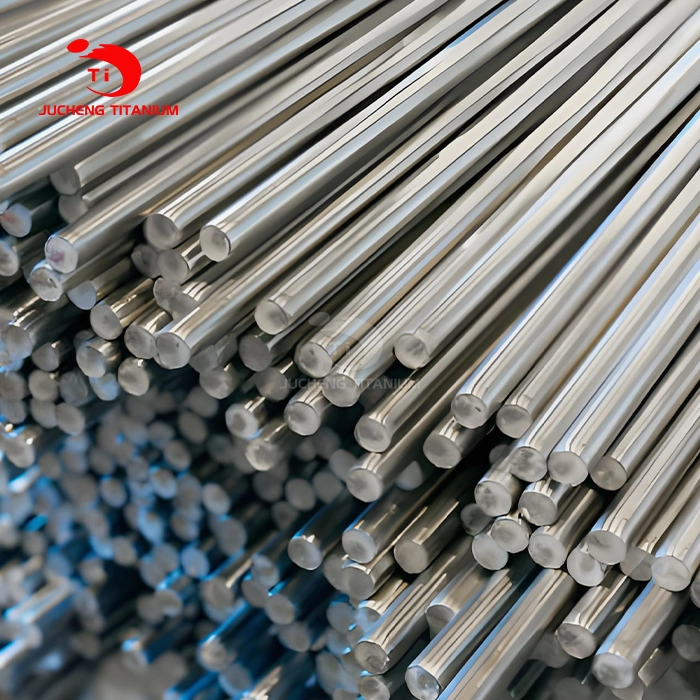
Titanium rods made of titanium are flexible, which makes them good for tough industrial uses. Titanium is more flexible compared to hard materials because it has an elastic modulus of about 110 GPa. This means that it can deform under stress while still keeping its structural integrity. This flexibility changes a lot depending on the grade of titanium. Commercially pure grades (Gr1–Gr4) are more flexible than combination grades like Ti-6Al-4V (Gr5). Titanium bars are very important for aerospace fasteners, medical implants, and chemical processing equipment because they can bend without permanently changing shape and have very high strength-to-weight ratios. This is because controlled flexibility keeps the equipment from breaking under cyclic loading conditions.
Understanding Titanium Rods and Their Flexibility
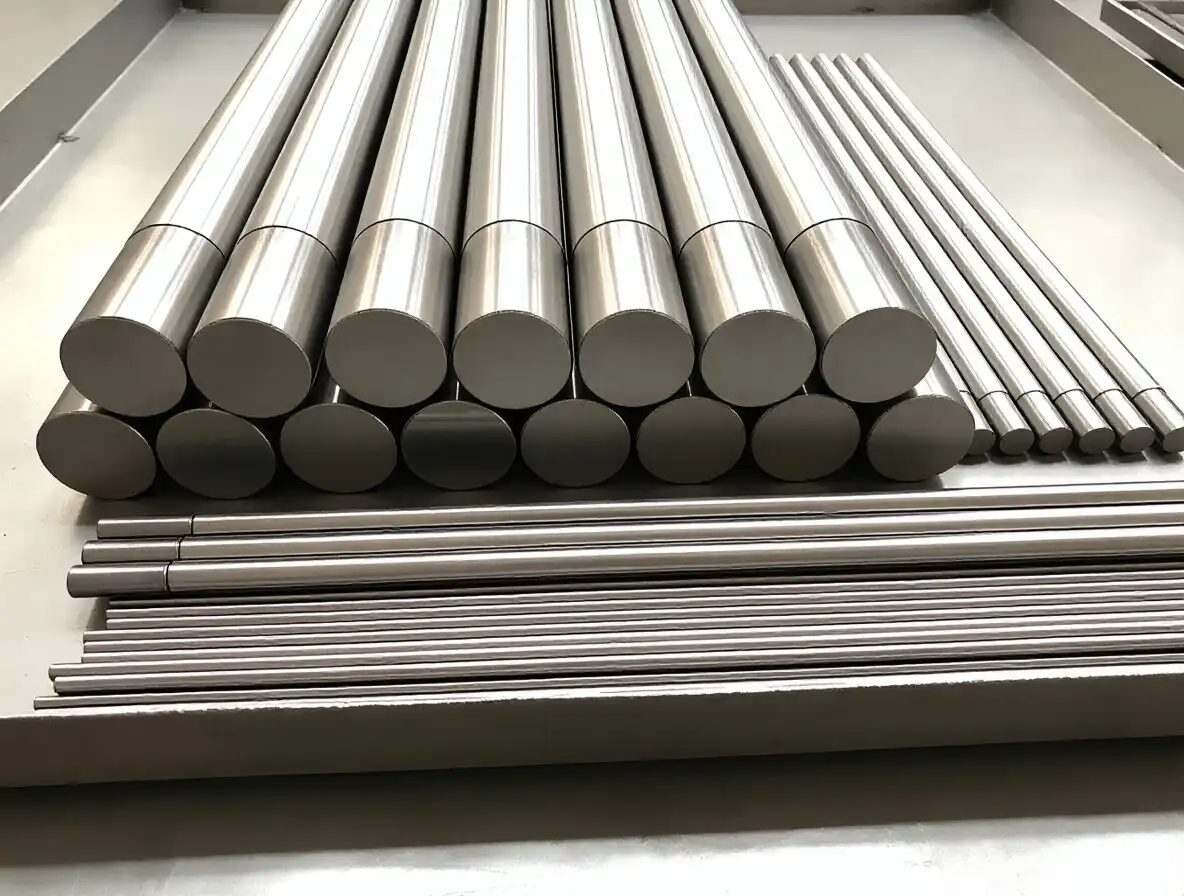
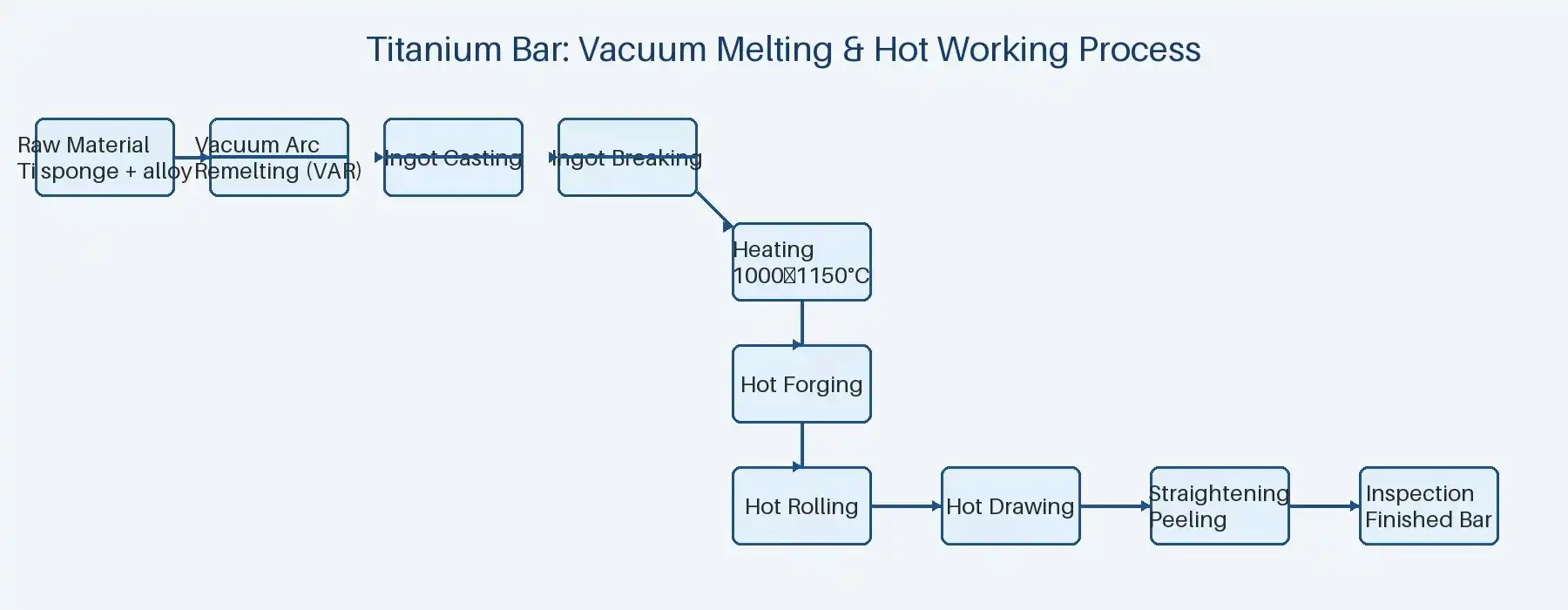
Vacuum melting, casting, and hot rolling are all exact processes that are used to make titanium bars. The unique mechanical properties of these cylinder-shaped parts make them stand out from other materials. In particular, they have the right amount of strength and can be shaped in a controlled way.
Chemical and Physical Properties Affecting Flexibility
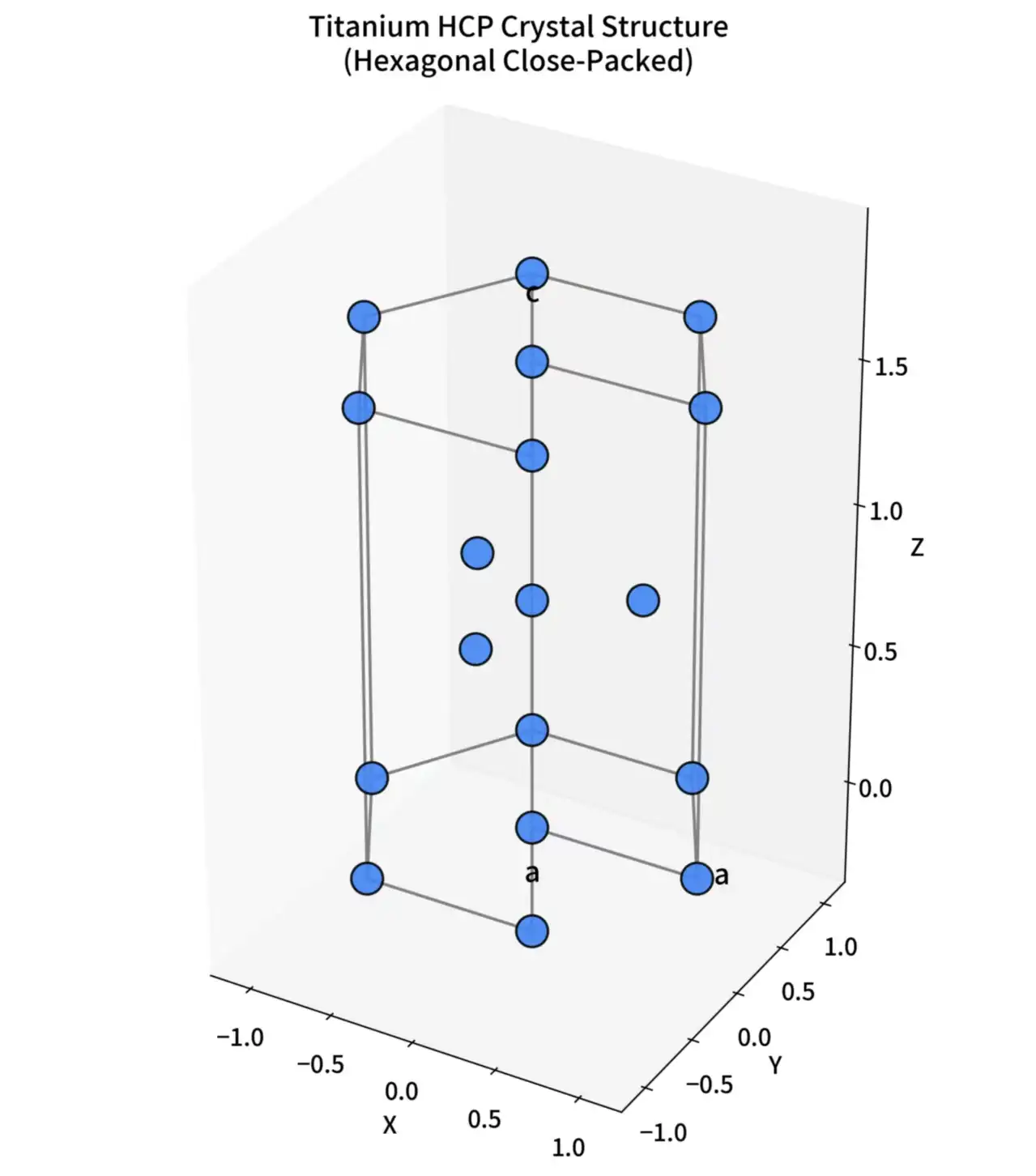
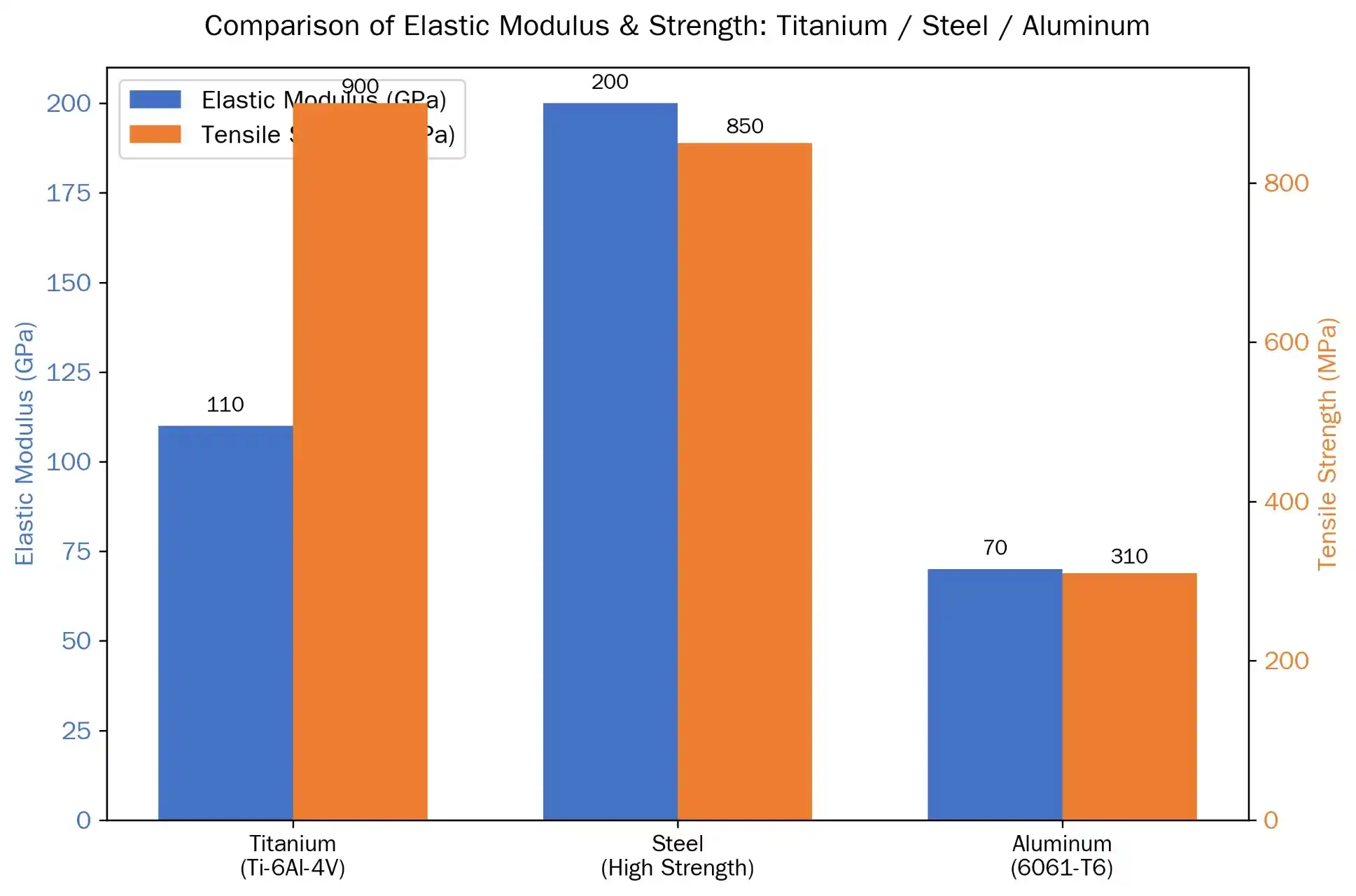
Titanium bars can be bent even though they are made of chemicals that make them hard. Even though pure titanium is solid at room temperature, its elastic modulus is only 110 GPa, while steel's is 200 GPa. This is because titanium has a hexagonal close-packed (HCP) crystal structure. Since the material isn't as hard, it can bend more when weight is put on it without breaking.
Titanium has a great strength-to-weight ratio of 4.51 g/cm³, which is higher than that of aluminum and closer to that of steel. It is also more flexible than steel. Based on the grade, the material can stretch between 15% and 24%, which lets you bend it in a controlled way during production and service uses.
Comparative Analysis with Alternative Materials
Comparing titanium rods to steel, aluminum, and carbon fiber ones shows that they are more flexible. Even though steel bars are stronger in the end, they can break quickly in harsh conditions. Aluminum is very bendable, but it doesn't resist corrosion well enough to be used in chemical and sea settings. Titanium is better at withstanding high temperatures and has properties that are the same in all ways as carbon fiber materials.
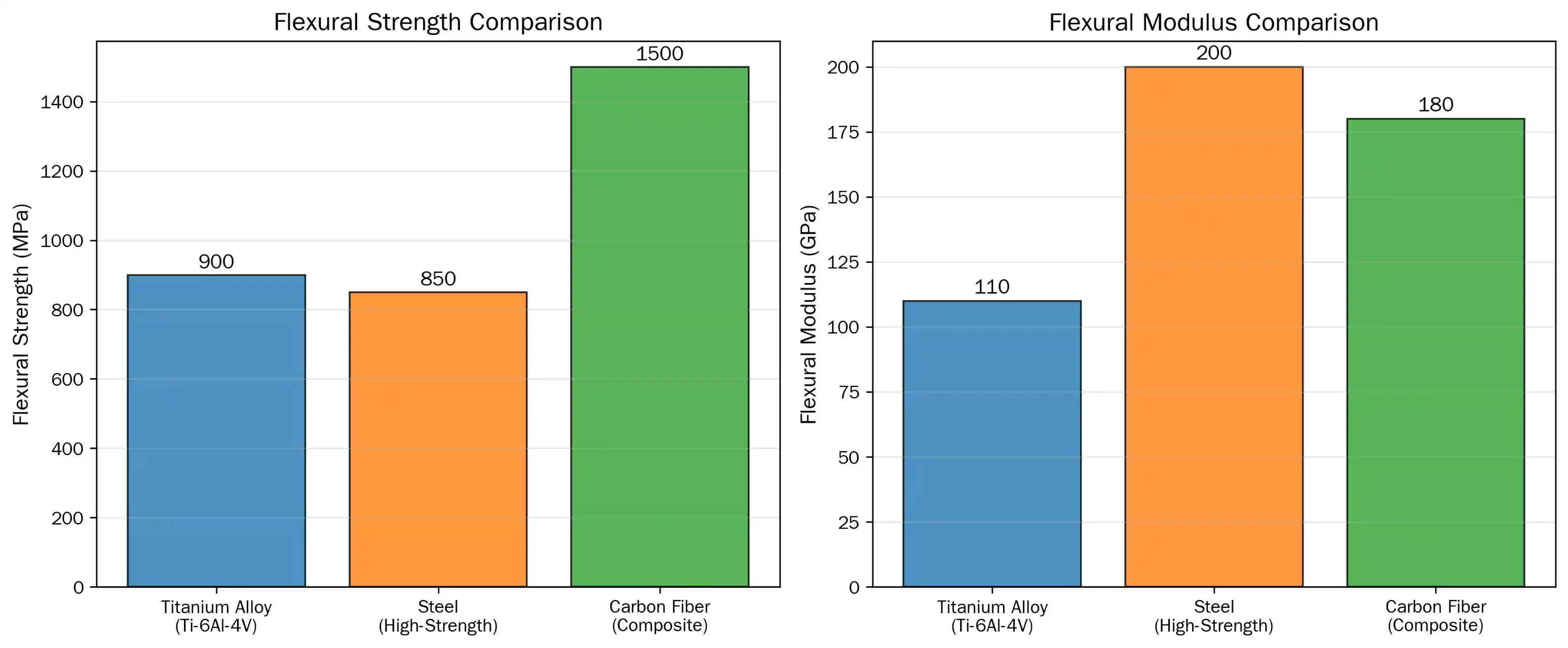
Titanium bars are useful in places where steel would rust quickly, and aluminum would not be strong enough, because they are both flexible and don't rust. This balance is what makes aircraft manufacturers rely on titanium parts for important tasks that need to be strong but never too flexible.
Factors Influencing the Flexibility of Titanium Rods
The flexibility of titanium bars is affected by many factors, such as the choice of material grade, the manufacturing method, and the size requirements. When procurement workers understand these factors, they can choose the best materials for each purpose.
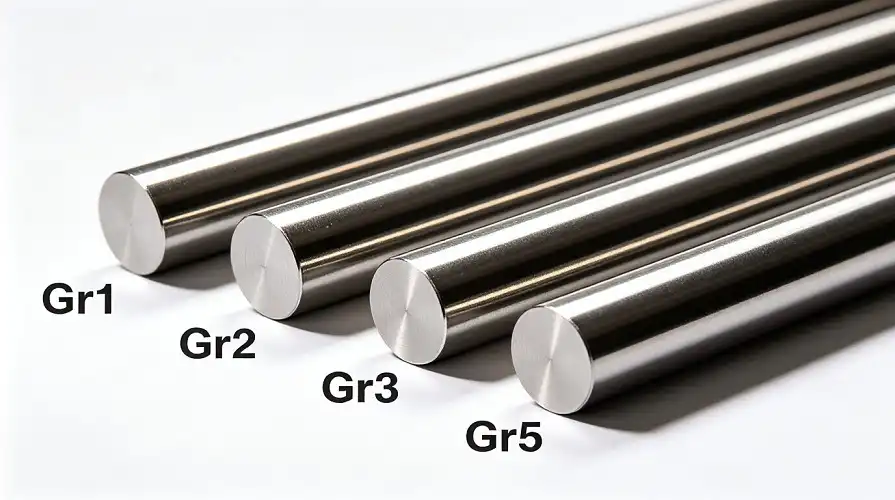
Grade-Specific Flexibility Characteristics
Based on their chemical make-up and texture, different types of titanium have different levels of flexibility. For industrial use, these are the main types that are available:
- Commercially Pure Grades (Gr1–Gr4): These grades are the most flexible, with Grade 1 being the most flexible at 24% extension. Grade 2, which is the most common business grade, is a good mix of strength and flexibility for most industry uses.
- Alpha-Beta Alloys (Gr5/Ti-6Al-4V): This aerospace-grade alloy is less flexible than pure grades but has a great strength-to-weight ratio. The additions of aluminum and vanadium make the metal stronger while still allowing structural parts to be flexible enough.
- Enhanced Low Interstitial Grades (Gr23/Ti-6Al-4V ELI): This grade is made for medical uses and makes biological devices more flexible while still meeting biocompatibility standards.
These grade differences let makers perfectly match the features of the material to the needs of the application. This ensures the best performance in flexibility-critical applications.
Dimensional Impact on Flexibility Performance
Rods vary in how bendy they are when loads are put on them based on their length and thickness. Basic beam theory says that rods with smaller widths are more flexible per unit length. Different-sized rods, from ¥6mm to ¥450mm, are not as flexible as each other. For precise tasks, rods with smaller sizes are easier to bend.
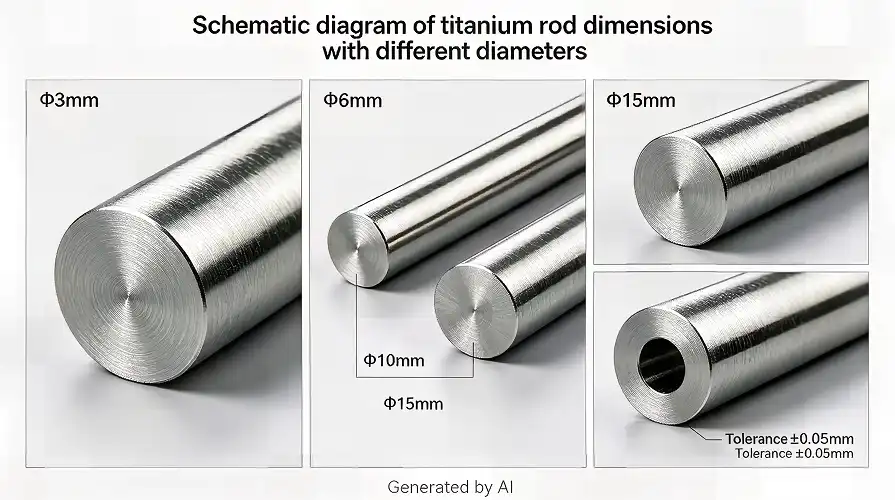
Length limits of up to 6000 mm (which can be raised to 12000 mm with special processing) make them harder to work with and machine. When working with longer rods, it's important to think about how resistant they are to breaking and how they can be moved while still being flexible.
Manufacturing Process Effects
The order in which the steps are done—vacuum freezing, forging, and hot rolling—has a direct impact on how flexible the finished product is. During hot rolling, the desired grain orientations can be added, which can change how flexible the material is in different directions. Then, centerless grinding and surface processes change the amount of stress on the surface, which changes how flexible the wear is when the load is put on it in cycles.
Annealing methods make materials more flexible by lowering the pressure inside them and improving the structure of the grains. If the rod goes through the right number of rounds of heat treatment, its flexibility will be the same across its cross-section, and its size will stay the same during later cutting.
How to Test and Evaluate the Flexibility of Titanium Rods?
Tough testing procedures make sure that titanium rods meet specific standards for flexibility in important uses. Industry-standard testing methods give buyers and quality assurance programs numbers they can use to make decisions.
Standard Testing Methodologies
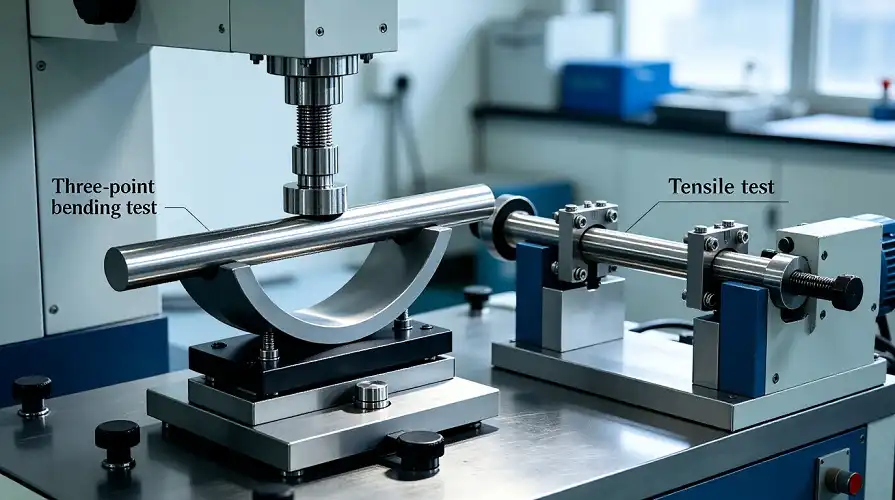
According to ASTM B348 and ASME SB348 guidelines, tensile testing finds the elastic modulus, yield strength, and maximum tensile strength values. These values set the limits of how flexible something can be. These tests find the stress-strain relationship, which is needed to estimate how the material will distort under service loads.
Bend testing methods check how flexible something is in real life by putting controlled loads on rod samples until they deform permanently. Three-point and four-point bend tests show different stress patterns, showing how the material acts under different loading situations that are common in real life.
Fatigue Life Assessment
Fatigue testing looks at how well a material keeps its flexibility under repeated loading situations that are common in aerospace and automotive uses. High-cycle wear tests mimic millions of load cycles to predict how flexible something will be in the long term and stop it from breaking down without warning.
Rotating beam fatigue tests check how flexible titanium rods are when they are stressed in both bending and rotating directions. These tests are especially useful for shaft uses where keeping the flexibility stops severe failure modes.
Quality Verification Protocols
Suppliers you can trust will give you full test certificates that show the mechanical qualities of the material, such as its stretch values, yield strength, and elastic modulus. Depending on what they will be used for, these papers should list relevant standards like AMS 4928, AMS 6931, or ASTM F136.
Ultrasonic testing finds flaws inside that might make the freedom less useful in real-world situations. This non-destructive testing method makes sure that the rod is solid throughout the cross-section without changing the qualities of the material.
Practical Applications Where Titanium Rod Flexibility Matters
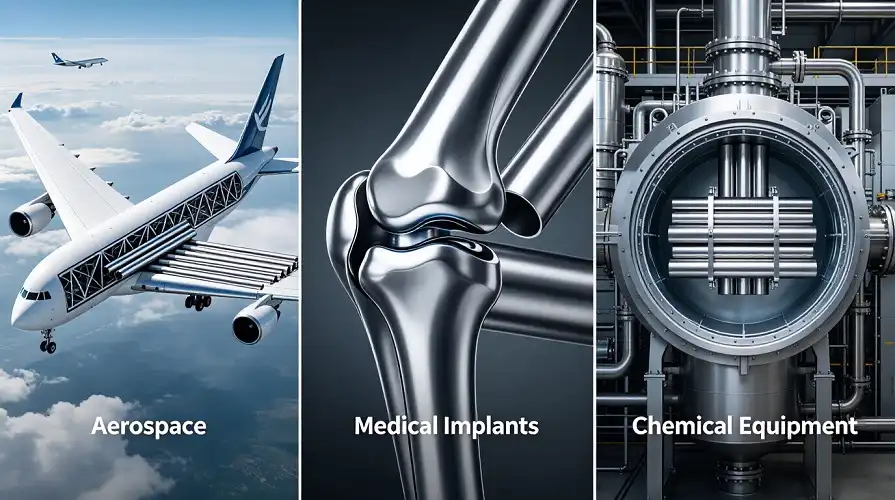
The unique flexibility characteristics of titanium bars enable critical applications across industries where conventional materials fail to meet performance requirements. Understanding these applications helps procurement teams appreciate the value proposition of titanium investments.
Aerospace and Defense Applications
For the production of fasteners, actuator shafts, and landing gear pistons, where flexibility avoids stress concentration failures, aircraft component makers use titanium rods. It is important for safety-critical uses that the material can absorb shock loads while still keeping its shape.
Titanium stays flexible at high temperatures, while steel and aluminum become rigid and weak. This makes jet engine parts more useful. For use in spinning shafts and compressor blades, materials need to be able to stay flexible over a wide range of temperatures and not rust from combustion leftovers.
Medical Device Manufacturing
Making orthopedic implants depends on titanium rods being flexible enough to match the elastic modulus qualities of human bone. Stems and rods for hip replacements need to be flexible in a controlled way so that they don't have stress buffering effects that break down bone around implant surfaces.
Titanium's flexibility is used in surgical instruments to make precise tools that need to be able to bend without permanently changing shape. The ability of the material to absorb chewing forces while keeping its shape over long periods of time is helpful for making dental implants.
Chemical Processing Equipment
Titanium bar flexibility enables stirrer shaft applications in aggressive chemical environments where hard materials would break from stress corrosion cracking. The combination of flexibility and corrosion resistance extends equipment service life while reducing maintenance costs.
Titanium's flexibility is used to accommodate thermal growth in high-temperature uses when it is used to make heat exchanger tubes. Because the material can bend when heated and cooled, it keeps joints from breaking, which can happen with hard pipe systems in chemical plants.
How to Source High-Quality Titanium Rods for Your Business?
To successfully buy high-quality titanium rods, you need to carefully evaluate suppliers and understand how the market works. When used in industrial settings, strategic buying methods improve both the performance of materials and their total cost of ownership.
Supplier Selection Criteria
Established manufacturers with extensive titanium processing experience provide the most reliable sources for high-quality rods. Companies with decades of metallurgical expertise understand the little things about making titanium that affect its end flexibility and stability in size.
Certification compliance is a very important decision factor, especially for medical and aircraft uses that need compliance with ASTM B348, ASME SB348, or ASTM F136. Suppliers should keep up-to-date quality control systems that can be used to track all steps of the process, from receiving the raw materials to the final review.
Market Considerations and Logistics
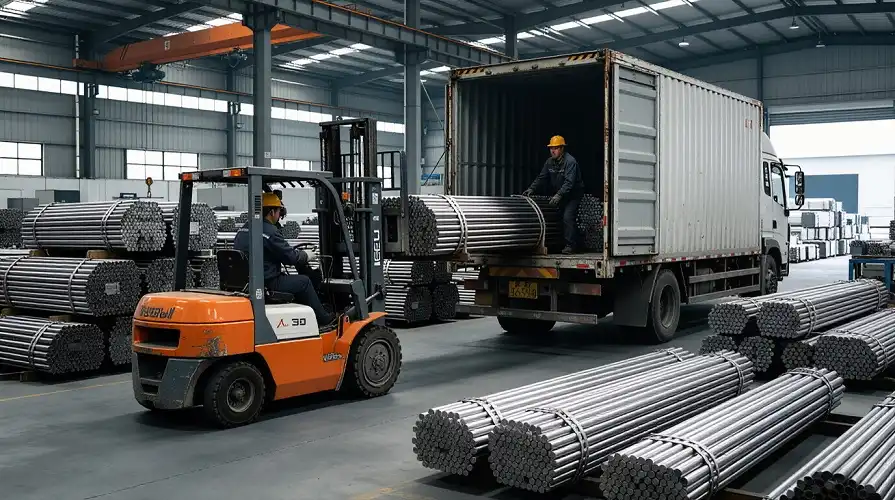
Titanium prices are stable on the market right now, and there are chances for long-term deal benefits. Suppliers who keep large inventories (3,000 tons or more) can meet immediate shipping needs and make sure that materials are consistent across multiple orders.
Export compliance is especially important for getting into the US market, so sellers need to know about the rules and paperwork for foreign shipping. Export routes that have been used for a long time cut down on wait times and customs problems that could hold up important projects.
Value Engineering Opportunities
Custom processing makes it possible to get the best rod specs for each application, which could lower overall costs by getting rid of the need for extra steps. When working with suppliers that can offer longer lengths (up to 12000mm), welding isn't needed as much for long shaft uses.
There are different ways to treat the surface, such as polishing, turning, centerless grinding, sandblasting, or pickling. This lets buying teams choose the best surface conditions for the jobs they need to do. Choosing the right surface can increase wear life and cut down on cutting time when making a component.
Conclusion
Titanium rods demonstrate exceptional flexibility characteristics that make them indispensable for demanding industrial applications across aerospace, medical, and chemical processing sectors. The material's unique combination of controlled flexibility, corrosion resistance, and strength-to-weight ratio provides solutions where conventional materials fail to meet performance requirements. Understanding the factors that influence flexibility—including grade selection, dimensional specifications, and manufacturing processes—enables procurement professionals to make informed decisions that optimize both performance and cost-effectiveness. Through proper testing and evaluation protocols, buyers can ensure material quality while leveraging the long-term value proposition of titanium investments in flexibility-critical applications.
FAQ
Q1: Are Titanium Rods More Flexible Than Steel Rods?
Titanium rods exhibit greater elastic flexibility than steel due to their lower elastic modulus (110 GPa vs 200 GPa for steel). This characteristic allows titanium to deform more readily under applied loads while returning to its original dimensions when loads are removed. However, steel provides higher ultimate strength before permanent deformation occurs.
Q2: How Can I Verify Titanium Rod Quality and Flexibility Before Purchase?
Ask for full material test reports that include tensile test results, a chemical makeup analysis, and proof of the grain structure. Test results from reputable sources show the stretch, yield strength, and elastic modulus values. Third-party approval is another way to make sure that the product meets important standards like ASTM B348 or ASME SB348.
Q3: Which Titanium Grade Offers the Best Balance of Strength and Flexibility for Industrial Use?
Grade 2 commercially pure titanium is the best mix for most industry uses because it can stretch 24% while still being strong enough for structural parts. Grade 5 (Ti-6Al-4V) is used in places that need the most strength with some flexibility, like in aircraft, where weight reduction is still very important.
Partner with Jucheng Titanium for Premium Titanium Rods
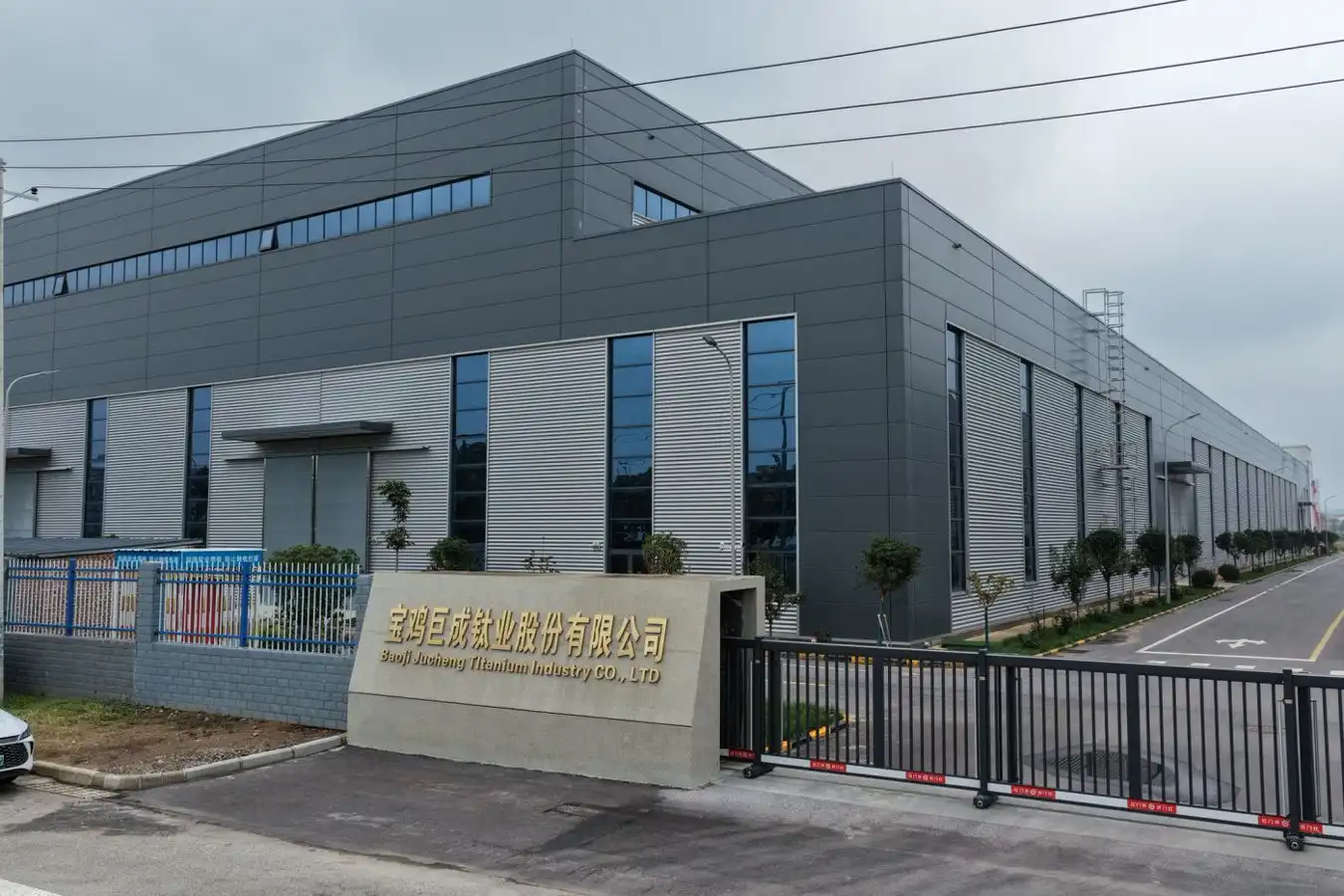
Jucheng Titanium stands ready to meet your most demanding titanium rod requirements with over 20 years of specialized manufacturing experience in China's renowned Titanium Valley. Our comprehensive inventory of 3,000 tons ensures immediate availability across all grades from Gr1 through Gr23, with diameters ranging from Φ6-Φ450mm and custom lengths up to 12000mm. As a National High-Tech Enterprise maintaining strict ASTM B348, ASME SB348, and AMS standards compliance, we guarantee consistent quality for your aerospace, medical, and industrial applications. Contact our experienced engineering team at s4@juchengti.com to discuss your specific flexibility requirements and discover why leading manufacturers choose Jucheng Titanium as their trusted titanium rods supplier for mission-critical applications.
References
1. Boyer, R. R. "An Overview on the Use of Titanium in the Aerospace Industry." Materials Science and Engineering: A, vol. 213, 1996, pp. 103-114.
2. Donachie, Matthew J. "Titanium: A Technical Guide, 2nd Edition." ASM International, Materials Park, Ohio, 2000.
3. Lutjering, Gerd, and James C. Williams. "Titanium Engineering Materials and Processes." Springer-Verlag, Berlin Heidelberg, 2007.
4. Peters, Manfred, et al. "Titanium Alloys for Aerospace Applications." Advanced Engineering Materials, vol. 5, no. 6, 2003, pp. 419-427.
5. Rack, H. J., and J. I. Qazi. "Titanium Alloys for Biomedical Applications." Materials Science and Engineering: C, vol. 26, 2006, pp. 1269-1277.
6. Veiga, Catarina, et al. "Properties and Applications of Titanium Alloys: A Brief Review." Reviews on Advanced Materials Science, vol. 32, 2012, pp. 133-148.