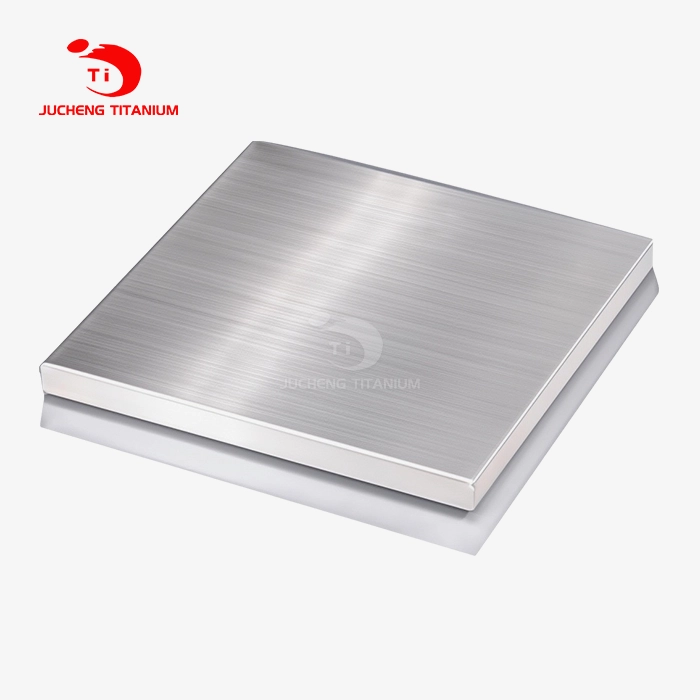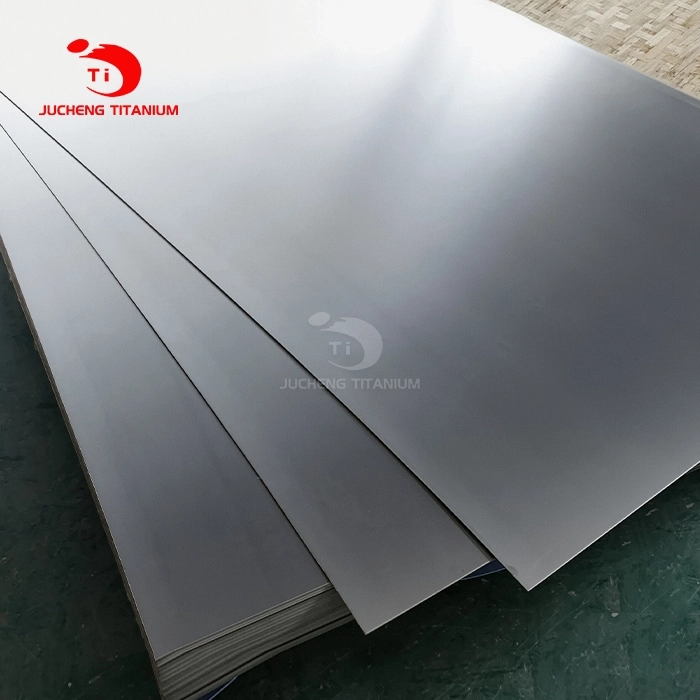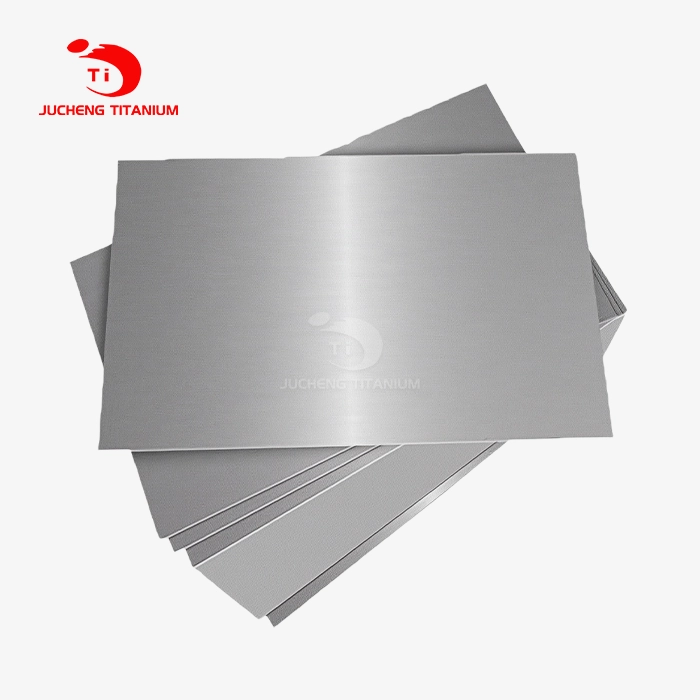

How to Cut and Form 4mm Titanium Sheet Without Damage or Warping
Working with titanium sheets requires specialized knowledge, particularly when dealing with 4mm thicknesses commonly used in aerospace, chemical processing, and medical device manufacturing. The key to successful cutting and forming of 4mm titanium sheet lies in controlling thermal input, selecting appropriate tooling, and understanding material behavior during deformation. Proper technique prevents warping, surface oxidation, and microstructural damage that compromise mechanical properties. Whether you're using waterjet cutting for precision or press brake forming for complex geometries, matching your process parameters to titanium's unique characteristics ensures dimensional accuracy and preserves the corrosion resistance that makes this material invaluable across demanding industrial applications.

Understanding the Challenges of Cutting and Forming 4mm Titanium Sheet
When it comes to processing, titanium is different from other metals. Because it doesn't transfer heat well, heat builds up at cutting zones instead of spreading out through the material. This causes localized thermal stresses that cause the material to bend. The high strength-to-weight ratio of the material is good for service, but it speeds up the wear on cutting tools when they are used for machining.

Why Titanium Sheets Warp During Processing
During cutting, periods of thermal expansion and contraction create leftover stresses in the sheet. Differential expansion creates internal forces when one area heats up much more quickly than the material around it. These pressures stay in the material after it cools, which makes it twist. If the clamps aren't tight enough or there isn't enough support during processing, this effect gets worse.

Surface Integrity Concerns
Titanium reacts easily with oxygen at high temperatures, forming an alpha-case layer that is brittle and weakens the wear strength. Cutting methods that produce too much heat without enough covering gas protection hurt the quality of the surface. When titanium is mechanically cut, it tends to gall and stop up against tool surfaces, so it needs special oils and slower cutting speeds than steel or aluminum.

Material Springback in Forming Operations
Because titanium has an elastic modulus, sections that have been bent will try to return to their original shape once the forces that bent them are gone. Because Grade 5 (Ti-6Al-4V) is so strong, it has a lot of springback and needs to be overbent to get to the final shapes. This feature makes designing tools more difficult, and you need to have a lot of experience to correctly guess the end dimensions.

Key Principles for Cutting 4mm Titanium Sheet Without Damage
The right cutting method is chosen based on the amount of work to be done, the level of accuracy needed, and the characteristics of the heat-affected zone that are acceptable. Each method has its own benefits when it comes to working with titanium.
Waterjet Cutting for Zero Thermal Distortion

Because abrasive waterjet cutting doesn't use any heat, it's perfect for keeping 4mm titanium sheets from twisting. Using high-pressure water and garnet abrasive to wear away material doesn't change its metallic features. Tolerances of ±0.2mm can be reached with this method, and the beauty of the edges is kept. The process works well with all grades of titanium, from commercially pure Grade 2 to high-strength Grade 5 alloy, and only needs the traverse speed to be changed. Since there are no heat-affected zones, there is no need for any additional stress relief work.
Fiber Laser Cutting for Precision Applications
Modern fiber laser systems can cut 4mm titanium very quickly and accurately, with accuracy as low as ±0.05mm when set up correctly. The focused beam makes the kerf width very narrow, which cuts down on material waste. But thermal management is very important—choosing the right assist gases and flow rates is needed to keep oxidation from happening while molten material is pumped out. At 15-20 bar pressure, nitrogen-based gas usually makes clean cuts that don't change the color. The heat-affected zone is about 0.3 to 0.5 mm from the cut edge and needs to be taken into account in situations where strict metallurgical requirements need to be met.

For material approvals, processing suggestions, and quotes that are specific to your project needs, please email our technology team at s4@juchengti.com.
Mechanical Shearing Considerations
Straight-line cuts for 4mm titanium sheet can be made cheaply in production settings with guillotine shears and hydraulic shears. Sharp blades with little space between them (usually 5 to 8 percent of the thickness of the sheet) cause clean cutting without too much warping. The shape of the blade is very important. For example, bigger rake angles lower cutting forces but may raise edge roughness. Work hardening at cut edges is prevented by regular blade care. Work hardening at cut edges makes following forming processes more difficult.
Plasma Cutting for Heavy-Duty Applications
Plasma cutting is less popular for precise work, but it can quickly remove material for rough blanking jobs. The process makes heat-affected zones that are wider than laser cutting—usually by 2 to 3 mm. This means it can't be used in situations where precise measurements or low thermal impact are needed. Even though high-definition plasma systems make cuts better, they are still not the best choice for cutting 4mm titanium when waterjet or laser options are available.
Effective Methods for Forming 4mm Titanium Sheet Without Warping
When you shape titanium sheets, you have to pay close attention to the material grade, the design of the tools, and the process factors that take titanium's unique mechanical behavior into account.

Understanding Grade-Specific Forming Characteristics
At room temperature, commercially pure types like Grade 1 and Grade 2 are very easy to shape. They can be bent to radii as small as two to three times the thickness of the material without breaking. These types are good for heat exchangers and equipment used in chemical processing where resistance to rust is more important than ultimate strength. Because it has a higher yield strength, Grade 5 titanium alloy is harder to shape. For example, cold bending usually needs bend angles that are at least 4-5 times the thickness. If you try to get the circles smaller without preheating, you could cause cracks on the surface and damage below the surface, which shortens the wear life.
The Role of Annealing in Forming Operations
Annealed titanium sheets are made by slowly heating them to 650–750°C and then cooling them down again. These sheets are very flexible and have very little internal stress. This condition is necessary for complicated forming tasks that involve many bends or deep draws. Mill-annealed material that meets ASTM B265 standards is ready to be shaped without any extra heat treatment. When working with cold-worked materials or trying to do a lot of forming, stress-relief annealing at 480–595°C for 30–60 minutes makes them easier to shape without changing their strength too much.

Tooling Selection and Die Design
To keep the surface from getting scratched or marked, press brake tools made of titanium need larger radii than steel tools of the same type. Titanium doesn't gall when it comes in touch with tool steel dies that are rated 58 to 62 HRC hard. Large gaps—usually 1.5 times the thickness of the material—are left between the punch and the die to allow for springback and stop the material from shrinking too much at the bend lines. Segmented tooling lets complex profiles be formed in steps, which lowers peak forming forces and keeps distortion to a minimum.
Controlling Springback Through Process Parameters
To account for springback, you have to figure out the overbend angles by using the material grade and the shape of the bend. Grade 2 titanium usually springs back 4 to 6 degrees, but Grade 5 can spring back more than 10 degrees, depending on the thickness and radius of the bend. Bottoming processes, in which the punch goes all the way into the die hole, lower the variation in springback compared to air bending. Adding hold times after the first shaping step lets the stress ease before releasing the tool, which improves the stability of the dimensions even more.
Comparing 4mm Titanium Sheet with Other Metals for Processing and Application
Knowing titanium's place in comparison to other materials helps explain why it should be used, even though it is more expensive and harder to work with.

Titanium Versus Stainless Steel
Both titanium and stainless steel are resistant to corrosion, but a 4mm titanium sheet weighs 45% less than stainless steel for the same volume. This is a big benefit in aerospace and automotive applications where weight reduction directly affects fuel efficiency. Standard tools work better with stainless steel, which can be cut three to four times faster than titanium. But titanium keeps its mechanical qualities at temperatures above 300°C, while austenitic stainless steels start to soften at that temperature. Titanium is more resistant to pitting and crevice corrosion than even high-grade stainless alloys in marine environments and chemical processing with chlorides.
Titanium Versus Aluminum Alloys
Aluminum is a good choice for uses where titanium's special properties aren't needed because it's cheaper and easier to work with. But aluminum loses its strength quickly above 150°C, which limits its use in high-temperature situations. Titanium's mechanical qualities stay stable up to 400°C and even higher, based on the grade. Titanium is better for structural uses because it is stronger for its weight. Grade 5 titanium has twice the specific strength of 7075-T6 aluminum. Titanium is better at resisting corrosion in saltwater and chemical conditions, especially when galvanic corrosion is a problem in mixed-metal systems.
Selecting the Right Titanium Grade
The choice of material is based on the needs of the application, taking into account factors like strength, formability, and resistance to corrosion. Commercially pure types (Grade 1, Grade 2, Grade 4) are used in architecture, desalination, chemical processing, and other areas where middling strength is needed. Most aerospace structural parts, pressure vessels, and marine hardware that need the highest strength-to-weight ratios are made of Grade 5 titanium alloy. Palladium is added to specialized types like Grade 7 and Grade 12 to make them more resistant to corrosion in less acidic settings. Grade 9 is a good compromise between pure grades and Grade 5. It is stronger than Grade 5 without losing its shapeability.
Practical Procurement Tips for 4mm Titanium Sheet to Ensure Quality and Support
When looking for titanium, suppliers need to be carefully checked to make sure the material is real, meets standards, and the supply chain works well.

Verifying Material Certification and Traceability
Reliable providers give Mill Test Reports (MTR) for each production lot that show the chemical makeup, mechanical qualities, and history of heat treatment. The standards for these certificates are usually the same as EN 10204 3.1. They allow tracking from the finished product all the way back to the mill where it was made. As long as sheets are compliant with ASTM B265, they will meet the property and size standards for uses in aerospace, chemicals, and medicine. With stricter compositional controls and more testing procedures, AMS 4911 approval is designed to meet the needs of aircraft materials.
Evaluating Supplier Processing Capabilities
Suppliers who offer value-added services cut down on the work and wait times you have to do internally. Custom cutting to finished sizes gets rid of the need to saw or shear things in-house. You can choose to have the surface cleaned, machined, or acid-pickled, and it will come ready to be put together or made. Different part shapes can be made from hot-rolled material that comes in thicknesses from 4mm to 80mm, widths up to 2500mm, and lengths up to 10,000mm. Suppliers with a large inventory—ideally 500 tons or more of standard grades and sizes—can meet urgent needs quickly and without having to wait for long mill lead times.
Understanding Minimum Order Quantities and Lead Times
Titanium prices usually have bulk discounts that start at 500 kg sales and get better after that at 1000 kg. Standard mill products in common grades like Grade 2 and Grade 5 ship within two to four weeks from reputable suppliers who keep stock on hand. As the material moves through the mill's production schedules, lead times can be extended to 8 to 12 weeks for custom compositions, non-standard dimensions, or specialized certifications. Building ties with providers that work with your business, like aerospace, chemical processing, or medical devices, makes sure that they know what you need and what standard you expect.
Requesting Samples and Technical Support
Before agreeing to production numbers, ask for samples of the material along with test results. Physical samples let you check the finish on the surface, the accuracy of the dimensions, and how the product handles. Getting technical help from suppliers who know a lot about metals can help you choose the best materials, process parameters, and heat treatment requirements for your application. Suppliers who also do their own fabrication know more about the problems that come up in downstream processing and can suggest grades and conditions that make your manufacturing operations easier.
Conclusion
To cut and shape a 4mm titanium sheet without damaging it, you have to make sure that the working methods are right for the material and that the heat and stress are kept in check. When waterjet cutting, there are no worries about warping at all, and when laser systems are set up correctly, they balance speed and accuracy. To get correct end measurements, forming processes need to pay close attention to grade choice, annealing conditions, and springback compensation. Even though it costs more, titanium is better than stainless steel and aluminum in challenging situations because it has a higher strength-to-weight ratio and doesn't rust. Working with knowledgeable suppliers who offer certified materials, processing that adds value, and technical support makes buying things easier and makes sure that the quality is always the same. When procurement professionals and engineers understand these basic ideas, they can safely request titanium and avoid costly material waste or part rejection.
Frequently Asked Questions
1. What causes warping when cutting titanium sheets?
Warping is mostly caused by localized thermal expansion that happens when things are cut. Titanium doesn't let heat spread widely because it doesn't conduct heat well. This creates temperature differences that cause pressure inside the material. When the material cools down, these pressures cause it to become permanently warped. The problem gets worse when there aren't enough clamps or supports for cutting. Thermal warping doesn't happen at all with waterjet cutting, but laser cutting needs careful parameter control to make sure that the right turn speeds, gas flow, and cooling are used to keep heat from building up. Thermal gradients in thick sections can be lessened by heating the material to a uniform temperature before cutting it.
2. Which titanium grade requires less heat treatment for forming?
Pure Grade 2 titanium that is sold in stores can be shaped most easily without having to be heated. It can be bent to tight curves at room temperature. Because it isn't as strong as some metal types, it has less springback and forming forces. When Grade 2 comes from the mills, it is already softened and ready to be shaped right away. To keep Grade 5 titanium alloy from cracking and reducing residual stresses, it usually needs to be hot-formed at 650–870°C or annealed for stress relief after cold-forming. Grade 9 is in the middle; it is stronger than pure grades but easier to shape than Grade 5. It can often be shaped at room temperature with little or no post-forming treatment needed.
3. How can I extend cutting tool life when working with titanium?
Strategies for extending the life of tools focus on controlling heat and using the right cutting parameters. Cutting speeds that are usually 40–60% slower than steel mean that less heat is generated at the contact between the tool and the workpiece. Using flood coolant or high-pressure coolant that is aimed directly at the cutting zone stops heat from building up. Cutting forces and heat are reduced by using sharp tools with positive rake angles. Aluminum-titanium-nitride coatings on carbide tools make them more resistant to heat and wear than tools that aren't coated. Regularly checking and replacing tools before they get too worn out stops work hardening, which speeds up the breakdown of later tools. When you use climb milling instead of regular milling, the cutting forces are lower, and the surface finish is better.
Partner With a Trusted 4mm Titanium Sheet Supplier
Baoji Jucheng Titanium Industry Co., Ltd. has been processing titanium for more than 20 years and has a lot of knowledge of difficult aerospace, chemical processing, and industrial equipment needs. About 3,000 tons of certified 4mm titanium sheet in grades Grade 1, Grade 2, Grade 4, Grade 5, Grade 7, Grade 9, and Grade 12 are kept in our large inventory. This titanium sheet meets the standards set by ASTM B265, ASTM F67, AMS 4911, and ASME SB265. We offer hot-rolled, annealed steel with styles such as polished, machined, and acid-pickled, and in widths ranging from 4mm to 80mm. Our advanced processing skills and 45 patents allow our custom cutting and forming services to deliver parts that meet your exact requirements without any surface damage or warping. For material approvals, processing suggestions, and quotes that are specific to your project needs, please email our technology team at s4@juchengti.com.

References
1. Boyer, R., Welsch, G., & Collings, E.W. (1994). Materials Properties Handbook: Titanium Alloys. ASM International, Materials Park, Ohio.
2. Donachie, M.J. (2000). Titanium: A Technical Guide, 2nd Edition. ASM International, Materials Park, Ohio.
3. Lutjering, G., & Williams, J.C. (2007). Titanium, 2nd Edition. Springer-Verlag, Berlin Heidelberg.
4. Veiga, C., Davim, J.P., & Loureiro, A.J.R. (2012). Properties and Applications of Titanium Alloys: A Brief Review. Reviews on Advanced Materials Science, 32(2), 133-148.
5. American Society for Testing and Materials. (2015). ASTM B265-15: Standard Specification for Titanium and Titanium Alloy Strip, Sheet, and Plate. ASTM International, West Conshohocken, Pennsylvania.
6. Ezugwu, E.O., & Wang, Z.M. (1997). Titanium Alloys and Their Machinability: A Review. Journal of Materials Processing Technology, 68(3), 262-274.