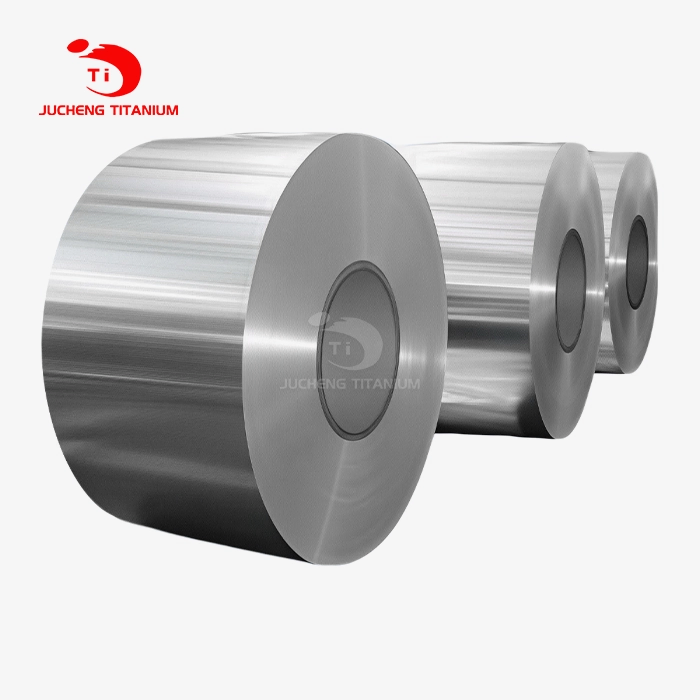

What is a Grade 5 titanium plate, and Why Is It Unique?
Grade 5 titanium plate is ideal for aircraft components that must handle tremendous stress at high altitudes and have corrosion resistance. Its 6% aluminium and 4% vanadium make Ti-6Al-4V the most extensively used titanium alloy worldwide. Grade 5 titanium plate solves a major industrial problem: high strength-to-weight ratios, corrosion resistance, and weldability. Grade 5 dominates the aerospace, medical implant, and chemical processing markets with 50% of the worldwide titanium market, balancing mechanical performance with fabrication flexibility.
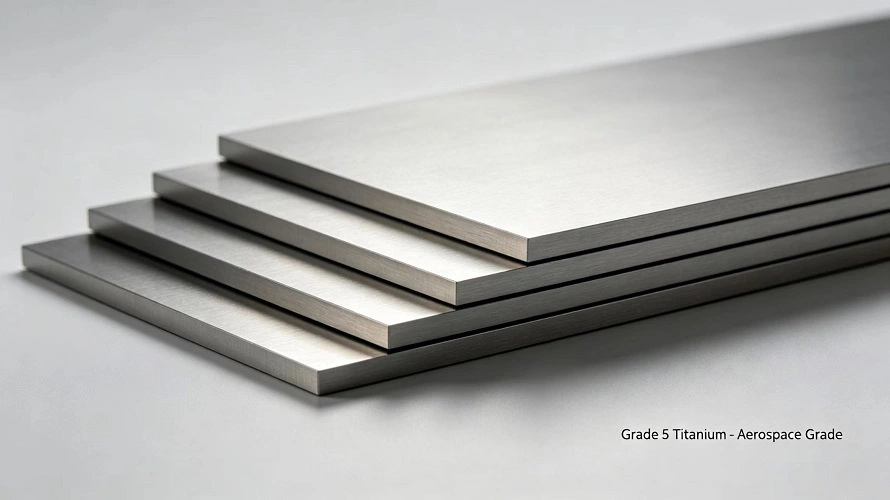
Understanding Grade 5 Titanium Plate: The Industry Workhorse
The chemically manufactured grade 5 titanium plate distinguishes it from other titanium materials. Alpha stabilisation with 6% aluminium increases strength and reduces density. Beta stabilisation with 4% vanadium improves ductility and workability. The annealed material has 130 ksi (895 MPa) tensile strength, approximately twice that of commercially pure Grade 2 titanium.
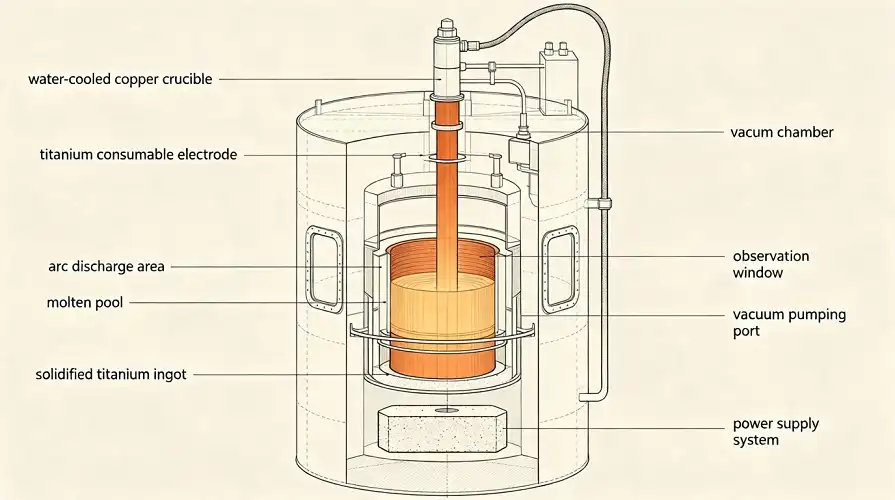
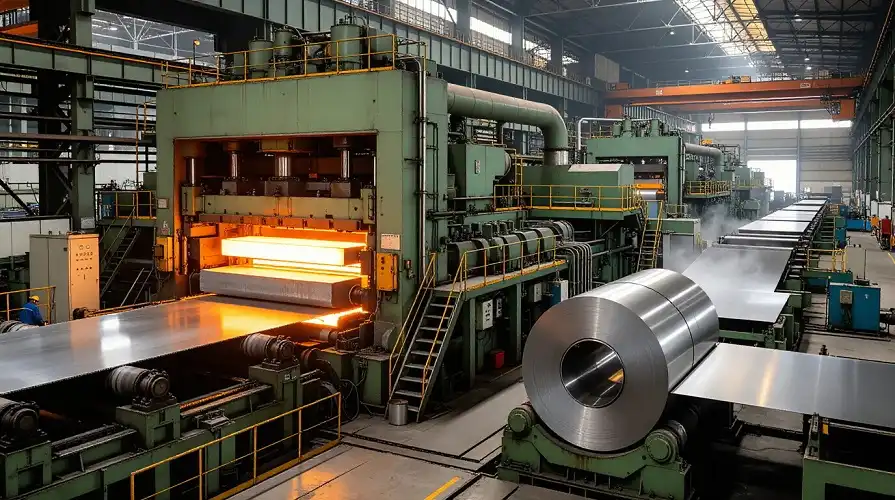
Advanced procedures are needed to make this aircraft's titanium plate. Vacuum arc remelting removes contaminants from raw titanium sponge. Ingots are hot-rolled at 900-1050°C to achieve the necessary alpha-beta phase balance. Annealing reduces internal tensions and improves mechanical qualities.
Grade 5 titanium sheet manufacture follows ASTM B265 for ordinary plate requirements and AMS 4911 for aerospace applications. Chemical composition must be strictly controlled, with maximum tolerances of 0.08% carbon, 0.05% nitrogen, and 0.015% hydrogen. This accuracy prevents brittle phases that might jeopardise structural integrity throughout service.
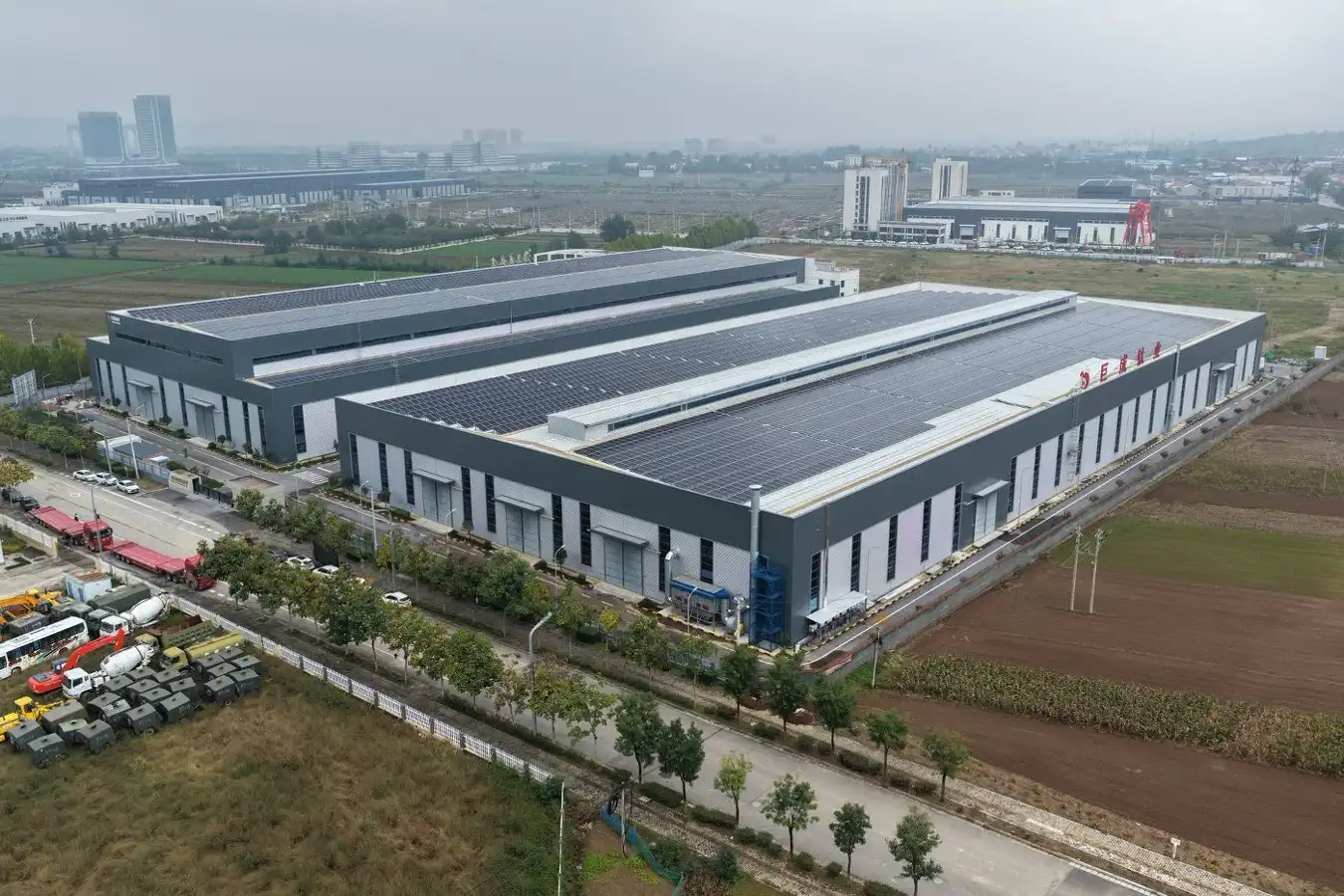
Jucheng Titanium manufactures titanium plates with strict quality standards. Our modern rolling mills in Baoji, China's Titanium Valley, can produce plates from 4mm to 80mm thick and 2500mm wide. Our dimensional versatility lets us service varied sectors without affecting material consistency.
The Engineering Problems Grade 5 Titanium Metal Solves
Aircraft weight affects fuel economy, yet structural components must bear massive mechanical stresses. Traditional aluminium alloys are too weak for crucial applications, while steel is too heavy. Grade 5 titanium plate addresses this issue with a density of 4.43 g/cm³, 45% lighter than steel, while maintaining equivalent strength.
Equipment corrosion causes costly downtime and safety problems in chemical processing operations. Commercially pure titanium resists numerous corrosive media, but high-stress, high-temperature conditions require outstanding mechanical characteristics. Grade 5 titanium alloy plates are corrosion-resistant and strong enough for high-pressure reactors and heat exchangers.
Medical device producers need biocompatible, load-bearing materials. Hip stems and spinal fusion cages must maintain body weight for decades without decaying. Grade 5 is the orthopaedic benchmark due to its fatigue resistance and Young's modulus (114 GPa), similar to bone tissue.
Defence contractors manufacturing naval vessels need ballistic and seawater-resistant materials. Grade 5 titanium plate corrosion resistance eliminates galvanic corrosion with aluminium alloys, a major benefit in hybrid hull construction.
Jucheng Titanium has shown this applicability for over 20 years. For landing gear components that withstand thousands of loading cycles, chemical storage tanks that handle mixed acids at 180°C, and medical implants with 99.7% clinical success rates, we've delivered Grade 5 plates.
Core Mechanical Properties and Performance Characteristics
Several observable factors separate titanium grade 5 mechanical qualities from other structural materials. The annealed material shows:
- Tensile strength: Minimum 895 MPa (130 ksi), equal to many tool steels at half the weight.
- Yield strength: Minimum 828 MPa (120 ksi) to prevent permanent deformation under operating stress.
- Minimum 10% elongation in 50mm gauge length for ductility during forming while retaining structural integrity.
- Hardness: 334 HB (Brinell) for actuator components and sliding contact wear.
These characteristics are stable at several temperatures. Grade 5 is appropriate for turbine blades and exhaust systems because it retains 80% of its room-temperature strength at 400°C. Precision aircraft components benefit from the material's low thermal expansion coefficient (8.6 × 10⁻⁶/°C), which reduces dimensional changes during thermal cycling.
Heated titanium grade 5 tensile strength is predictable. Solution treatment at 955°C and ageing at 540°C raise tensile strength to 1170 MPa but reduce ductility, which engineers use for landing gear and fasteners.
Fatigue performance also excels. Grade 5 has a fatigue strength of 510 MPa at 10⁷ cycles, suitable for applications such as helicopter rotor hubs and aircraft wing attachments that undergo several stress reversals.
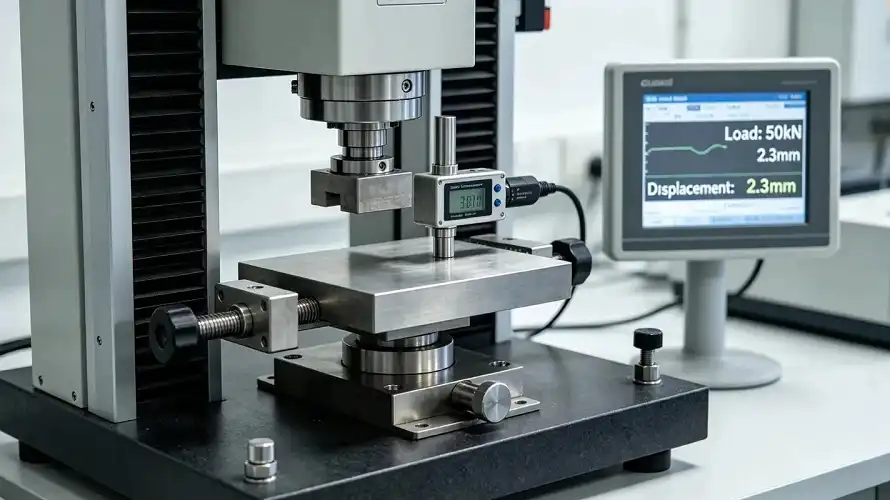
Jucheng Titanium's quality inspection team tests these qualities extensively. Aerospace producers require material consistency; every manufacturing lot passes ASTM E8 tensile testing, hardness verification, and AMS 2631 ultrasonic inspection.
Technical Processing Methods and Surface Treatment Options
Understanding Grade 5 machining characteristics is necessary to make precise components. Titanium plate machining varies from steel and aluminium due to its poor heat conductivity (6.7 W/m·K). The tool-material contact heats up while cutting, causing tool wear.
Successful machining requires 30-60 m/min cutting rates (slower than aluminium's 300 m/min), positive rake angles to decrease cutting forces, and continual coolant application to regulate temperatures. Wear-resistant carbide tooling lasts 300% longer than uncoated tools.
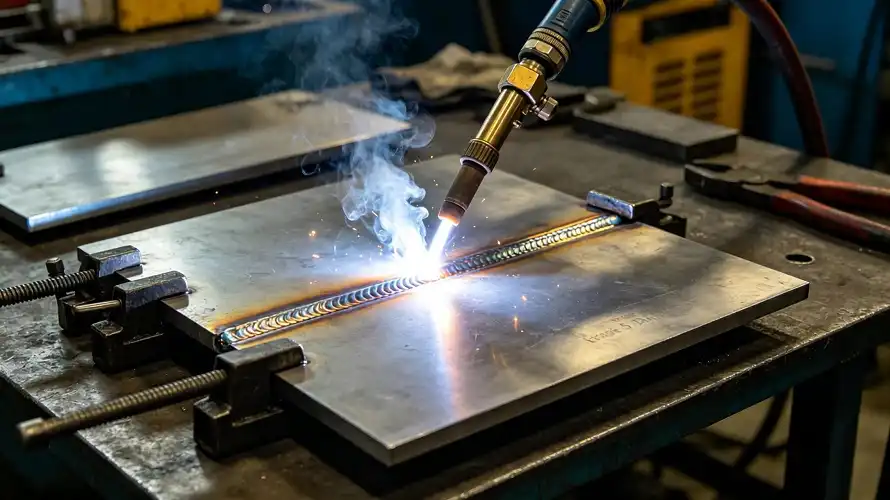
Titanium grade 5 welding needs regulated settings to avoid contamination. From air oxygen and nitrogen, which generate brittle phases, argon or helium shields the weld pool and heated base metal. Gas Tungsten Arc Welding (GTAW) generates the best joints with base material-matching filler metal.
Our fabrication experts at Jucheng Titanium use trailing shields 150mm beyond the weld zone for complete atmospheric cooling protection. Welds with 95% base metal strength without heat treatment result from this attention to detail.
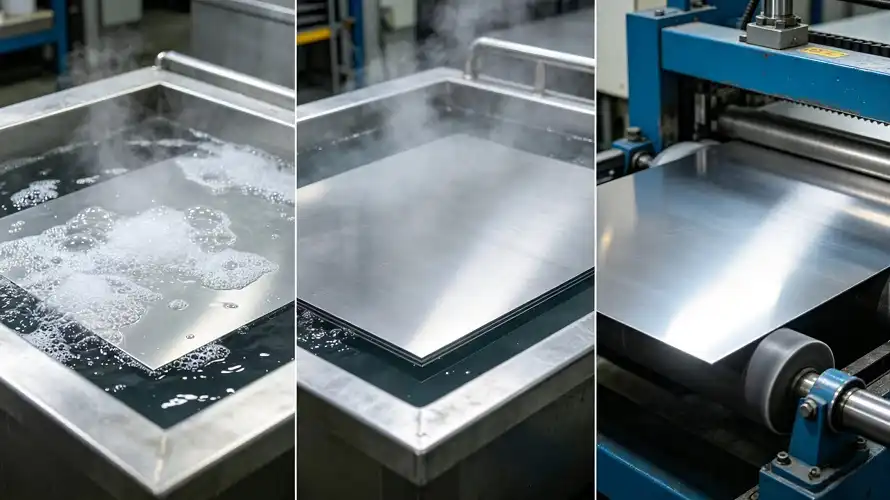
Titanium plate surface treatment choices vary by application. The alpha case—an oxygen-enriched surface layer generated during hot working—is removed by acid pickling (hydrofluoric-nitric acid combination) to show the brilliant metallic substrate. This must be done before welding or coating.
Mechanical polishing to Ra values below 0.4 μm generates biocompatible surfaces for medical implants, reducing bacterial adherence and boosting bone cell attachment. Grit blasting and passivation provide matte surfaces for composite sandwich adhesive bonding.
Titanium grade 5 annealing optimises microstructure and reduces cold working stresses. Heating to 730°C for 2 hours and air cooling recrystallises distorted grains and stabilises dimensions. Our 120,000-square-meter facility has controlled-atmosphere furnaces that can manufacture 10-meter slabs for huge aircraft structures.
Key Strategic Advantages for Industrial Procurement
Specifying Grade 5 titanium has operational advantages that balance its higher material cost. Titanium plate aerospace saves lives by:
- Replacement of steel components with Grade 5 can reduce weight by 50-60%, saving $1.2 million per commercial aircraft based on current usage patterns.
- Extended service life: Corrosion immunity removes protective coating maintenance, saving marine and chemical lifetime expenses by 30-40%.
- Design simplification: High specific strength permits thinner wall sections, simplifying pressure vessel and airframe assembly and part count.
- Temperature capability: Cryogenic to 400°C operation avoids material changes between thermal zones, simplifying inventory.
In spinning parts, titanium grade 5 density is very beneficial. Lower mass decreases centrifuge, turbine disc, and impeller bearing stresses and energy consumption.
Supply chain stability is another crucial factor. The broad usage of grade 5 titanium plate assures competent vendors and standardised requirements worldwide. Jucheng Titanium leads alloy research and processing technologies through cooperation with the Northwest Institute for Nonferrous Metal Research and R&D.
Quality certification boosts buying confidence. ISO 9001:2015 and aerospace AS9100D certification show our systematic quality management. For aerospace and medical applications, material test reports accompany every shipment, tracing ingot to plate.
Practical Limitations and Cost Considerations
Grade 5's restrictions must be considered for objective assessment. Titanium plate costs $15-30 per kilogram, depending on thickness, volume, and certification—much more than aluminium ($2-5/kg) or stainless steel ($3-8/kg). Grade 5's advantages must be carefully value-engineered to justify the expense difference.
Machinability issues raise production costs. Cutting speeds one-fifth of aluminium increase machining time, while specialised tools and coolant systems cost more. Electrical discharge machining (EDM) or electrochemical machining (ECM) may increase manufacturing costs for complex geometries.
Room-temperature shaping is limited by cold formability. While annealed Grade 5 has 10-15% elongation, it work-hardens faster than aluminium alloys. Hot forming at 650-850°C for complex bends or deep draws requires specialised equipment and regulated atmospheres.
Since the material's modulus is 114 GPa compared to steel's 200 GPa, components deflect more under stress. Structural designs must account for elastic flexibility, which may need higher section thickness to counterbalance weight savings.
Beta fleck—small patches of preserved beta phase evident after etching—occurs in heavier sections. This microstructural characteristic is usually harmless, but aeronautical requirements routinely reject it, necessitating vendor certification.
Jucheng Titanium overcomes these constraints through open customer cooperation. Design evaluations by our technical team optimise the titanium part shape, lowering material use by 15-25%. Our 3,000-ton inventory lets us match each application's needs with the most cost-effective grade.
Competitive Material Comparison and Selection Guidance
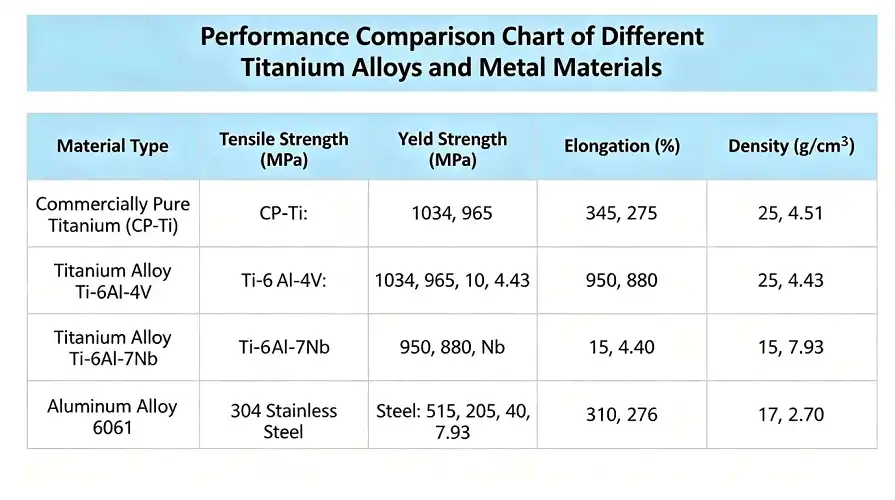
A systematic comparison is needed to determine whether Grade 5 excels. Grade 5, which is twice as strong as Grade 2 commercially pure titanium, costs 20-30% more and is harder to machine. Grade 2's formability and cheaper cost make it ideal for moderate-stress applications like chemical heat exchangers. Grade 5 is needed for aircraft fittings and pressure vessel closures with heavy structural stresses.
Grade 5 (Ti-3Al-2.5V) is 30% stronger than Grade 9 but less ductile. Grade 9 is used for extended cold forming, such as seamless tubing, when Grade 5 cracks. Grade 5 is unbeatable for jet engine hot sections because of its improved elevated-temperature capabilities.
Grade 5 has equivalent strength to Grade 23 (Ti-6Al-4V ELI, Extra Low Interstitial) but poorer fracture toughness and fatigue crack development resistance. Grade 23's greater damage tolerance is increasingly required for fracture-critical aerospace titanium plate components like landing gear and wing attachments, despite its 15-20% cost premium.
At about one-third the cost and density (2.81 g/cm³), aluminium alloys like 7075-T6 provide comparable strength. Aluminium's marine stress corrosion cracking and 50% lower modulus restrict its aircraft usage to non-critical secondary structures.
316L is cheaper and easier to process than Grade 5. However, Grade 5's 4.0 g/cm³ density results in 12% heavier components, negating its principal benefit in weight-sensitive applications.
These trade-offs are shown by our annual delivery of approximately 500 titanium equipment units. We use decision matrices to help clients choose materials based on strength, weight, corrosive environment, forming needs, and budget. By judiciously employing Grade 5 in high-stress zones and Grade 2 elsewhere, this consulting strategy has saved chemical processors $200,000 yearly.
Target Industries and Optimal Application Scenarios
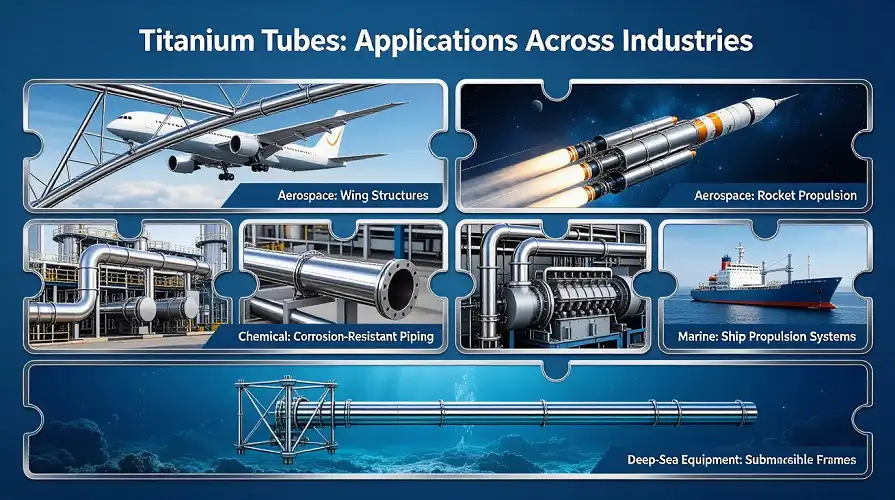
The titanium plate application portfolio includes businesses where Grade 5's special properties justify its pricing premium. Grade 5 is used most by aerospace manufacturers:
- Bulkheads, landing gear beams, and wing spar fittings with high strength-to-weight ratios increase payload and fuel economy.
- Engine parts: Compressor blades, casings, and fasteners using temperatures above aluminium but below nickel superalloy.
- High-pressure hydraulic tubing and fittings that resist corrosion and reduce weight.
- Specialised equipment in chemical processing uses Grade 5 titanium plates:
- High-pressure reactors: Grade 2's reduced strength requires thick walls above 10 MPa.
- Mechanical and corrosive strains on impellers and baffles in agitated containers.
- Heat exchanger tubesheets: Components with differential thermal expansion stresses that shatter brittle materials.
- Medical device makers use Grade 5 for load-bearing implants:
- Hip and knee prostheses: Stems and tibia support weight for 15-20 years.
- Spinal fusion cages: Preserve vertebral space and promote bone development.
- Root replacements with 95%+ osseointegration.
Our Jiangxi Copper Group partnership proves Grade 5's hydrometallurgical equipment is worth. Our titanium anode plates have 70% market dominance due to their greater current efficiency and 10-year operating life—triple that of lead-based competitors.
Grade 5 is increasingly used for submarine pressure hull penetrations, propeller shafts, and sonar domes when corrosion resistance and structural requirements are combined. North American shipbuilding uses our all-titanium heat exchangers, which save maintenance costs by 60% over cupro-nickel.
FAQ
Q1: How does Grade 5 titanium plate pricing compare to other structural materials for large-scale projects?
A: Current market rates for Grade 5 range from $15-30 per kilogram, depending on thickness and certification level. This represents 5-8 times the cost of equivalent aluminium alloys and 3-5 times that of stainless steel. However, lifecycle cost analysis reveals a different picture. In aerospace applications, every kilogram saved generates approximately $250 in annual fuel savings over a 25-year aircraft service life. For a 500 kg component substitution, the $5,000 material cost premium is recovered within 2-3 years through operational savings. Chemical processing equipment shows similar economics—Grade 5 heat exchangers costing 80% more initially deliver 300% longer service life, yielding 40% lower total cost of ownership.
Q2: What certifications and quality documentation should buyers expect when procuring Grade 5 titanium sheet?
A: Comprehensive material certification packages should include: chemical composition analysis via optical emission spectroscopy verifying aluminum, vanadium, iron, oxygen, and interstitial element content against ASTM B265 requirements; mechanical property test reports documenting tensile strength, yield strength, elongation, and reduction of area from samples taken perpendicular to rolling direction; ultrasonic inspection certificates per AMS 2631 confirming absence of internal defects; surface inspection reports noting any alpha case thickness; and full traceability documentation linking finished plate to original ingot melt number. Aerospace suppliers must additionally provide First Article Inspection Reports (FAIR) and Certificate of Conformance stating compliance with customer-specific purchase order requirements. At Jucheng Titanium, we maintain these records for seven years, supporting regulatory audits and failure investigations.
Q3: Can a Grade 5 titanium plate be welded to dissimilar metals, and what precautions are necessary?
A: Direct welding of Grade 5 to steels or nickel alloys creates brittle intermetallic compounds that crack during cooling. Successful dissimilar metal joining requires explosion bonding or friction welding techniques that minimise melting and diffusion. Explosion-bonded titanium-steel transition joints are commercially available for applications like pressure vessels requiring titanium corrosion resistance with carbon steel structural economy. Alternatively, mechanical fastening with isolation gaskets prevents galvanic corrosion between titanium and less noble metals. When welding Grade 5 to other titanium alloys like Grade 2, use Grade 5 filler metal to ensure weld strength matches the higher-strength base material. Always maintain inert gas shielding extending 150mm beyond the heat-affected zone—oxygen contamination creates hard, brittle welds prone to hydrogen embrittlement.
Partner with an Established Titanium Plate Supplier for Your Critical Projects
Sourcing Grade 5 titanium plate from Jucheng Titanium means partnering with a specialised manufacturer holding over 20 years of aerospace-grade material expertise. Our national-level "little giant" enterprise status and 41 utility patents demonstrate technical capabilities that generic metal distributors cannot match. We maintain 3,000 tons of certified inventory, enabling 48-72 hour delivery for standard specifications—eliminating the 12-16 week lead times that disrupt project schedules. Our technical team provides complimentary design consultation, optimising your component geometry to reduce material consumption by 15-25% while meeting performance requirements. Contact our export specialists at s4@juchengti.com to discuss your specifications and receive detailed quotations with full material certifications.
References
1. Boyer, R., Welsch, G., & Collings, E. W. (1994). Materials Properties Handbook: Titanium Alloys. ASM International, Materials Park, Ohio.
2. Donachie, M. J. (2000). Titanium: A Technical Guide (2nd ed.). ASM International, Materials Park, Ohio.
3. Lutjering, G., & Williams, J. C. (2007). Titanium (2nd ed.). Springer-Verlag, Berlin Heidelberg.
4. Froes, F. H., Qian, M., & Niinomi, M. (2019). Titanium for Consumer Applications: Real-World Use of Titanium. Elsevier Science, Amsterdam.
5. Cotton, J. D., Briggs, R. D., Boyer, R. R., Tamirisakandala, S., Russo, P., Shchetnikov, N., & Fanning, J. C. (2015). State of the Art in Beta Titanium Alloys for Airframe Applications. Journal of the Minerals, Metals and Materials Society, 67(6), 1281-1303.
6. Peters, M., Kumpfert, J., Ward, C. H., & Leyens, C. (2003). Titanium Alloys for Aerospace Applications. Advanced Engineering Materials, 5(6), 419-427.