
What Should Buyers Verify Before Ordering 1 Inch Titanium Plate?
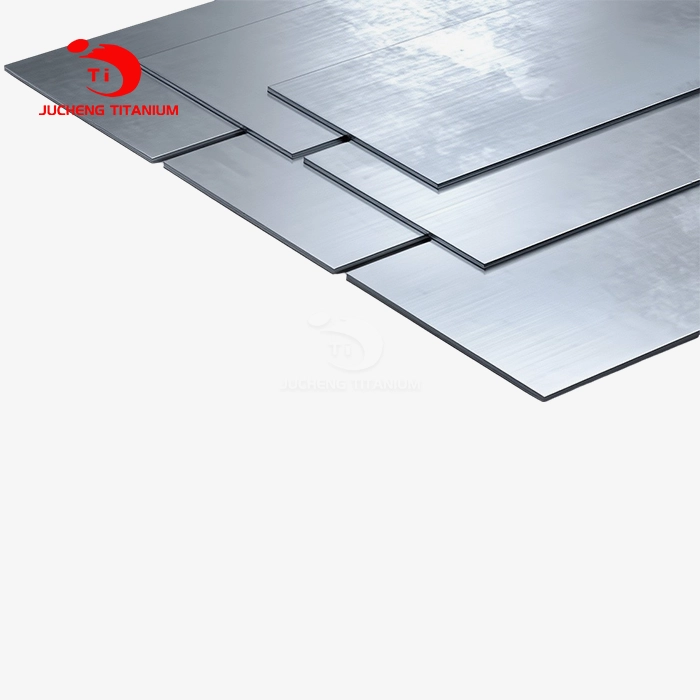
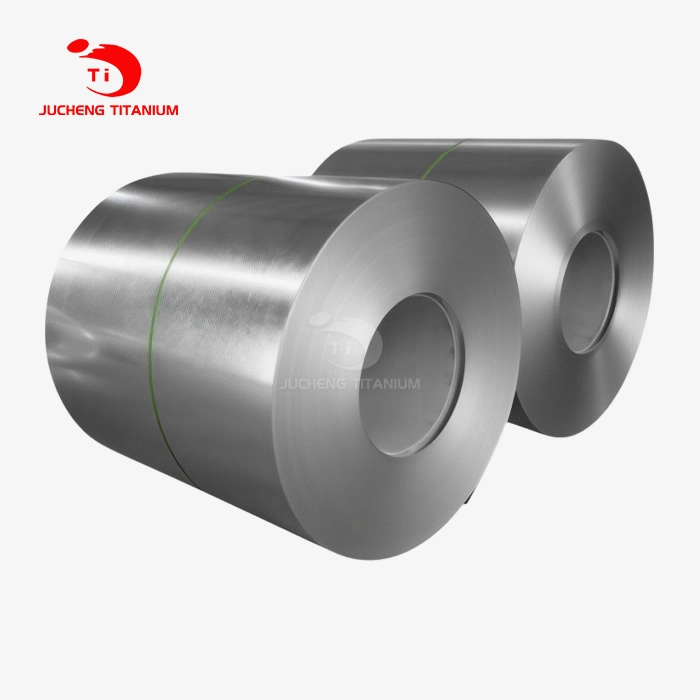
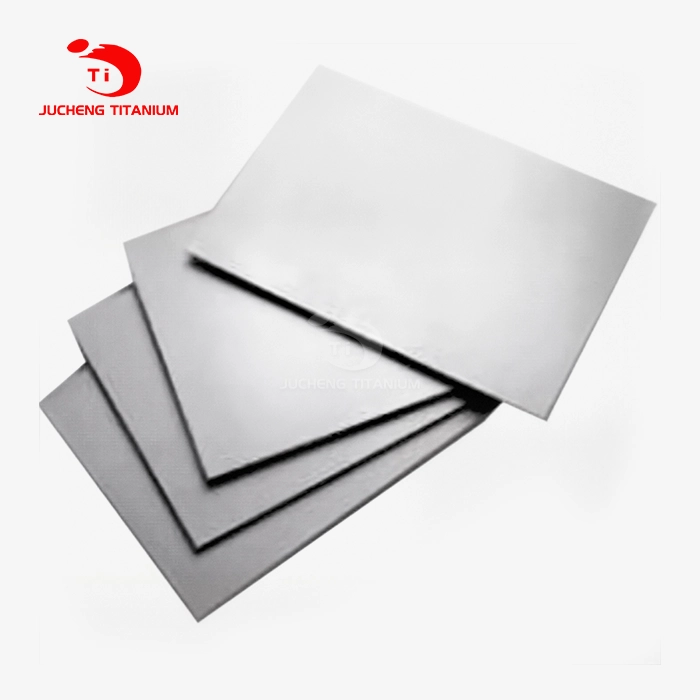
When sourcing a titanium 1inch plate, procurement managers must verify grade certification, dimensional tolerances, surface finish quality, and supplier traceability documentation. Material consistency, compliance with ASTM B265 or AMS 4911 standards, and mechanical property validation through mill test reports are non-negotiable. Confirming these elements upfront prevents costly production delays, ensures regulatory compliance, and guarantees performance reliability in demanding aerospace, chemical processing, and medical device applications.


Understanding the Core Properties of 1 Inch Titanium Plate
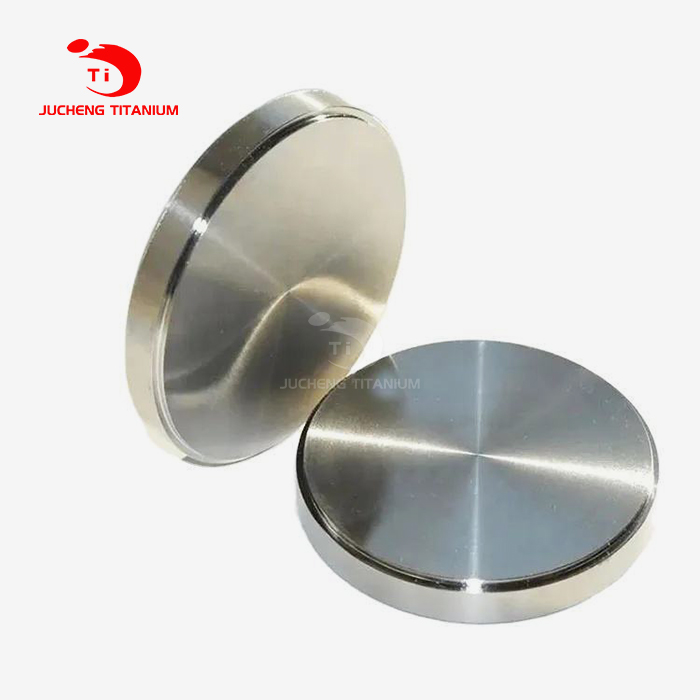
When it comes to buying industrial materials, titanium 1inch plates (about 25.4 mm) are in a special group. Instead of smaller sheets that are easier to shape, thick titanium plates offer structural integrity for load-bearing uses where mechanical strength and physical stability are very important. Titanium has a density of about 4.51 g/cm³, which means that a titanium 1inch plate weighs a lot less than steel plates of the same size but with the same tensile strength. This makes it perfect for aircraft structures that need to be light and equipment used in the ocean.

Physical Characteristics That Define Performance
Titanium's most important quality is its resistance to corrosion. A stable layer of titanium dioxide (TiO₂) forms on its own, protecting the base metal from acids, chlorides, and high-temperature oxidation. This quality makes equipment last longer in places like petrochemical reactors and the ocean, where stainless steel breaks down quickly due to pitting and crevice corrosion. Compared to aluminum, thermal conductivity stays low, which can make welding more difficult but improves performance in heat exchanger uses that need to control thermal transfer.

Grade Selection: Matching Material to Application
Grade 2 titanium plates have a commercially pure makeup and can be cold shaped and welded very well. Grade 2 has a tensile strength of about 345 MPa, making it good for chemical processing equipment and building projects where resistance to rust is more important than strength. On the other hand, Grade 5 (Ti-6Al-4V) titanium alloy has a tensile strength of more than 895 MPa thanks to the addition of aluminum and vanadium. This makes it the workhorse of the aircraft industry for building pressure vessels and landing gear components. Grade 7, which has been strengthened with palladium, has the best resistance to reducing acids, meeting specific needs in chemical processes. By knowing the differences between these grades, buyers can balance the costs of materials against performance requirements, avoiding either too much engineering or terrible underperformance.

Critical Comparison Factors: Titanium 1 Inch Plate vs Alternatives
To choose titanium over other materials, you need to do a thorough cost-benefit analysis that is based on lifecycle economics instead of the price of the initial purchase. At first, steel plates may be a tenth the price of titanium, but over the course of 20 years, maintenance cycles, corrosion-related replacements, and system downtime will make the total cost of ownership much higher.
Corrosion Resistance in Extreme Environments
When the pH is neutral, stainless steel types like 316L don't rust too easily, but they break down quickly when they are exposed to chloride amounts above 1,000 ppm at high temperatures. Titanium stays passive in seawater at temperatures above 250°C, so it doesn't need coatings or cathodic protection systems to keep it safe. Nickel alloys, like Hastelloy C-276, are also resistant to chemicals, but they are almost twice as dense as titanium. This means that they don't offer the weight savings that are important for aircraft and underwater uses. Aluminum alloys are easier to work with and conduct heat better than titanium, but they don't keep their strength at high temperatures above 300°C, which means they can't be used in turbine engine parts.

Strength-to-Weight Optimization
The strength-to-weight ratio is very important in situations where the weight of the structure has a direct effect on how well it works. Manufacturers of airplanes figure that every kilogram of weight that is taken off the airframe saves a lot of fuel over the life of the plane. A Grade 5 titanium 1inch plate has a specific strength (strength-to-density ratio) that is about 40% higher than high-strength steel alloys. This means that structural parts can be smaller without losing their ability to hold weight. This lower weight affects the base, supporting structures, and mounting gear, which saves more money on the original cost of materials across the whole system.
Machinability Considerations
Titanium is difficult to machine because it doesn't conduct heat well and reacts chemically with cutting tools. This makes the cost of fabrication higher. When the wrong cutting parameters cause localized heating that leads to work hardening and galling, tool wear rates go up very quickly. For effective material removal, you need specialized carbide or polycrystalline diamond tools along with flood cooling systems. Steel and metal are better when complex designs need a lot of secondary processes because they can handle mistakes better. Modern CNC programming and toolpath optimization, on the other hand, have closed this gap, especially for big production runs where the costs of making each unit are spread out over many orders.

Essential Procurement Considerations Before Ordering
To find your way through the global titanium supply chain, you need to do more than just compare prices. Whether your procurement brings value or liability depends on how authentic the materials are, how clear the supply chain is, and how technically skilled the suppliers are.
Verifying Supplier Credentials and Material Authenticity
When fake titanium gets into B2B supply lines, it can be very dangerous, especially in medical and aerospace uses that need to be safe. Suppliers with a good reputation keep certifications like AS9100 for aerospace quality management and ISO 13485 for medical device materials. Ask for proof that the mill source can be tracked—each plate should be linked to a specific heat number and output lot records. Suppliers that have been around for a while, like Baoji Jucheng Titanium Industry Co., Ltd., have complete quality management systems that cover everything from buying the raw materials to inspecting the finished product. These systems keep written records of the chain of custody that are needed for regulatory audits. Their 20-year history of business and national-level status as a specialized company give customers confidence that the materials they certify are the right ones in terms of composition and mechanical qualities.

Custom Specification Requirements
Standard titanium 1inch plates come in widths of up to 2,500 mm and lengths of up to 10,000 mm, and their thicknesses range from 4 mm to 80 mm. For many industrial uses, non-standard sizes, edge preparations, or surface processes are needed in addition to standard products. Talk about the size limits of your project as soon as possible. Hot-rolled plates often have thickness differences of ±0.5mm, which means that precision assemblies may need extra work on the machine. Acid pickling and other surface treatments get rid of scale and dirt, and polished finishes make the surface of clean pharmaceutical equipment less rough. If a supplier has their own cutting facilities, they can provide plates with chamfered edges, drilled bolt patterns, or CNC-milled features. This can help you streamline your supply chain and cut down on lead times.
Lead Times and Inventory Availability
Because of how it is made, titanium has more complicated sourcing cycles than other metals. Standard grade materials that are in stock may be shipped within two weeks. However, wait times can go up to 12 to 16 weeks for special metal compositions or non-standard sizes. Suppliers who keep a lot of inventory on hand—Jucheng Titanium keeps about 3,000 tons on hand all year—protect against problems in the supply chain and meet tight project deadlines. Set up blanket purchase agreements for needs that come up over and over again. This will let your suppliers predict demand and prepare inventory that fits your production schedules. This method reduces the changes in spot market prices and makes sure that materials are available during times of high demand when titanium mill capacity around the world is limited.

How to Evaluate and Verify Quality Before Finalizing the Purchase
Quality control procedures for titanium 1inch plate separate trustworthy sellers from dishonest traders who don't know much about technology or can't track their materials. Setting up a structured inspection schedule will protect your company from non-conforming materials that could hurt the performance of your products or cause you to break the law.
Documentation Review and Certification Validation
Ask for full mill test results (MTRs) that follow ASTM E1417 guidelines and include information on the chemical make-up using optical emission spectroscopy and the mechanical qualities measured by tensile testing. In MTRs, the relevant material specifications should be used. These could be ASME SB265 for pressure vessel construction, AMS 4911 for Grade 5 aerospace applications, or ASTM B265 for commercially pure grades. Check that the heat numbers stamped on actual plates match the ones on the MTR paperwork to make sure that the lot can be tracked. According to ISO 10993 guidelines, companies that make medical devices need to do more biocompatibility testing. They also need certificates from approved testing labs that show cytotoxicity and sensitization studies.
Physical and Dimensional Inspection Protocols
A visual examination finds surface flaws like cracks, laminations, and foreign material embedment that weaken the structure. Using calibrated micrometers to check the dimensions proves the thickness tolerances, and flatness gages find warping that goes beyond the limits allowed for your manufacturing processes. Ultrasonic testing (UT) according to AMS 2631 finds flaws inside a material that can't be seen from the outside, like holes, inclusions, or segregation zones that start fatigue cracks when the material is loaded and unloaded over and over again. For pressure boundary uses, heavy-gauge plates must go through a 100% volumetric check to make sure they don't have any catastrophic failure risks.

Mechanical and Chemical Property Testing
Third-party testing from a different company verifies the certifications given by suppliers. This is especially important when setting up new supply relationships or making sure products are safe for use in important projects. Tensile testing makes sure that the minimums for yield strength, ultimate tensile strength, and elongation are met. Hardness testing (using the Rockwell or Brinell scales) quickly checks for consistency in the heat treatment process. Chemical analysis using X-ray fluorescence or inductively coupled plasma spectroscopy checks the amounts of alloying elements and finds contamination. For example, oxygen levels above 0.25% make alpha-case layers that are brittle and easily crack during the making process. In aerospace applications, hydrogen embrittlement causes high-stress parts to fail slowly through cracking. This makes hydrogen analysis very important.
Practical Tips for Machining and Handling 1 Inch Titanium Plate
Making thick titanium plates requires specialized knowledge that keeps the cost of processing low and stops damage to the material. Understanding how titanium behaves in specific ways when it is cut, shaped, and heated makes manufacturing more efficient.
Machining Parameters for Tool Life and Surface Integrity
Titanium doesn't carry heat well, so cutting heat builds up at the point where the tool meets the chip faster, which speeds up carbide diffusion wear and hole formation. For roughing work, keep the cutting speed between 15 and 25 meters per minute, which is much slower than the normal 60 to 100 m/min range for steel. High-pressure flood coolant (at least 70 bar) moves chips out of the cutting zone and stops heat from building up, which would otherwise strengthen the surface. Cutting forces are smaller in climb milling than in regular milling, which lowers sound and improves surface finish. It is necessary to have sharp tools because dull edges create too much heat and encourage galling, which is when titanium cold-welds to cutting edges and destroys the geometry of the tool.
Heat Treatment for Property Enhancement
Stress-relief annealing at 540–650°C for 1–2 hours gets rid of any remaining stresses from milling or shaping. This keeps the dimensions stable and stops warping during further processing. Solution treating Grade 5 titanium 1inch plate at 955°C and then aging it at 540°C raises its tensile strength by 10-15% but makes it slightly less flexible. Controlled cooling rates stop too much grain growth, which weakens the material. Annealing can only happen in a vacuum or an inert atmosphere. Oxidation above 430°C creates an alpha-case that weakens the metal and needs to be removed by chemical milling or cutting, which costs more and cuts down on the end thickness.

Fabrication Best Practices for Assembly Integration
When welding thick titanium sections, inert gas shielding is needed on both the weld face and the root sides. Trailing shields are also needed to keep the metal that is cooling from getting contaminated by air. Argon-purged backing systems stop rusting, which makes weld roots weak and likely to crack. Preheating to 90–150°C lowers temperature gradients in thick areas, which makes distortion and stress buildup less likely. Post-weld stress relief is needed for pressure vessels and structural assemblies to get their flexibility back in areas that have been damaged by heat. Using titanium bolts for mechanical fixing stops galvanic corrosion between metals that are not the same, and molybdenum disulfide-based thread lubricants stop galling when applying force to an assembly.
Conclusion
Getting titanium 1inch plates that are at least an inch thick needs a lot of checks, including making sure the materials are certified, the source is reliable, the measurements are correct, and there is quality paperwork. By knowing the properties that are unique to each grade, you can be sure that the material you choose will meet the mechanical needs and environmental conditions of your application. Titanium is more cost-effective than other materials when you look at its lifecycle costs instead of its initial buy price. This is especially true in situations where corrosion or weight is a concern. Your company can lower supply chain risks and get materials that meet strict aerospace, medical, and industrial standards by working with well-known suppliers that offer traceability, technical support, and a reliable inventory.
Frequently Asked Questions
1. What distinguishes Grade 2 from Grade 5 titanium plates?
Grade 2 titanium is commercially pure and has a minimum content of 98.9% titanium. It is very resistant to corrosion and can be welded, and its tensile strength is about 345 MPa. Grade 5 (Ti-6Al-4V) is an alpha-beta metal with 6% aluminum and 4% vanadium. It has a tensile strength of more than 895 MPa and performs better at high temperatures. Grade 5 is about 30–40% more expensive than Grade 2, but it is strong enough for use in aerospace structures and high-pressure chemical processing equipment.
2. How does titanium perform in marine environments?
Titanium is very resistant to weathering by seawater across the whole range of salinities. It stays solid at temperatures up to 260°C, where stainless steels quickly break down. The steady titanium dioxide film doesn't allow pitting, crevice corrosion, or stress-corrosion cracks to happen, even in port waters that are polluted with sulfides and living things. Because it lasts so long, titanium is commonly used in offshore oil platforms, desalination plants, and naval ship parts where maintenance is hard to get to and the cost of replacing equipment is too high.
3. What factors extend lead times for custom titanium orders?
When compared to stock plate cutting, non-standard sizes that need special mill rolling plans add 8 to 12 weeks. More quality control steps and testing methods are needed when there are changes to the chemistry or tighter tolerance standards. International shipping, clearing customs, and preparing paperwork for aerospace-certified materials can cause delays, especially when the final target country needs third-party inspection proof points before releasing the material.
Partner with Jucheng Titanium for Certified Titanium 1 Inch Plate Supply
Jucheng Titanium can help you with your procurement problems because they have been handling titanium for more than twenty years and have a large collection as well as the ability to make custom parts, which makes your supply chain more efficient. Our 3,000-ton stock inventory means that standard grades can be delivered quickly, and our specialized production facilities can make changes to the alloy, surface treatments, and sizes that are specific to your needs. As a national-level specialized business with 45 patents in titanium processing technology, we provide materials that meet the requirements of ASTM B265, AMS 4911, and ASME SB265, along with full traceability documentation that meets the needs of aerospace and medical device regulatory audits. Get in touch with our technical team at s4@juchengti.com to talk about the details of your project and find out how our position as a top manufacturer of titanium 1inch plates can help you save money on materials, cut down on lead times, and make sure that the quality of your production stays the same across all volumes.

References
1. Boyer, R., Welsch, G., and Collings, E.W., Materials Properties Handbook: Titanium Alloys, ASM International, Materials Park, OH, 1994.
2. Donachie, Matthew J., Titanium: A Technical Guide, 2nd Edition, ASM International, 2000.
3. Peters, M., Kumpfert, J., Taylor, C.H., and Leyens, C., "Titanium Alloys for Aerospace Applications," Advanced Engineering Materials, Vol. 5, No. 6, 2003, pp. 419-427.
4. Schutz, R.W. and Thomas, D.E., "Corrosion of Titanium and Titanium Alloys," Metals Handbook Volume 13: Corrosion, ASM International, 1987, pp. 669-706.
5. ASTM International, "ASTM B265-20a: Standard Specification for Titanium and Titanium Alloy Strip, Sheet, and Plate," West Conshohocken, PA, 2020.
6. Lutjering, G. and Williams, J.C., Titanium: Engineering Materials and Processes, 2nd Edition, Springer-Verlag, Berlin, 2007.