
Hafnium Metal Plate vs titanium metal plate: Key Differences
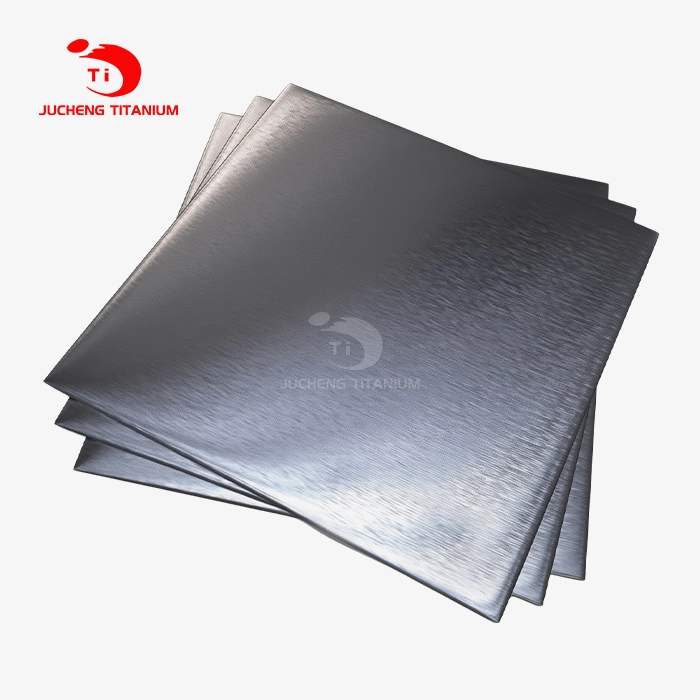
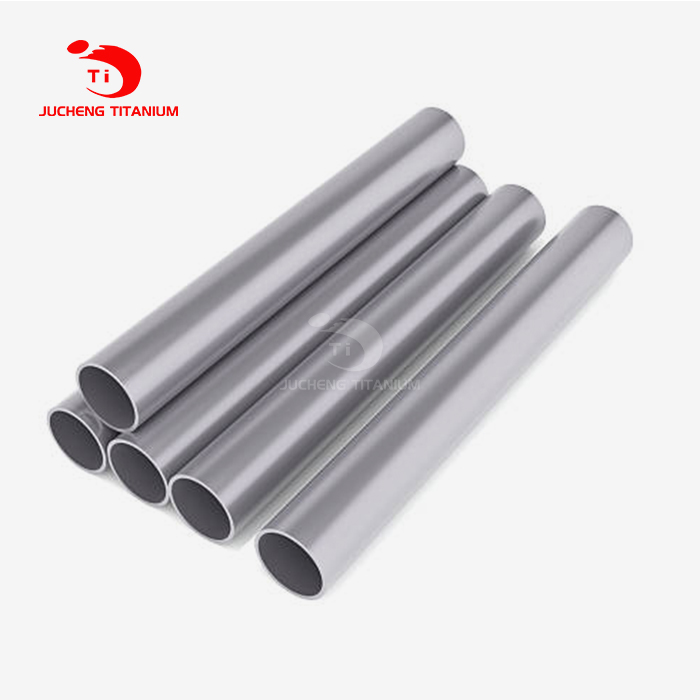
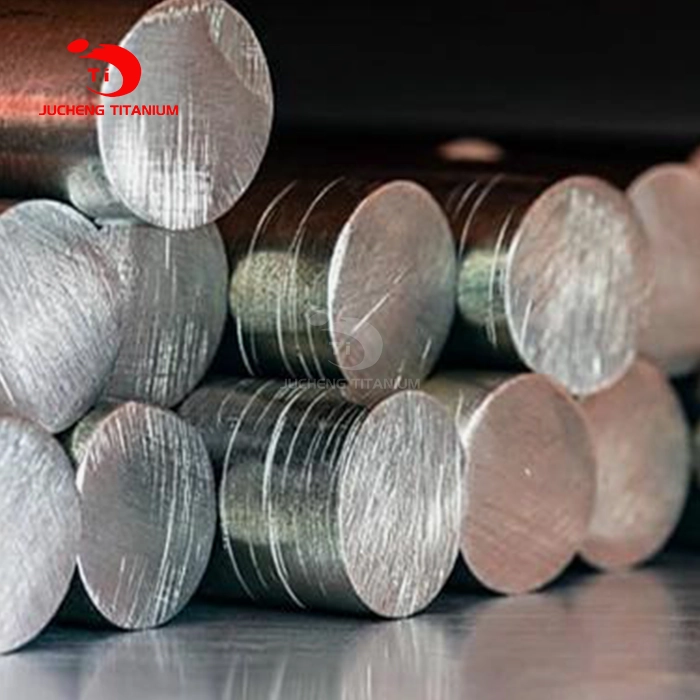
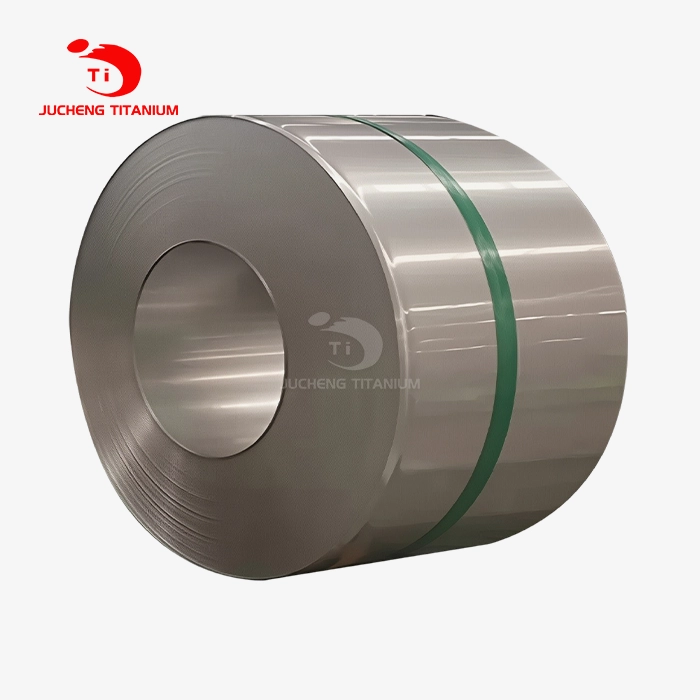
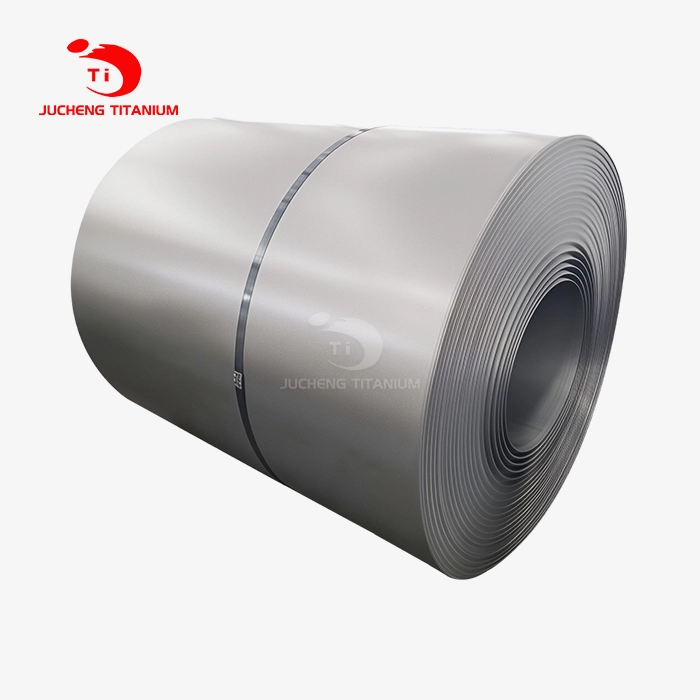
Know the difference between hafnium and titanium metal plates while seeking high-tech materials for harsh industrial usage. Titanium metal plates, which are flat-rolled commodities above 4.75 mm thick and satisfy ASTM B265, are robust for their weight and don't rust in chemicals, aviation, or marine environments. While hafnium plates resist corrosion like stainless steel, they absorb neutrons, making them helpful in nuclear and semiconductor technologies. Both materials are important for distinct industrial challenges, but titanium is more flexible, cheaper, and simpler to acquire. It is also appropriate for most B2B procurement scenarios requiring reliable performance under severe environments.
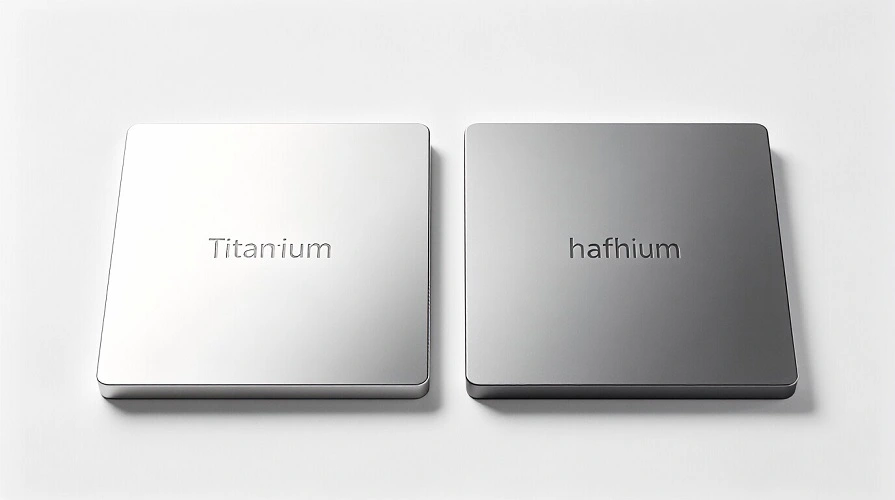
General Overview of Hafnium and Titanium Metal Plates
Understanding Titanium Metal Plates
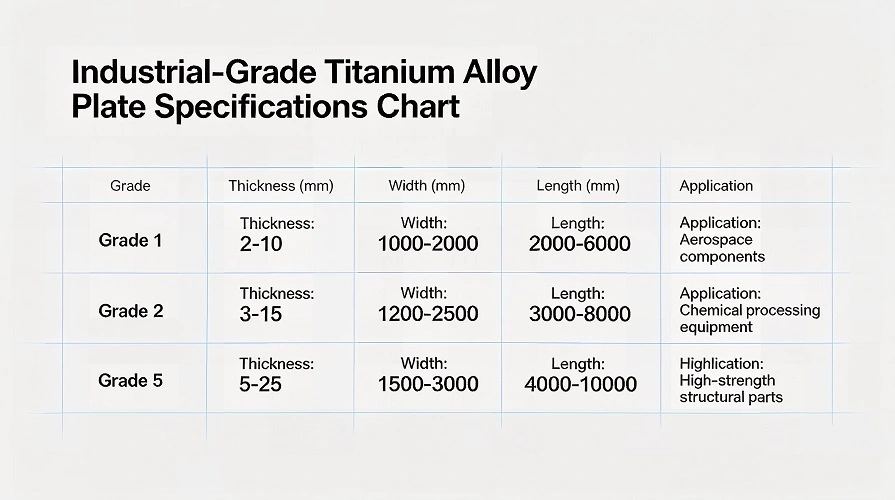
Titanium metal plates are a key industrial material. These plates are normally 4mm to 80mm thick and 950mm to 2,500mm wide. They're vacuum arc remelted, hot-rolled, and heated. We fabricate plates to ASTM B265, ASTM F67, AMS 4911, and ASME SB265. Our aviation and chemical industrial customers get traceability and approval.
With a density of 4.51 g/cm³, the material is robust and lighter than steel counterparts, weighing around 45% less. Titanium plates come in commercially pure Gr1 and Gr2 for corrosion resistance, Gr5 (Ti-6Al-4V) for mechanical qualities, and Gr7 and Gr12 for chemical resistance. They answer the industrial dilemma of making products lighter and last longer. Reactor tanks, heat exchangers, and structural aircraft parts with machined, polished, and acid-pickled finishes meet their specifications.
Hafnium Metal Plates: Niche Applications
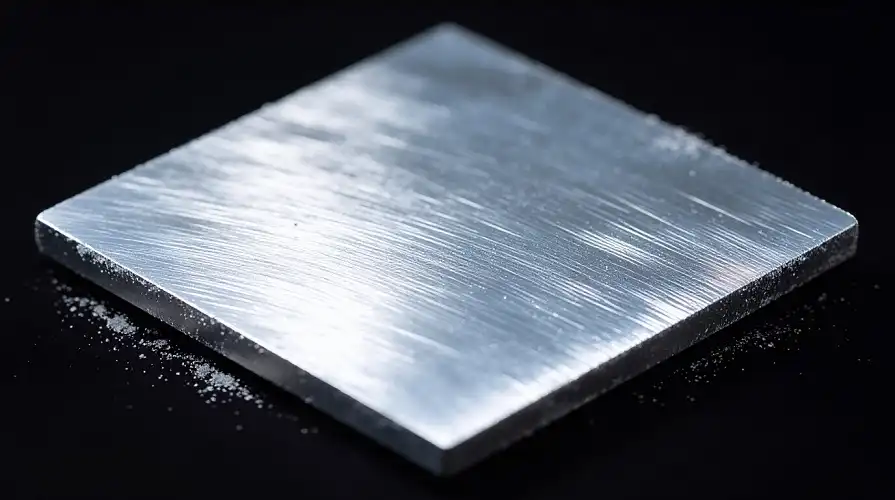
Hafnium plates are approximately three times denser than titanium plates at 13.31 g/cm³. This strong metal is ideal for nuclear reactor control rods because it absorbs neutrons. The material resists corrosion in acidic circumstances and retains its form at 2,200°C.
Despite its advantages, hafnium is produced in limited quantities (less than 100 metric tonnes per year) and costs more than titanium. This implies it can only be utilised when titanium choices don't fulfil scientific requirements. Titanium plates are cheaper and better for most industrial tasks that demand corrosion resistance, structural integrity, and heat retention.
Comparative Analysis: Hafnium Metal Plate vs Titanium Metal Plate
Mechanical Performance and Structural Integrity
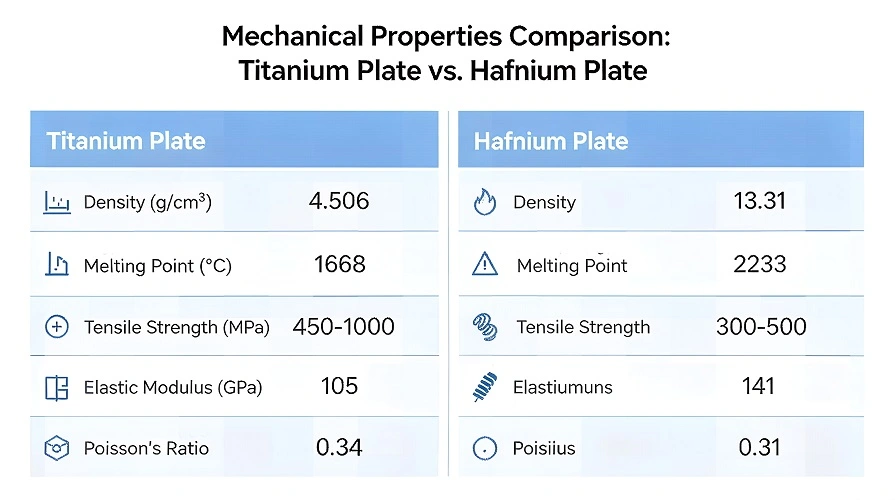
Tensile strength reveals technological variances. Commercially pure titanium Gr2 has a tensile strength of 345–483 MPa, whereas titanium alloy Gr5 has 895–930 MPa, more than many stainless steels. Hafnium has a compressive strength of 760 MPa in its pure condition, between commercially pure titanium and titanium metal plate alloys.
Titanium Gr5 has a yield strength of 828 MPa, making it ideal for pressure vessels and spacecraft structural elements. Although both materials are strong enough for commercial applications, titanium has a greater strength-to-weight ratio, making it more efficient per kilogram. We've delivered titanium plates to chemical laboratories that operate at pressures over 10 MPa, where material dependability impacts safety and maintenance.
Elongation is crucial for fabrication. Titanium Gr2 can stretch 20% and be cold moulded and welded without stress breaking. This ability to shape objects makes developing unique tools easier and cheaper.
Corrosion Resistance Across Industrial Environments
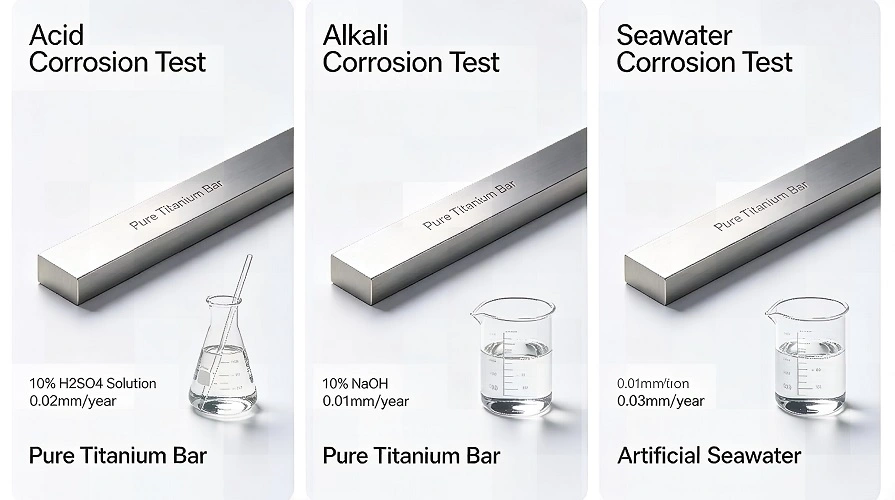
After injury, titanium develops a self-healing passive coating of TiO₂ that quickly regenerates. It resists chloride pitting and crevice rust. Chemical processing equipment that uses hydrochloric acid, sulphuric acid, and sodium hypochlorite uses our titanium metal plates. Other metals degrade in months, but these plates survive years.
Seawater doesn't corrode titanium from -20°C to 260°C. This feature eliminates the routine maintenance and significant expense of replacing stainless steel or copper-nickel alloy heat exchangers and condenser systems. Titanium rusts in acidic situations, whereas hapnium doesn't. Titanium resists rust in alkaline, salty, and oxidising conditions.
Longevity matters economically over time. Our titanium heat exchangers for desalination plants have been operated continuously for 15 years without wear. In contrast, steel units require replacement every 3–5 years. Despite a larger material investment, its total cost of ownership is cheaper since it lasts longer.
Thermal and Electrical Characteristics
These metals transfer heat differently. Titanium conducts heat at 15-22 W/m·K, depending on grade and temperature. In contrast, hafnium conducts heat at about 23 W/m·K. Copper and aluminium transmit heat better than these two. They may be employed in thermal barriers or controlled heat transfer applications.
Titanium is structurally robust at low temperatures up to 430°C for commercially pure grades and 540°C for certain alloys. Most industrial power facilities, chemical plants, and marine systems operate within this temperature range. Hafnium can endure temperatures beyond 2,000°C; most industries don't require this capacity.
Both materials still conduct electricity poorly. Titanium is 3.1% IACS. This is useful in electrochemical procedures that need safe coatings for conductive surfaces, such as hydrometallurgy and titanium metal plates.
Cost-Effectiveness and Supply Chain Accessibility
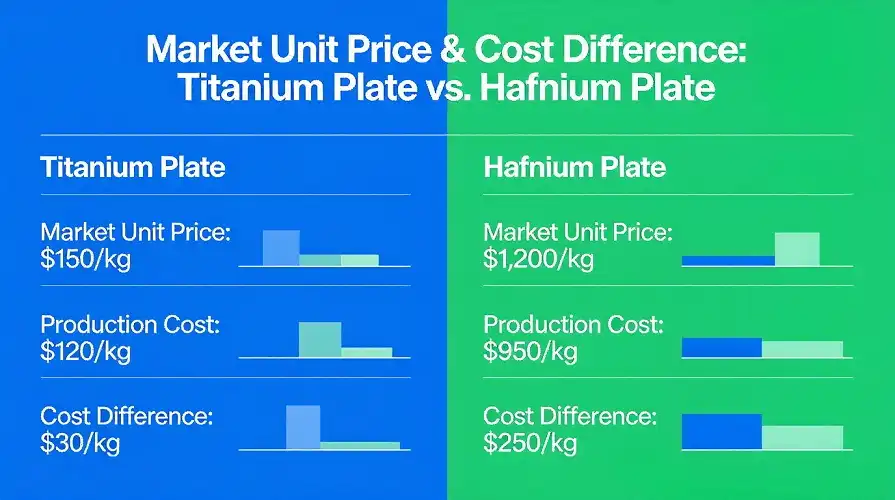
Price discrepancies strongly influence buying decisions. Titanium metal plates cost $15–$45 per kilogram, depending on quality, quantity, thickness, and market conditions. Due to its scarcity and limited production, hafnium costs around $800 to $1,200 per kilogram. Unless necessary by science, hafnium is a bad investment due to its 20–40x greater cost.
These goods also stand out for their supply chain dependability. Keeping 3,000 tonnes of varied titanium in store allows us to meet urgent requests in days instead of months. Hafnium is hard to get; there are few sources, and supply issues might delay project deadlines.
The market accepts raw resources and completed items. Our Baoji, China's titanium valley factory, processes over 500 titanium tool sets annually. Our services include bespoke cutting, forming, welding, and finishing. Few specialised merchants can still manufacture hafnium, making purchase more difficult and hazardous.
Application-Specific Insights: Choosing the Right Metal Plate
Aerospace and Defense Applications
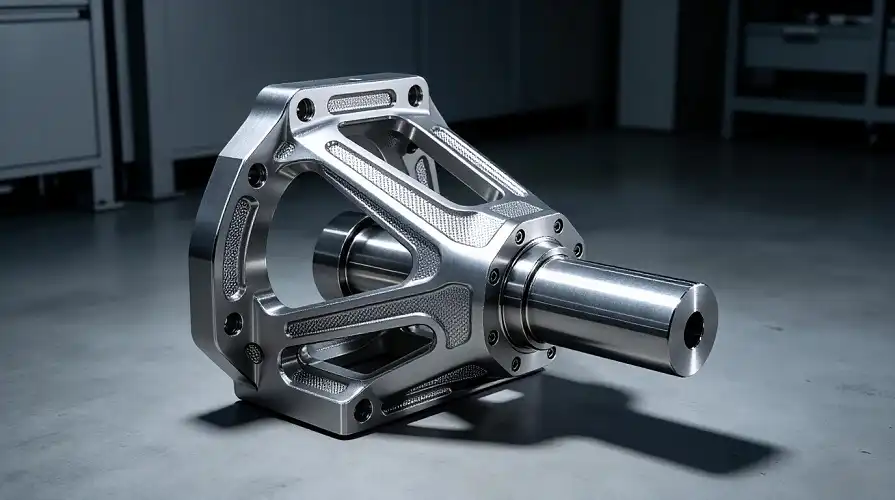
To get the most out of fuel economy and payload capacity, aerospace makers look for materials that are strong but light. Titanium metal plates of Gr5 grade are the perfect mix of strength and weight, weighing almost half as much as steel plates but being just as strong. We provide aerospace-grade plates that meet the requirements of AMS 4911 standards. These plates come with all the necessary material approval and tracking paperwork for airplane structural parts, landing gear assemblies, and engine parts.
The material's ability to fight wear is very important in situations where it is loaded and unloaded many times. Titanium can go through millions of stress cycles without cracking, which means that parts will be reliable for their whole useful life. Titanium is useful for defense because it is not magnetic, which makes it harder to find in secret equipment and shipbuilding.
Stable temperature is very important for motion systems and surfaces that move air. Titanium Gr5 keeps its mechanical qualities at temperatures where aluminum alloys weaken. This means that supersonic and hypersonic systems can do more. Outside of specialist thermal protection systems, hafnium doesn't have many uses in aircraft. Its ability to withstand high temperatures makes up for the higher cost.
Chemical Processing and Marine Industries
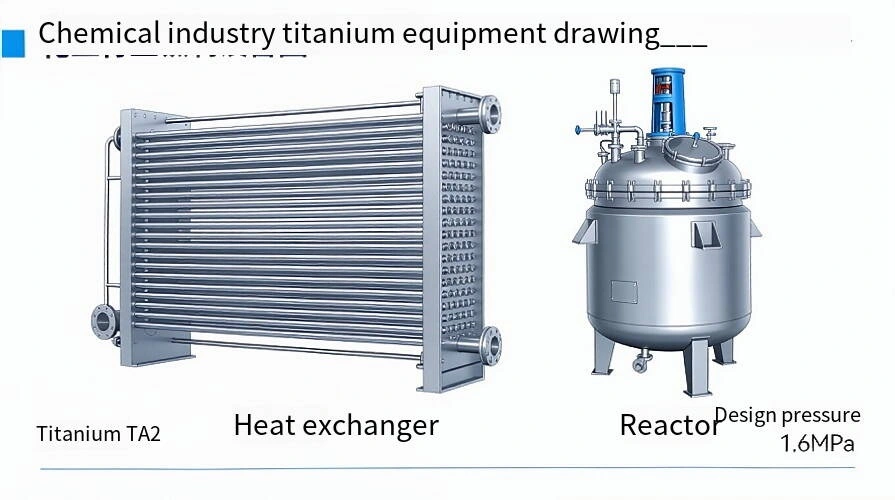
Corrosion is the main way that chemical processing equipment breaks down, which is why titanium is chosen for reactor tanks, distillation columns, and pipe systems. We've made reactors from titanium metal plates that can handle highly acidic media at temperatures above 180°C and pressures above 8 MPa, while stainless steel reactors would break down in 18 to 24 months.
The material gets rid of worries about contamination in the making of medicine and food-grade chemicals. Titanium's inert surface keeps products from changing color and metallic ions from escaping, which would lower the quality of the batch. Our titanium equipment is used by fine chemical makers who need it to be completely clean and consistent from batch to batch.
Titanium's resistance to seawater is very useful in marine uses. Titanium plate heat exchangers work in offshore platforms, desalination plants, and military ships without any upkeep. Getting rid of biofouling-induced rust lowers the number of times that need to be cleaned and inspected, which greatly reduces running costs. In these situations, hafnium doesn't offer any real benefits, and its high costs make it impractical to use.
Industrial Machinery and Power Generation
Power plants use titanium condensers and cooling systems that don't wear down easily when high-velocity water flows through them carrying solids in suspension. The material's ability to fight corrosion and be strong mechanically makes equipment last longer in coal-fired, nuclear, and geothermal plants that have to deal with tough temperature cycling conditions.
Titanium can handle temperature differences of more than 200°C without thermal stress cracking, which is useful for industrial heat exchangers. We've sold heat exchangers made from titanium metal plates to steel mills and industrial plants where uptime is very important for keeping production going. In these places, one piece of broken technology can stop activities, which can cost hundreds of thousands of dollars every hour.
Because the material is compatible with a wide range of process fluids, from organic solvents to inorganic acids, it makes it easier to build equipment for sites that make more than one product. Titanium tools can handle a wide range of chemicals, so there is no need to keep separate working lines for each type of metal. This saves money on capital investments and makes operations more flexible.
Procurement Guide: Sourcing Quality Titanium and Hafnium Metal Plates
Essential Quality Certifications and Standards
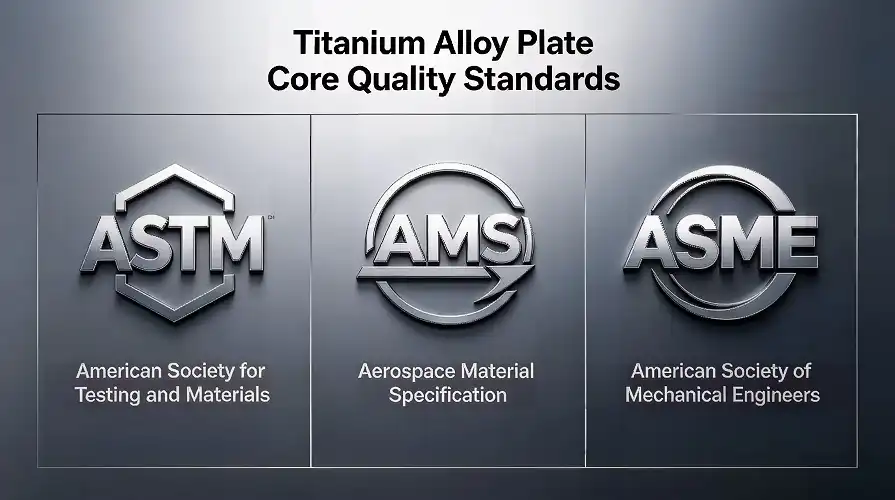
Professionals in charge of buying things should give preference to sellers who offer complete proof documents. ASTM B265 compliance makes sure that measurements are correct, chemicals are used correctly, and material properties are checked by a third party. Every package of titanium metal plates comes with a mill test report (MTR) that lists the heat numbers, chemical analysis results, tension test data, and ultrasonic inspection findings.
For aerospace uses, you need to get AMS 4911 approval, which shows that you have better quality control measures in place, such as tighter compositional limits and more non-destructive testing. Medical device makers need to make sure that their products meet ASTM F67 guidelines for biocompatibility and surface cleanliness. Our quality management system maintains its ISO 9001:2015 approval by following special steps to meet the needs of this industry.
In regulated businesses, being able to track the supply line lowers risk. Every plate we make has a lasting label that connects the finished product to the sources of the raw materials, the factors of the production process, and records of inspections. This paperwork is very important during governmental audits and failure reviews, and it keeps your company from being held responsible.
Evaluating Supplier Capabilities and Reliability
When choosing a supplier, it's not just about price; professional skills and business security are also important. When you ask for unique sizes or special surface finishes for your titanium metal plates, manufacturing knowledge is very important. We've been processing titanium for more than 20 years, so we know how to solve difficult manufacturing problems like large-format plates, precise thickness control, and unique heat treatment methods.
During times of high demand, the dependability of deliveries is affected by the production capability. Our 120,000-square-meter plant continuously processes titanium, keeping an inventory level that meets both urgent delivery needs and planned project deadlines. Smaller suppliers might have trouble meeting pressing requests or contracts for a lot of goods without having to wait longer for supplies to arrive.
The ability to provide technical help sets strategic partners apart from commodity providers. Our engineering team helps with choosing the right material grade, coming up with new welding procedures, and finding the best ways to use the making process. This way of working together lowers the risk of the project because problems are dealt with during the planning phase instead of being found during construction or installation.
Customization Services and Value-Added Processing
Standard sizes for titanium metal plates are useful for many things, but custom cutting gets rid of trash and lowers the cost of extra processing. We offer precision cutting services that make plates that meet exact requirements, even if they have complicated forms and need to be held to very tight tolerances. Cutting with a water jet keeps the material's qualities without creating heat-affected zones that could weaken the material's resistance to rust near the cut edges.
There are different ways to finish the surface of things so that they can be used in different ways. Acid pickling gets rid of surface dirt and metal scales, leaving clean surfaces that are perfect for painting or welding. Polished finishes make it easier to clean in safe settings and reduce the roughness of fluids in flow systems. Machined sides are perfectly flat for fitting gaskets or putting together machines.
Customizing the heat treatment of a material makes its features work best in the situations it will be used in. When you anneal something, you get rid of any leftover stresses from the forming process. This makes the structure more stable and resistant to rust. Controlled cooling rates smooth out the structure of the grains, which improves the mechanical qualities of important parts that carry loads. With these value-added services, normal mill goods are turned into solutions that are ready to be used.
Conclusion
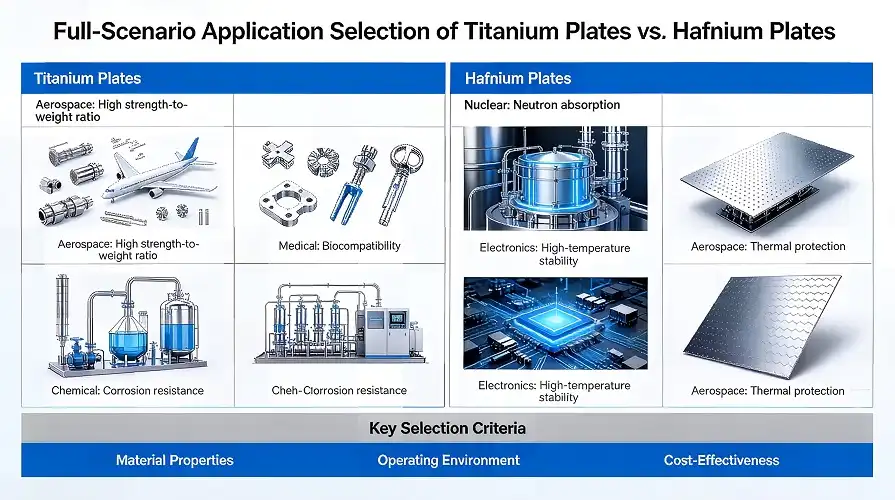
When choosing between hafnium and titanium plates, you need to carefully think about the needs of the application, the performance standards, and the cost limits. Hafnium is used in nuclear power plants and other very hot places, but titanium is more useful in the aircraft, chemical processing, marine, and industrial fields. Due to its high resistance to rust, good strength-to-weight ratio, and wide supply, the material is the best choice for the toughest industrial uses. Partnering with experienced providers that offer full certifications, customization options, and expert support is the best way to make sure that the procurement goes smoothly and that the total cost of ownership and project risk are kept to a minimum.
Frequently Asked Questions
1. What are the primary differences between hafnium and titanium metal plates?
Hafnium plates are very good at absorbing neutrons and staying strong at temperatures above 2,000°C, which makes them useful in nuclear and electronics uses. Titanium metal plates have better strength-to-weight ratios, are resistant to rust in a wide range of conditions, and can be used in many industries at a much lower cost. Titanium is better for uses that need to be light because it has a density of 4.51 g/cm³ compared to 13.31 g/cm³ for hafnium. Its long supply chain also makes it easy to get.
2. How do I verify titanium plate certifications from suppliers?
Ask for full mill test records that include heat numbers, chemical makeup analysis, mechanical property test results, and results from non-destructive examinations. Check that the product meets ASTM B265 or another relevant standard by having it tested by a third-party lab if you are working with sensitive uses. Check that the company has ISO 9001 quality management certification and qualifications specific to the business, like AMS standards for aerospace or ASTM F67 for medical uses.
3. Which titanium grade best suits chemical processing equipment?
The choice of grade varies depending on the chemicals that were exposed. Gr1 and Gr2 offer the best corrosion protection in conditions that are highly oxidizing or slightly reducing. Palladium added to Gr7 and Gr12 makes them more resistant to reducing acids. When corrosion conditions allow it, Gr5 has greater mechanical strength for pressure tanks. Talking to materials engineers will help you choose the best grade for your process chemistry.
Contact Jucheng Titanium for Custom Titanium Metal Plate Solutions
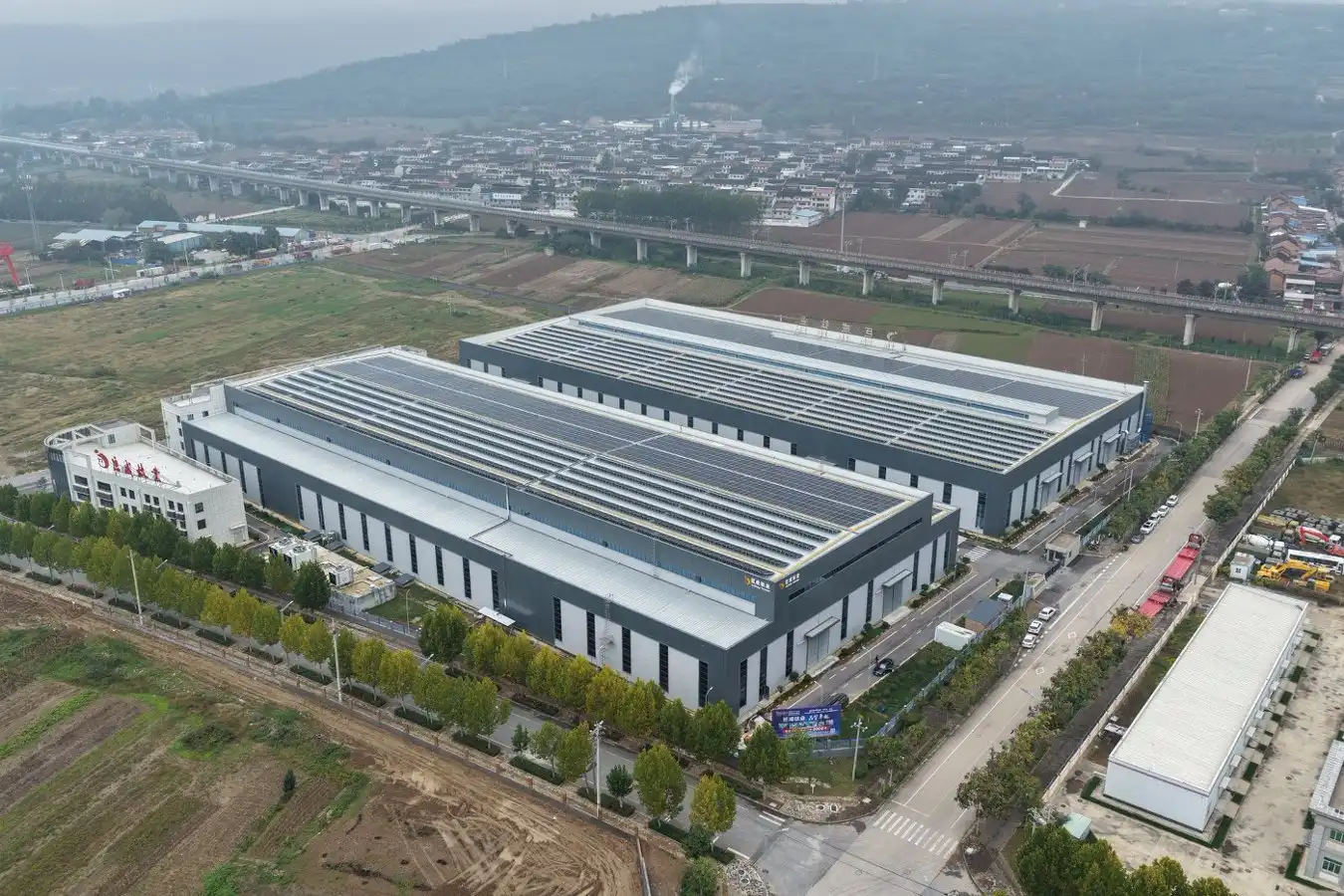
We know that your material choices are affected by the time it takes to get things and the money you have available. Our team at Jucheng Titanium has more than 20 years of experience helping companies that make aerospace parts, chemicals, and industrial tools choose the best titanium options. We can deliver quality materials that meet your exact needs and meet your deadlines because we keep 3,000 tons of approved goods on hand and can make things to order. Send an email to s4@juchengti.com right now to get a full quote from our titanium metal plate manufacturer.
References
1. Boyer, R., Welsch, G., & Collings, E.W. (1994). Materials Properties Handbook: Titanium Alloys. ASM International.
2. Schutz, R.W. & Watkins, H.B. (1998). "Recent developments in titanium alloy application in the energy industry." Materials Science and Engineering: A, 243(1-2), 305-315.
3. Donachie, M.J. (2000). Titanium: A Technical Guide (2nd ed.). ASM International.
4. Peters, M., Kumpfert, J., Jude, J., & Leyens, C. (2003). "Titanium alloys for aerospace applications." Advanced Engineering Materials, 5(6), 419-427.
5. American Society for Testing and Materials. (2015). ASTM B265-15: Standard Specification for Titanium and Titanium Alloy Strip, Sheet, and Plate. ASTM International.
6. Veeck, S., Kurz, S., & Kainer, K.U. (2005). "Corrosion behavior of titanium under harsh conditions." Materials and Corrosion, 56(9), 606-613.